
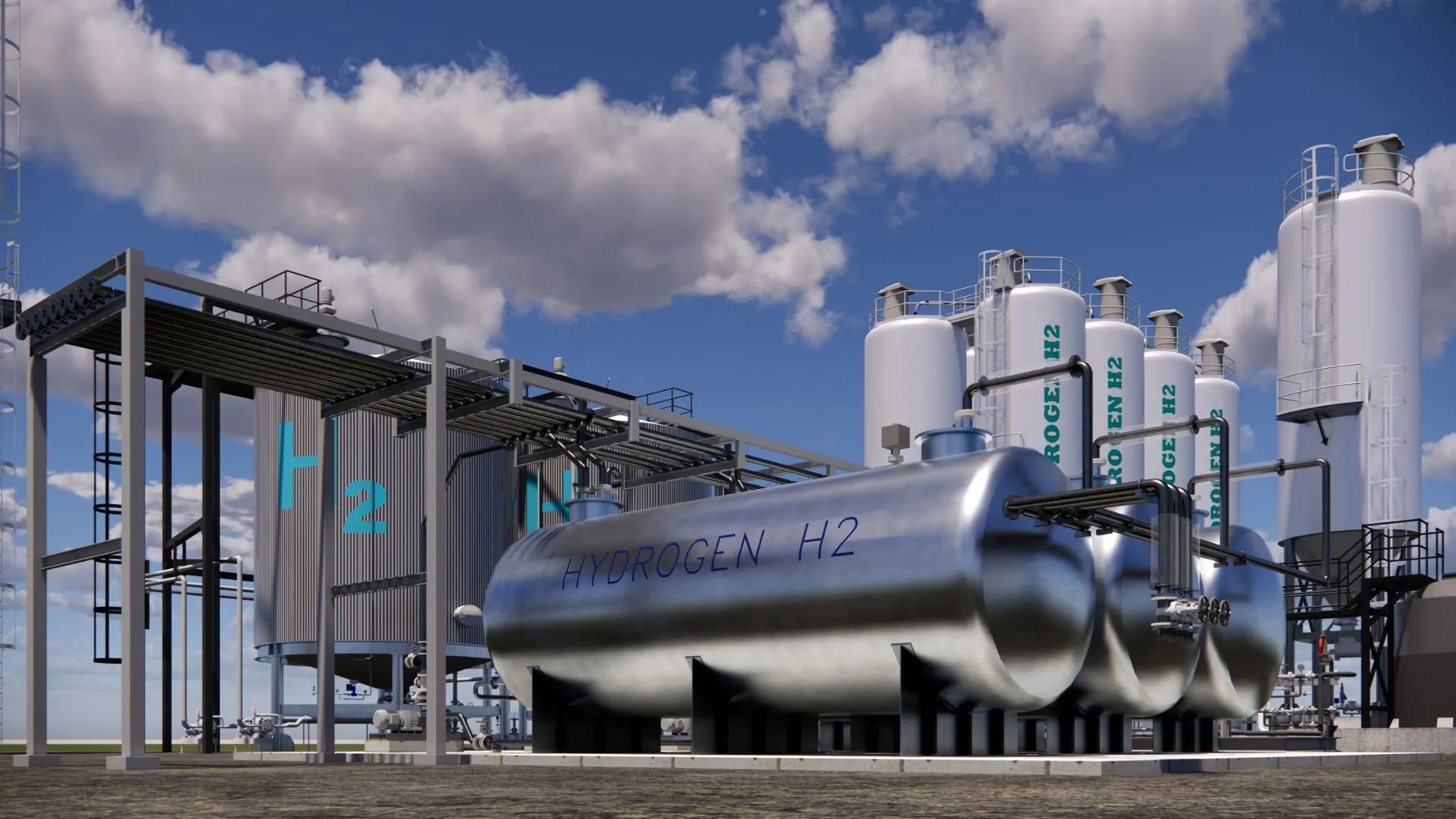
Scientists at the Oregon State University in the U.S. have developed a new class of materials that uses a sulfur-based chemistry to make clean green hydrogen from water using only sunlight. This removes the need for expensive metal-based catalysts, paving the way for lower-cost green hydrogen production in the near future.
As the world looks to move away from fossil fuels through the use of solar and wind energy, the shortcomings of the latter are also coming to the fore. While large renewable energy plants are being run in various parts of the world, energy generated through wind and solar energy cannot be used to drive high-power applications.
Hydrogen, on the other hand, offers a cleaner way to run high-power applications, since its combustion produces water as a by-product and no carbon emissions. However, conventional hydrogen production relies on methane, which releases carbon into the atmosphere. So, scientists have been looking for greener methods to produce hydrogen.
The simplest way to produce hydrogen is it split water using electricity. This process can be green, depending on how the electricity is sourced. Electricity generated at wind and solar power plants is now widely available, but the cost of hydrogen generated this way is around $5 per kilogram.
Photocatalysis is a much more direct approach, as it uses a material in its high-energy state activated by sunlight to bring about the same reaction and at a faster rate. Typically, photocatalysts are materials called Metal-Organic Frameworks (MOFs), which are crystalline, porous materials.
Scientists often leverage the pores and structures and fine-tune them to attain different properties in these materials for different applications.
Source link





