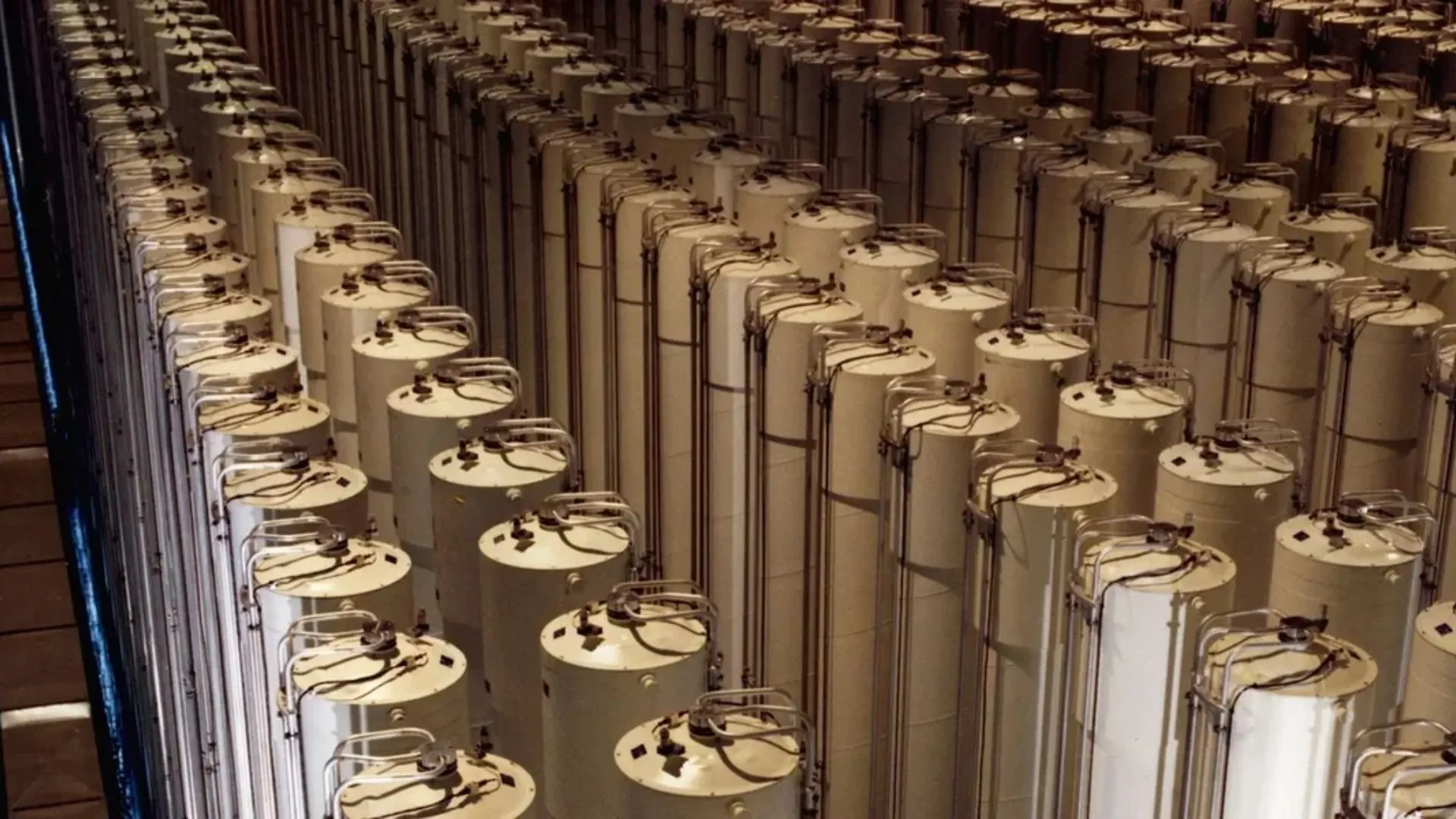
The National Enrichment Facility, the only commercial uranium enrichment center in the US, has reached a key milestone by completing 75 percent of its capacity expansion target. The facility is looking to increase its uranium production capacity to seven million separative work units (SWU) over the next decade as it looks to boost uranium enrichment in the US.
The demand for carbon-free energy sources is leading us back to nuclear energy which can produce power on demand without any associated carbon emissions. While earlier nuclear power projects have been marked by cost overruns and construction delays, newer approaches of building reactors at scale have brought in new hope about nuclear energy.
Even though the US leads in the development of these new-age technologies, it is also the largest consumer of uranium but not a major producer. Nuclear facilities in the US rely on international purchases to feed their reactors, while there is only one facility that can actually enrich uranium.
Naturally, uranium is found as two isotopes. U-238 and U-235. While U-238 is the stable form of uranium, it is the U-235 that is used as fuel in nuclear reactors. U-238 makes up 99.3 percent of natural uranium. U-235 levels must be increased to 3.5-5 percent of total uranium before it can be used in fission reactors, which is achieved through enrichment.
For enrichment, mined uranium is first processed into yellowcake containing largely triuranium octoxide (U3O8), which is then converted to uranium hexafluoride (UF6). Even at low temperatures, UF6 can easily convert to the gaseous state, which is then pumped into gas centrifuges, spinning at tens of thousands of rotations per minute.
Source link