
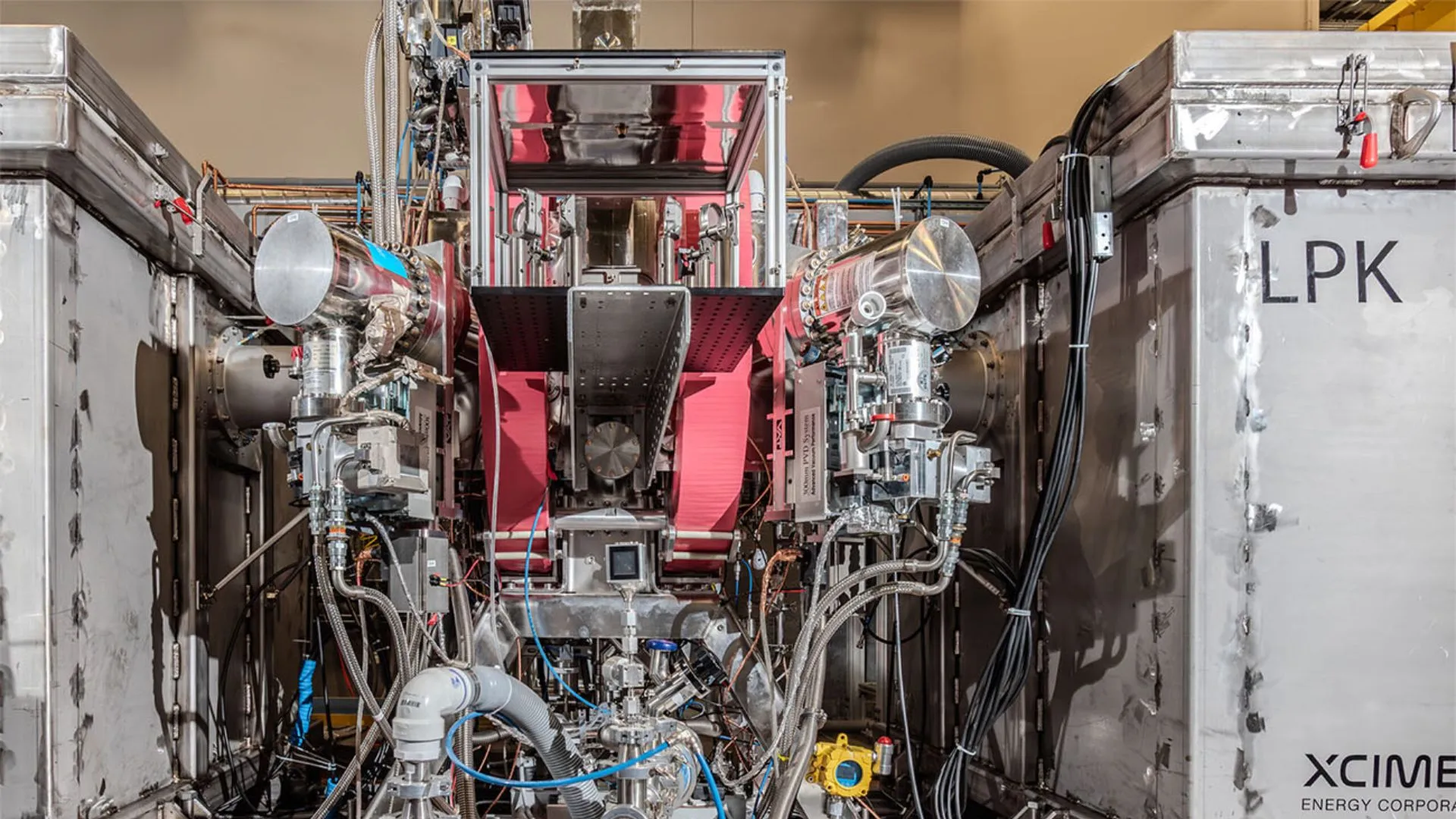
Commercial inertial nuclear fusion reactors require lasers that can fire high-energy pulses without wearing out. Xcimer Energy is developing an unconventional solution to this challenge. The company replaces solid-state glass optics with durable gases, aiming to supply electricity to the power grid by the mid-2030s.
This technical progress has qualified the firm for the second phase of the US Department of Energy’s Milestone-Based Fusion Development Program. The agreement unlocks up to $30.5m in performance-linked support. Unlike traditional research grants, these funds are released only after independent experts verify specific engineering benchmarks.
“Xcimer is making real progress toward a new generation of laser fusion technology, and this award will help accelerate that work,” said the DOE’s Under Secretary for Science Darío Gil.
Most experimental laser fusion facilities rely on large banks of solid-state glass lasers. These systems split light into dozens or even hundreds of beams. While they can reach fusion conditions, solid-state lasers face severe hurdles inside a working power plant. The optical glass retains heat, takes hours to cool between shots, and cracks under continuous megajoule-scale bursts.
Xcimer’s architecture bypasses large solid-state laser glass. Instead, it uses excimer gas lasers paired with dynamic gas optics. Flowing gas mixtures act as both the laser medium and the focusing optics. Because the gas circulates constantly, it sheds waste heat quickly and cannot suffer permanent structural cracks.
This setup allows engineers to use a simple two-beamline layout instead of hundreds of delicate beam paths. The system is built to fire megajoule-class pulses at the steady repetition rates required for baseload electricity generation.
Source link





