
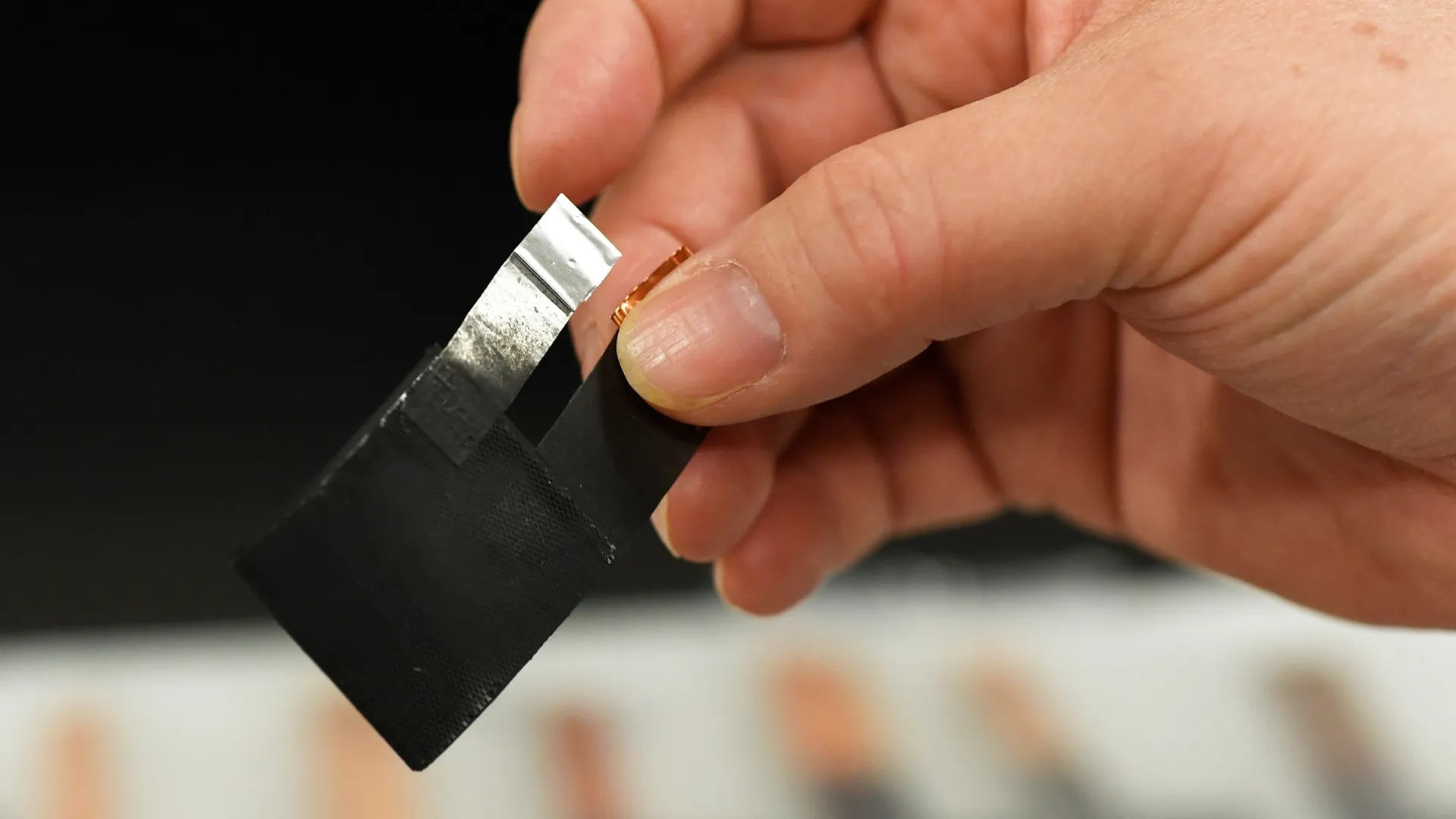
A new type of solid-state batteries which could store more energy and withstand repeated charging cycles without external pressure, has just received substantial financial backing by the US.
The batteries are being developed by New York’s InfinitEnergy, an energy storage startup co-founded by Quinn Qiao, PhD, chair of the Department of Mechanical and Aerospace Engineering at Syracuse University, and Anthony Terrinoni, a staff member at the department.
The firm recently secured USD 250,000 from the New York State Energy Research and Development Authority (NYSERDA). The funds will support the development of the cells and address their reliance on external mechanical pressure to operate reliably.
As per the university, the funding is part of a nearly USD 13 million investment in 15 energy storage projects. Their goal is to strengthen the state’s power grid and reduce its dependence on fossil fuels.
Solid-state batteries use solid electrolytes, rather than a liquid or gel, to conduct the ions between the anode and cathode. The electrolyte also acts as a physical barrier to prevent short circuits. The solid-state electrolytes usually have greater chemical and thermal stability than liquid ones.
At the same time, solid electrolytes can also enable batteries to achieve higher energy densities. Some solid-state battery designs could reach 500 watt-hours per kilogram (Wh/kg), compared to roughly 250 Wh/kg in conventional lithium-ion (Li-ion) cells.
However several technical challenges have prevented solid-state cells’ widespread adoption, including the need for external mechanical pressure to keep the contact between the different components inside the cells. The extra equipment needed to maintain this pressure can make batteries harder to build, heavier and bulkier.
Source link





