
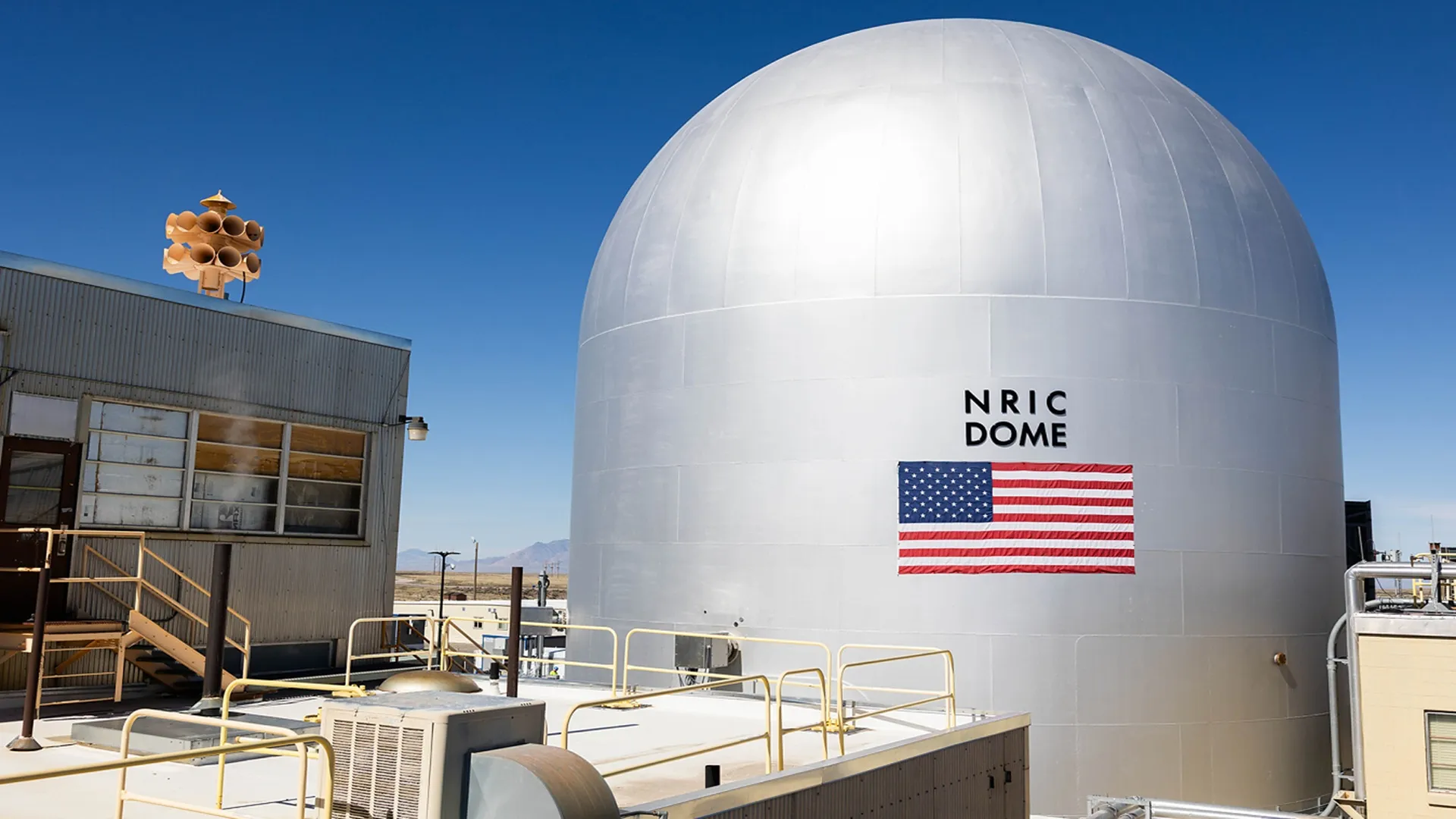
A US-developed nuclear battery that achieved its first controlled chain reaction in roughly 150 days is set for a full-power demonstration in 2027 at Idaho National Laboratory (INL).
Deployable Energy, a US developer of transportable nuclear reactors, announced October 7 that the Department of Energy (DOE) selected its Unity Nuclear Battery for testing at the laboratory’s Demonstration of Microreactor Experiments (DOME) facility.
The upcoming test will examine whether the compact reactor can operate at full power, be transported with nuclear fuel already loaded, and be moved to another location after operation. The company is developing Unity to provide continuous electricity for industrial sites, ships and remote locations.
The selection follows a June 30 milestone when Unity achieved criticality, the point at which a reactor sustains a controlled nuclear chain reaction. According to the company, this occurred about 150 days after the project began, making it the first developer under the National Reactor Innovation Center’s (NRIC) Nuclear Energy Launch Pad initiative to reach that stage.
Achieving criticality confirms that a reactor can sustain a chain reaction, but it does not establish that the system can deliver its intended power output under operating conditions.
The 2027 campaign is intended to test that next stage. Deployable Energy plans to fuel Unity at a factory, transport the fueled reactor to INL, install it inside DOME and operate it at full power.
After the test, the company intends to move the reactor to another location within the laboratory and complete the process of managing its nuclear fuel.
Source link





