
For a long time, fusion energy has been dogged by a persistent cliché — always 30 years in the future, yet never quite within reach.
UK-led STEP Fusion just pushed back against that cynicism with a stack of blueprints. The UK Atomic Energy Authority (UKAEA) has progressed its design for the STEP fusion plant, aiming to deliver clean, grid-connected fusion energy.
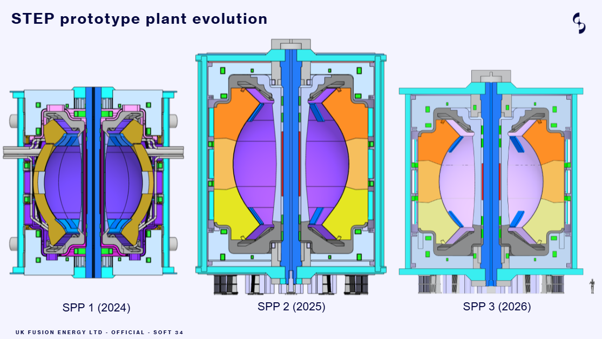
At the 34th Symposium on Fusion Technology (SOFT 2026) in Aix-en-Provence, the UK’s flagship fusion program revealed SPP3. It is the third-generation design iteration of its Spherical Tokamak for Energy Production prototype plant.
The core problem with fusion has rarely been making it work. The real hurdle is keeping it running long enough to turn a profit.
SPP3 changes this dynamic through its compact, cored-apple-shaped spherical tokamak design. This steady-state architecture lets the plant run continuously, delivering the uninterrupted energy flow needed to supply reliable power to the electricity grid.
“This is all very hard, but we have to keep sight of the benefits. We are consciously taking on some of these technical challenges and uncertainties because they unlock steady-state operation and practical maintenance,” said Sam Davis, Head of Engineering for the Tokamak Machine at STEP Fusion.
To make that vision work, engineers focused heavily on the plant’s giant microwave heaters, known as gyrotrons. These systems blast the plasma to temperatures exceeding 150 million degrees Celsius. Boosting their efficiency means burning less energy just to keep the internal fire hot.
Source link





