Researchers from the U.S. and Germany are launching a $13.3 million project to improve fusion technology and help pave the way for future fusion power plants.
The collaboration brings together scientists from Columbia University and Germany’s Max Planck Institute for Plasma Physics (IPP) to explore the strengths of Tokamak and stellarator designs and tackle challenges that have held back commercial fusion energy.
The new virtual research center, called the Max Planck Columbia Center “Optimizing Symmetry in Fusion Plasmas,” is one of seven Max Planck Centers being established this year. It is scheduled to begin work in 2027 and will initially operate for five years.
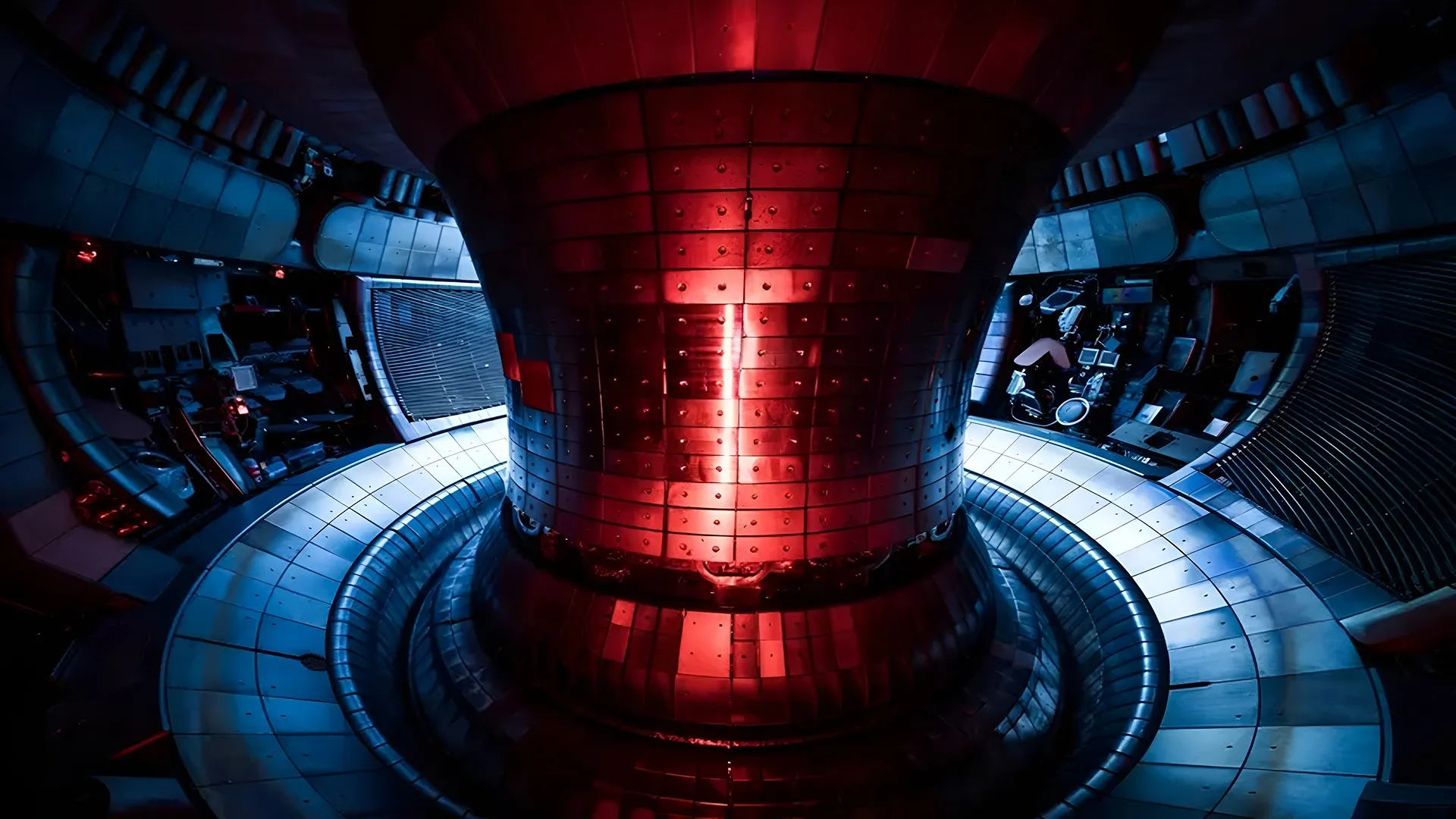
The research will focus on combining tokamaks and stellarators, two different types of machines designed to harness nuclear fusion for clean energy.
Both use powerful magnetic fields to contain extremely hot plasma, creating the conditions needed for hydrogen isotopes to fuse. However, they approach plasma confinement in different ways.
Tokamaks rely partly on electric currents flowing through the plasma to help keep it confined, while stellarators use complex arrangements of external magnetic coils to create a three-dimensional magnetic field.
This makes stellarators more complicated to design and build, but potentially better suited to continuous operation.
Researchers hope to combine the advantages of both designs to improve plasma stability and develop more practical fusion reactors.
“The Max Planck Columbia Center will bring together two leading institutions in plasma physics and fusion research. We aim to combine the strengths of tokamaks and stellarators to address key scientific and technological questions on the path toward a fusion power plant.
Source link