
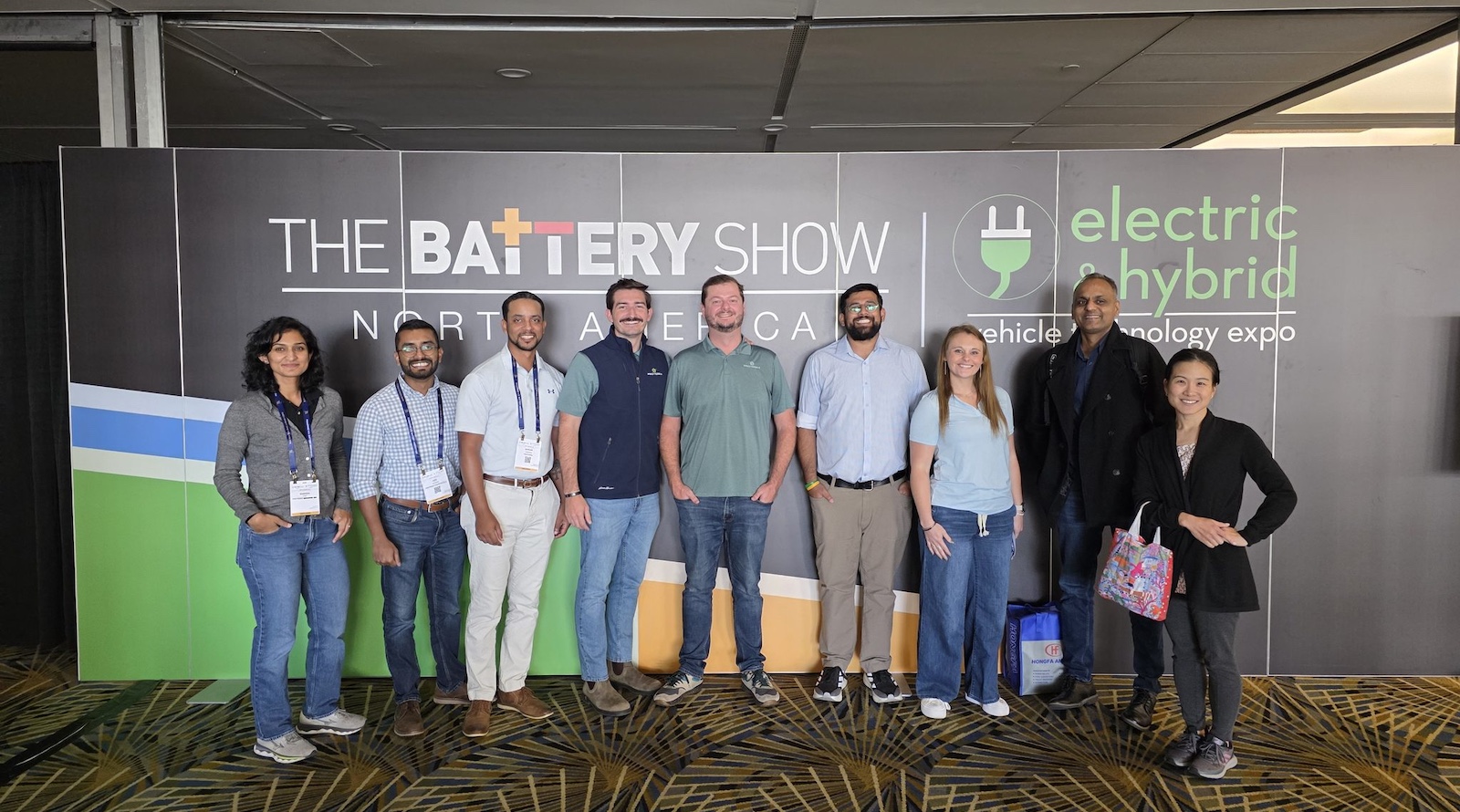
Each fall you can learn a lot about the battery industry by walking through the halls of Huntington Place in Detroit. This year’s Battery Show North America, held October 12th – 15th at Huntington Place, brought together thousands of engineers, executives, and suppliers from cell chemistry and vehicle integration to manufacturing, supply chain, and grid storage.
What stood out wasn’t a single product or chemistry. It was a shift in the questions being asked. We saw less of “what’s possible?” and more of “what’s proven?” That shift matters for every OEM and fleet planning its next electrification program.
Energy storage dominated the agenda. Pacific Northwest National Laboratory’s keynote spotlighted how automakers including Ford, GM, and Volkswagen have converted existing EV battery manufacturing assets to serve surging grid storage demand. Across the industry, battery makers are moving from passenger EVs toward energy storage, defense, industrial, and rail applications.
Some will read this as electrification losing momentum. We see it differently. The industry is sorting out where batteries create clear, measurable value today. Commercial and industrial applications, with predictable duty cycles and a total cost of ownership that can be calculated, sit squarely in that zone.
The opening session came away optimistic about the U.S. battery industry, and the most important word in the ExxonMobil keynote was “competitive.” The goal isn’t to wall off the market but to build an American supply chain that wins on quality, reliability, and delivery.
For OEMs, domestic content now matters on two fronts. It’s a compliance requirement under Buy America and BABA, and it’s a way to gain shorter lead times, closer engineering collaboration, and greater supply certainty.
Source link