
This article has been reviewed according to Science X's editorial process and policies. Editors have highlighted the following attributes while ensuring the content's credibility:
In a study published in the journal Energy Research & Social Science, Dr. Lukas Hermwille and three co-authors outline the consequences of a trade war over environmental technologies. Such a trade war would significantly drive up the global costs of combating climate change—with Europe being hit hardest. There is reason to fear that this would make achieving the global climate targets difficult, if not impossible.
The publication of the study comes at a decisive moment: On Nov. 30, EU trade ministers will meet with U.S. Trade Representative Jamieson Greer in Brussels to discuss the state of trade relations between the EU and the U.S.
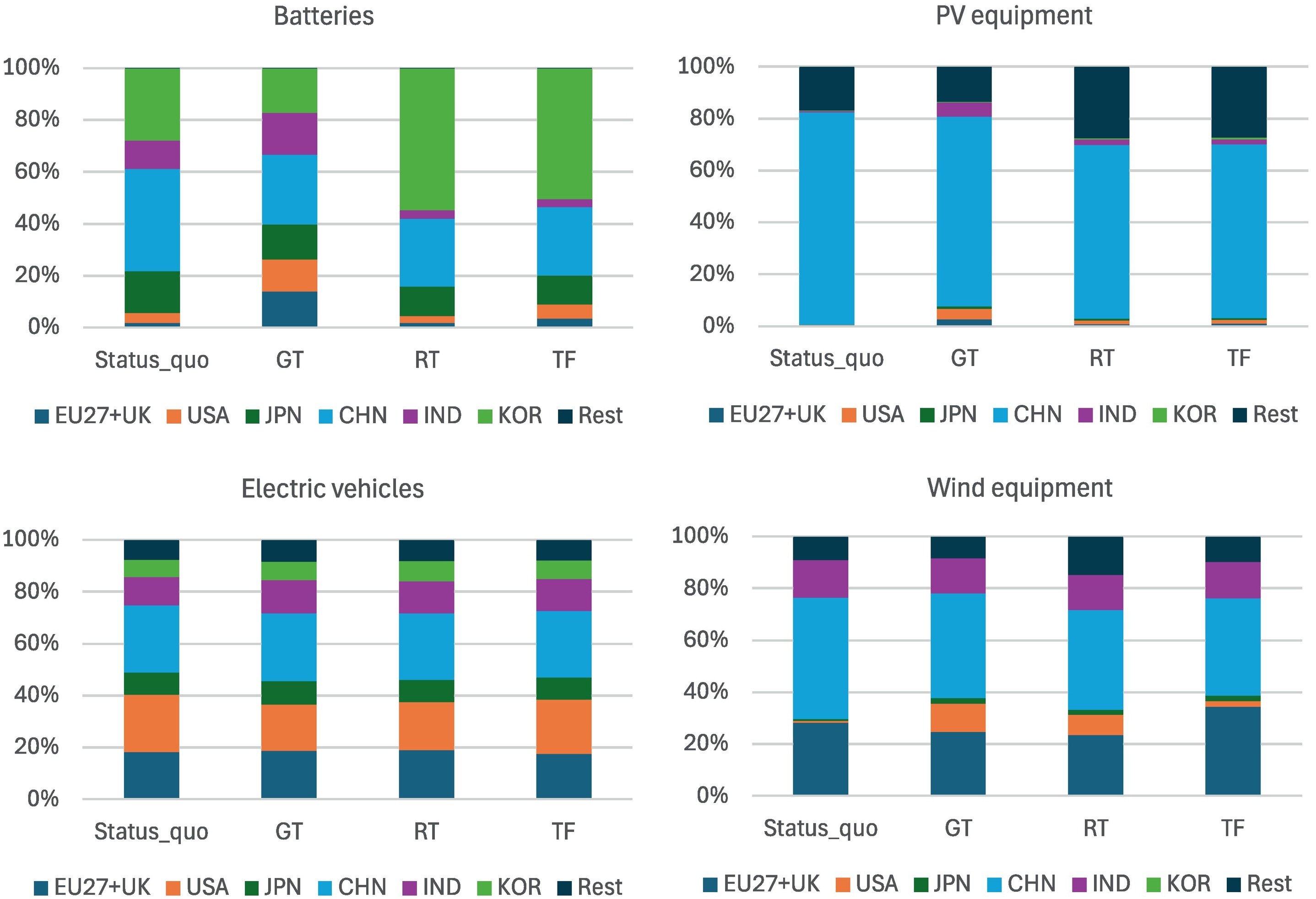
The study, titled "A race at all costs? Economic and environmental effects of geoeconomic rivalry in clean energy technologies," quantifies the long-term economic and environmental consequences that a protectionist industrial policy driven by geopolitical rivalries could bring about.
To examine the consequences of a global escalation of protectionist industrial policy, the authors used the macroeconomic model GEM-E3 (developed and maintained by E3Modelling/WSP Hellas) to analyze scenarios involving varying degrees of protectionism. The modeled scenarios are based on the assumption that the five leading industrialized economies (the U.S., China, the EU, India and Japan) impose symmetrical import tariffs on clean energy technologies and the associated upstream value chains and reinvest the revenue in subsidies for domestic producers.
4% to 1% lower than in the reference scenario without excessive protectionist industrial policy.
Source link





