

New research reveals a single ship emits, on average, as much toxic sulphur at port in a year as 19,300 cars, leaving taxpayers and hospitals to pay the hidden cost of shipping pollution.
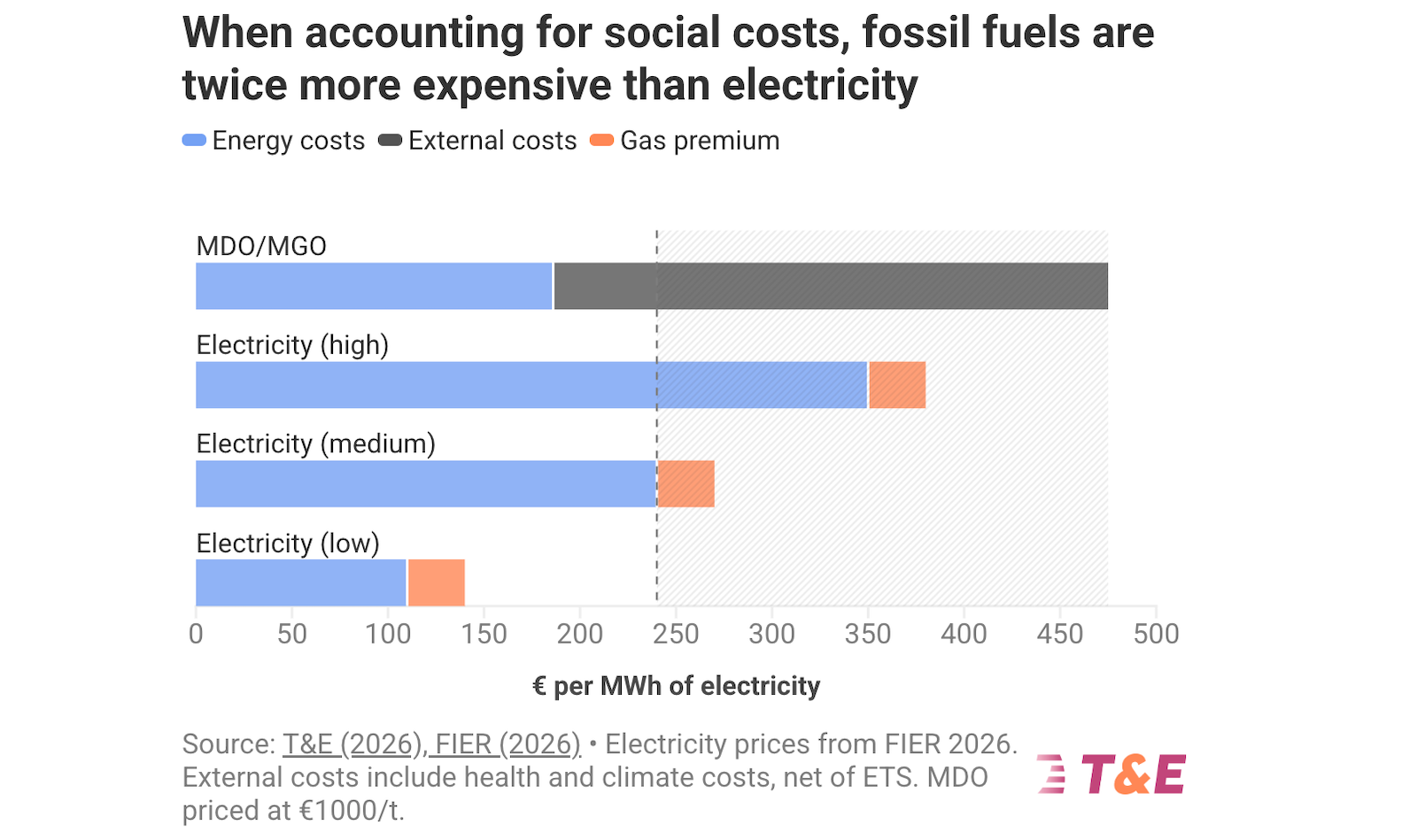
Commercial ships docked in European ports inflict €2.5 billion a year in societal and environmental costs, according to new research by T&E. While upcoming EU port rules will cut at-berth damages by 40% by 2030, most vessels remain exempt. Previous research has shown that residents living close to a commercial harbour already face significantly higher risks of cardiovascular and respiratory mortality¹. Tightening port pollution rules would save society billions and protect the health of port communities, says T&E.
Instead of plugging into the electrical grid when they dock, thousands of commercial vessels run diesel generators around the clock to power onboard systems. These idling engines release harmful pollution directly into neighbouring coastal and port communities. Analysis of Europe’s 100 largest ports shows that Rotterdam is the most polluted with costs at €350 million, followed by Antwerp (€220 million), Marseille (€120 million), Hamburg (€120 million), and Genoa (€110 million).
56bn in health and climate costs. Under current EU rules, outlined in the Alternative Fuels Infrastructure Regulation (AFIR), only large container ships, ferries and cruise ships are required to plug into dockside electricity sockets, meaning oil and gas tankers, bulk carriers, car carriers and other cargo ships are left out entirely. Requirements to connect should be progressively extended to all ship types in the upcoming review to cut emissions and grant ports the necessary long-term predictability.
Source link





