
This article has been reviewed according to Science X's editorial process and policies. Editors have highlighted the following attributes while ensuring the content's credibility:
From the street straight into the battery: Researchers have developed a wireless charging system that charges electric buses via their wheels at bus stops. This technology is expected to significantly reduce the costs of running a bus line.
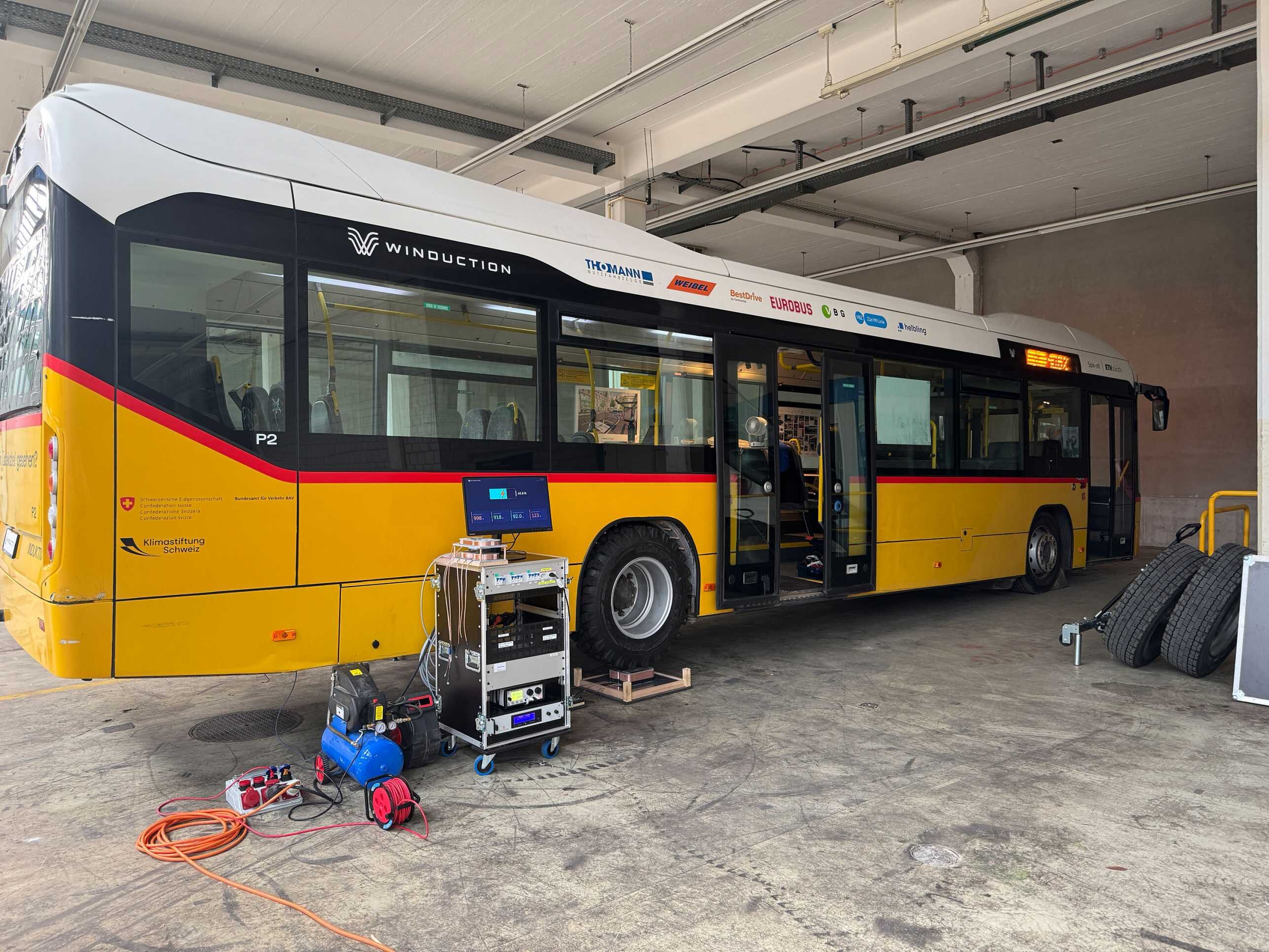
The back wheel of the slightly aging postal bus stands on a plate about the size of a shopping cart. Suddenly, the bus's battery begins to charge: 10%, 20%, 30%—the battery indicator climbs steadily, with no need for a cable to connect the bus to the plate. The underlying technology was developed by the ETH spin-off Winduction. As the company's first prototype, the electric bus is intended to solve a challenge that is becoming increasingly significant in public transportation.
The electrification of bus fleets is advancing in Switzerland and Europe. At present, transportation companies primarily rely on a combination of large batteries and powerful charging stations involving thick cables. Both are expensive to purchase and maintain.
Moreover, charging takes place at night in the depot using electricity that is not yet derived entirely from renewable sources—and the enormous batteries make the bus heavy, which leads to greater wear on individual components, as well as taking up valuable space.
It is precisely this approach that is being explored by Sonam Bhuka, Sylvain Fricker and Laurin Schwitter, the three founders of Winduction. "We believe that electric buses can be operated much more cheaply if they are charged wirelessly and regularly during operation," says ETH graduate Schwitter, CEO of the ETH spin-off.
Source link





