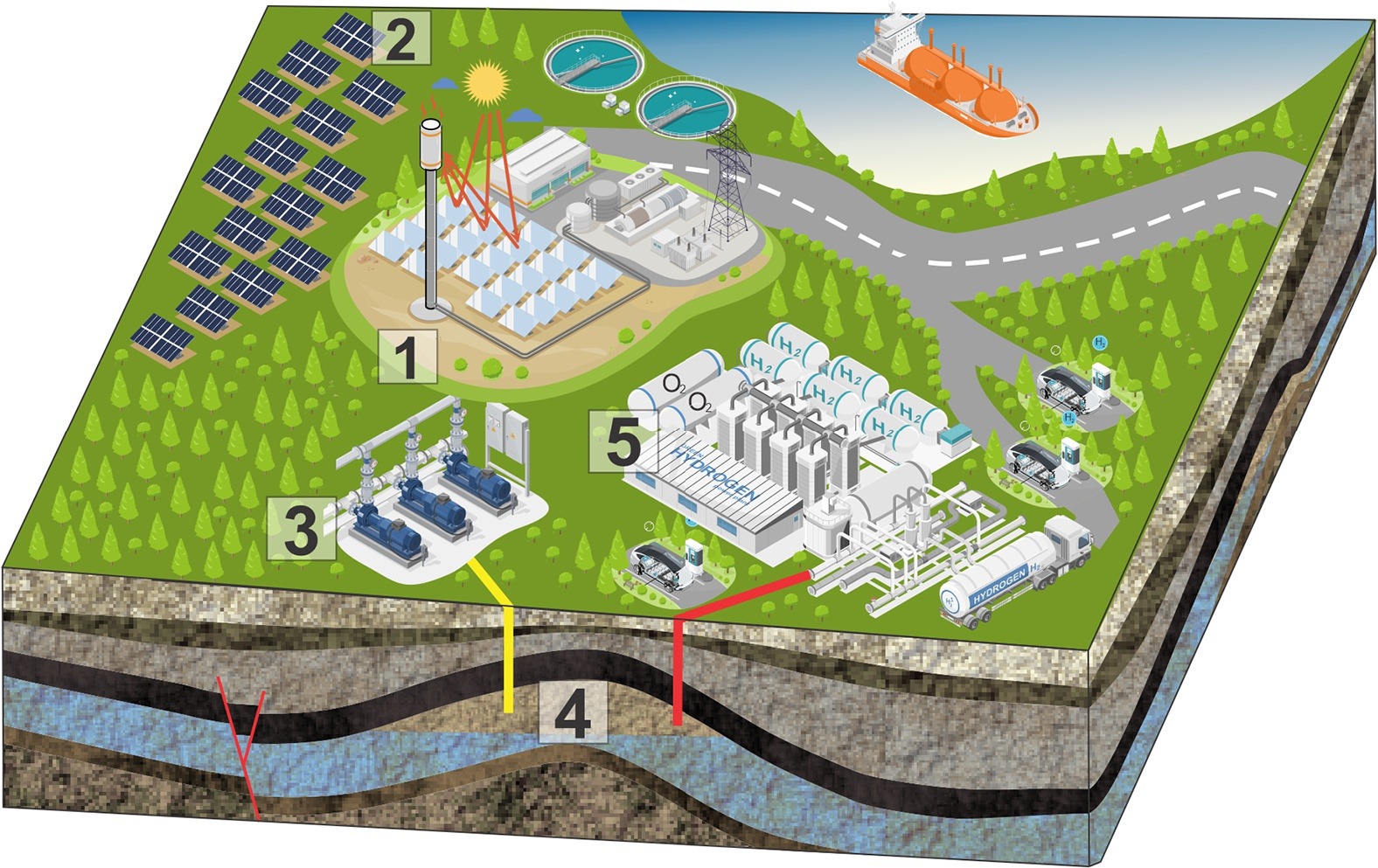
Australian scientists compared hydrogen fuel cells and hydrogen gas turbines as backup power sources during periods of low solar availability, finding that hydrogen turbines could offer lower capital expenditure and a levelized cost of hydrogen storage (LCOHS) of around AUD 0.90/kg ($0.62/kg) under modeled conditions of 10% porosity, 50 mD permeability, a 30-year project lifetime, and a 7% discount rate. “This paper demonstrates that the optimisation of integrated reservoir and surface systems could lower the LCOHS and enable the extensive implementation of solar-driven hydrogen production,” the researchers said in “Feasibility assessment of solar-driven underground hydrogen storage through integrated surface and subsurface modelling.” The paper, published in Applied Energy, assesses an integrated system encompassing hydrogen injection, geological storage, purification, and pipeline delivery. It highlights how reservoir characteristics affect hydrogen recovery and overall costs. Higher permeability improves injectivity and recovery rates but can increase purification and compression requirements, while lower porosity can improve gas displacement at the expense of higher injection pressures and equipment costs. The researchers said that interactions between reservoir properties and surface facility strategies are key to the performance of repurposed geological reservoirs for hydrogen storage, providing a basis for designing commercially viable, large-scale underground hydrogen storage (UHS) systems. Previous research has also examined alternative approaches to hydrogen storage in lakes and reservoirs.
Air Products reported significant charges related to business and asset restructuring, primarily associated with previously announced project exits. 95 per share). These charges primarily related to project exit actions announced on 30 June 2026, including the exit of a clean energy complex under construction in Louisiana, a green hydrogen production facility under construction in Casa Grande, Arizona, and certain other clean energy projects,” the Pennsylvania-based company said in its fiscal 2026 full-year results.
Source link