This article has been reviewed according to Science X's editorial process and policies. Editors have highlighted the following attributes while ensuring the content's credibility:
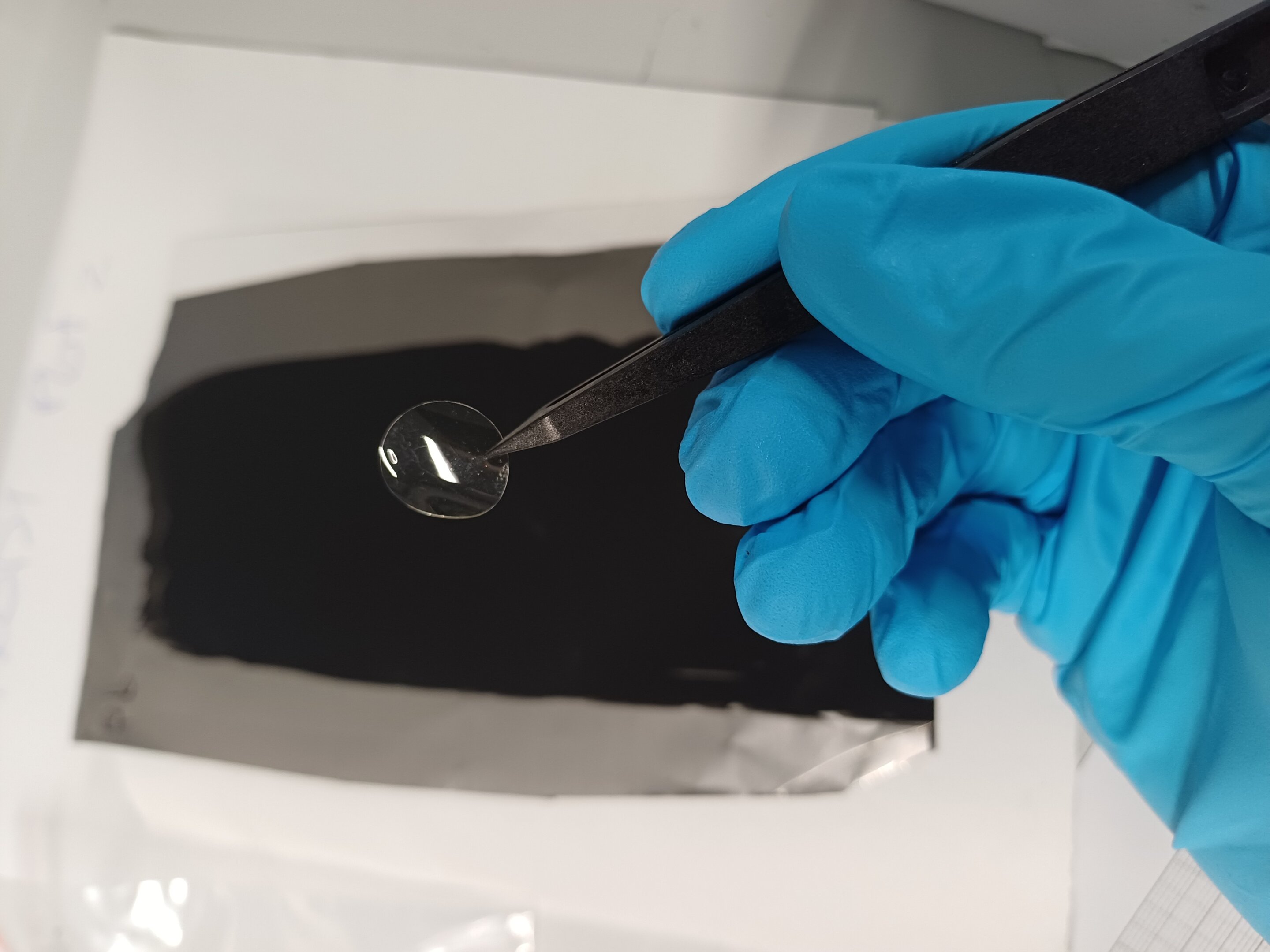
A new polymer electrolyte to replace lithium ions in batteries is the result of research carried out by a team from the Department of Chemistry, Materials and Chemical Engineering (DCMIC) "Giulio Natta" at Politecnico di Milano, which conceived and developed a revolutionary, nonflammable, quasi-solid gel membrane that enables the transport of fluoride ions within batteries at room temperature.
The study, published in the journal Energy Storage Materials, is the outcome of a collaboration between several professors and laboratories within DCMIC, thanks to an interdisciplinary approach that brought together different areas of expertise in chemistry, materials engineering, electrochemistry and molecular dynamics.
The key researchers involved were the coordinator Maurizio Sansotera, head of the Fluoritech laboratory; Luca Magagnin, head of the SEE Lab—Surface Engineering and Electrochemistry Laboratory, who was responsible for the electrochemical characterization; and Giuseppina Raffaini, whose contribution in molecular dynamics was fundamental to understanding the mechanisms underlying fluoride ion transport through the polymer membrane.
The study is pioneering precisely because it defines, for the first time, the concept of a fluoride exchange membrane (FEM), by analogy with the widely used proton exchange membranes (PEMs), already employed in numerous applications, and anion exchange membranes (AEMs).
The advantages of fluoride-ion batteries are multiple and relevant, starting with their environmental impact, as they could make use of materials that are more readily available and far more abundant than lithium.
Source link