

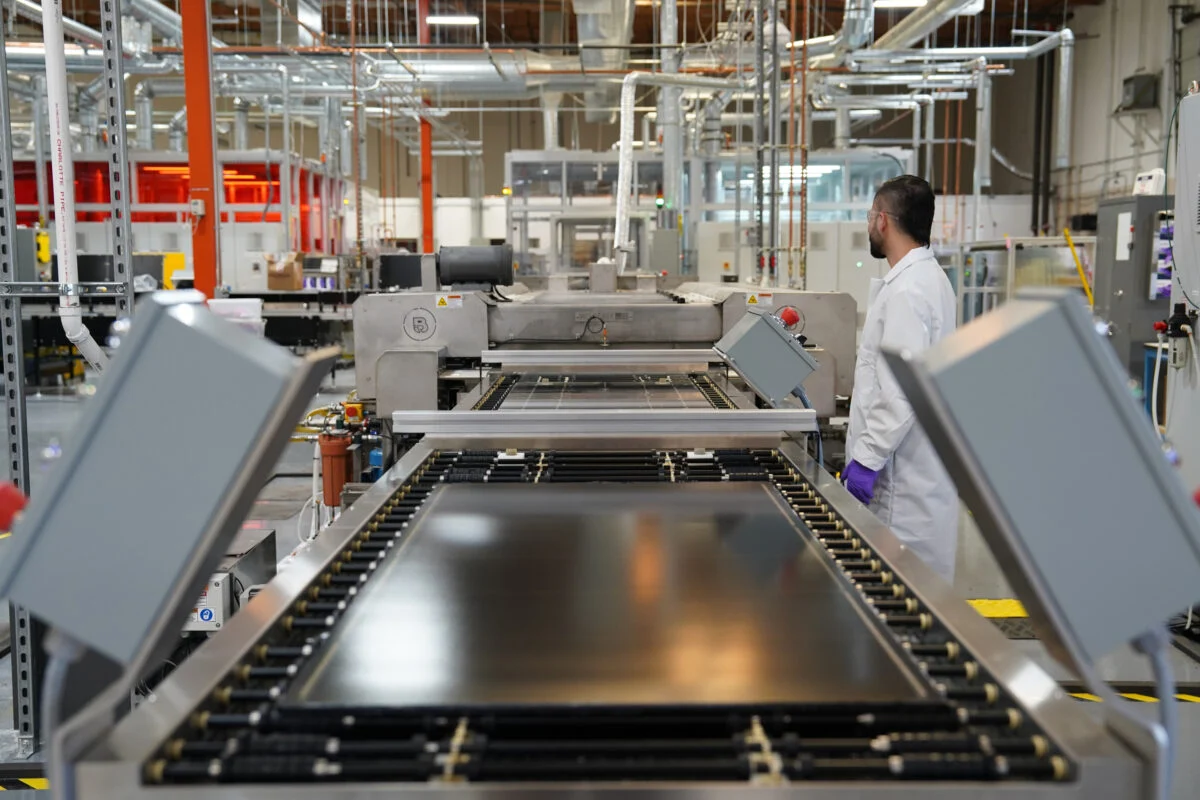
The last 18 months have been busy for Tandem PV. In March 2025 it raised US$50 million from venture capital firm Eclipse to fund a commercial-scale tandem module production line; in April this year, it began operations at that demonstration facility in the Silicon Valley enclave of Fremont, California; and in August it bagged a US$7.7 million grant from the Department of Energy (DOE) that the company said would speed up the rollout of its tandem modules, which it claims have a 29.7% conversion efficiency.
And in June, former US energy secretary Jennifer Granholm joined the company’s board of directors, bringing real industry clout and respect.
All of those developments are “votes of confidence from people from the outside in our ability to be successful,” Wharton says. “Jennifer Granholm is not on many boards at all, so it’s a real honour to have her participating with us. Same with the DOE—I think we were the only company in the solar space that won a grant for that particular programme.”
Wharton—a serial startup businessman rather than a solar specialist—spells out a formula for success that wouldn’t be out of place in a sales pitch: “You need three things to commercialise perovskites—efficiency, durability and manufacturability.”
7% demonstration modules, and he claims that the company has achieved less than 1% degradation per year on its products. Those claims have apparently been verified by bodies including the National Renewable Energy Laboratory (now the National Laboratory of the Rockies) and Renewable Energy Testing Centre (RETC), though that certification has been absent from the company’s public announcements.
Source link





