

Australia’s power grid is changing quickly. Coal-fired power stations are gradually shutting down as renewables such as solar and wind grow.
But as coal plants retire, they take something useful with them – their giant spinning turbines. As these turbines spin, they help keep the grid stable. Grid-scale batteries can do some of this stabilisation, but not all.
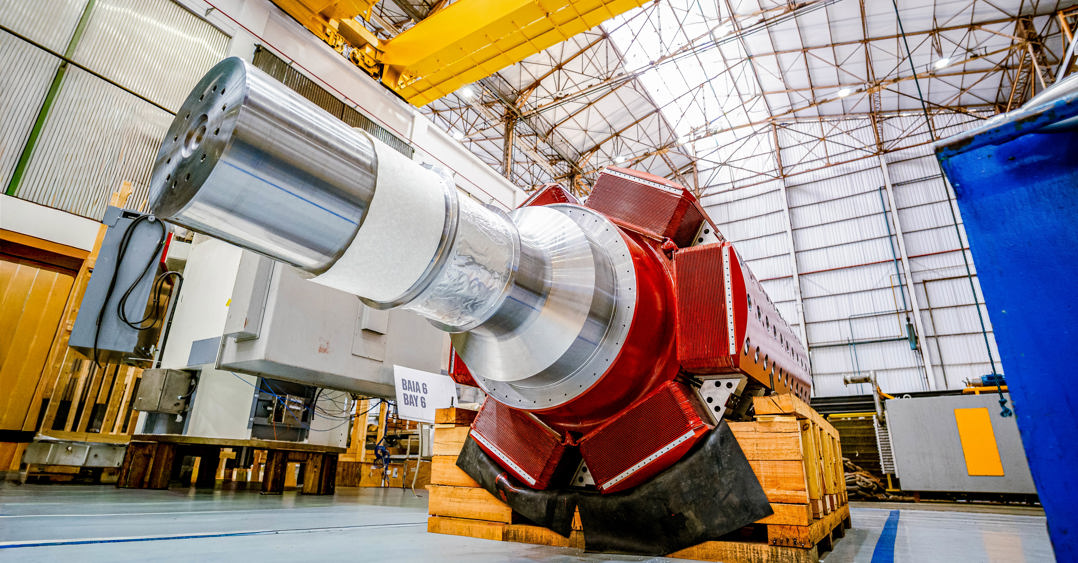
This is why authorities are installing more synchronous condensers (“syncons” for short) – large spinning electrical machines that can keep voltage normal and absorb shocks.
Our recent research found synchronous condensers work well. But because they are expensive, they have to be well located and the right size.
Since 2000, electricity on Australia’s grids has been set at 230 volts, with an acceptable range of up to 10% higher or 6% lower. If electricity is like water flowing through a pipe, voltage is the water pressure.
Maintaining voltage within this range is important. If there’s an electrical fault, a sudden change in electricity demand or a large power plant unexpectedly goes offline, the grid voltage can become unstable and lead to power outages. If the voltage fluctuates constantly, it can burn out appliances.
In severe cases, such instability can pave the way for prolonged blackouts, such as South Australia’s 2016 statewide blackout.
Authorities use the system strength metric to track how stable the grid voltage is. A grid with good system strength can maintain stable voltage both during normal operations and when things go wrong.
Source link





