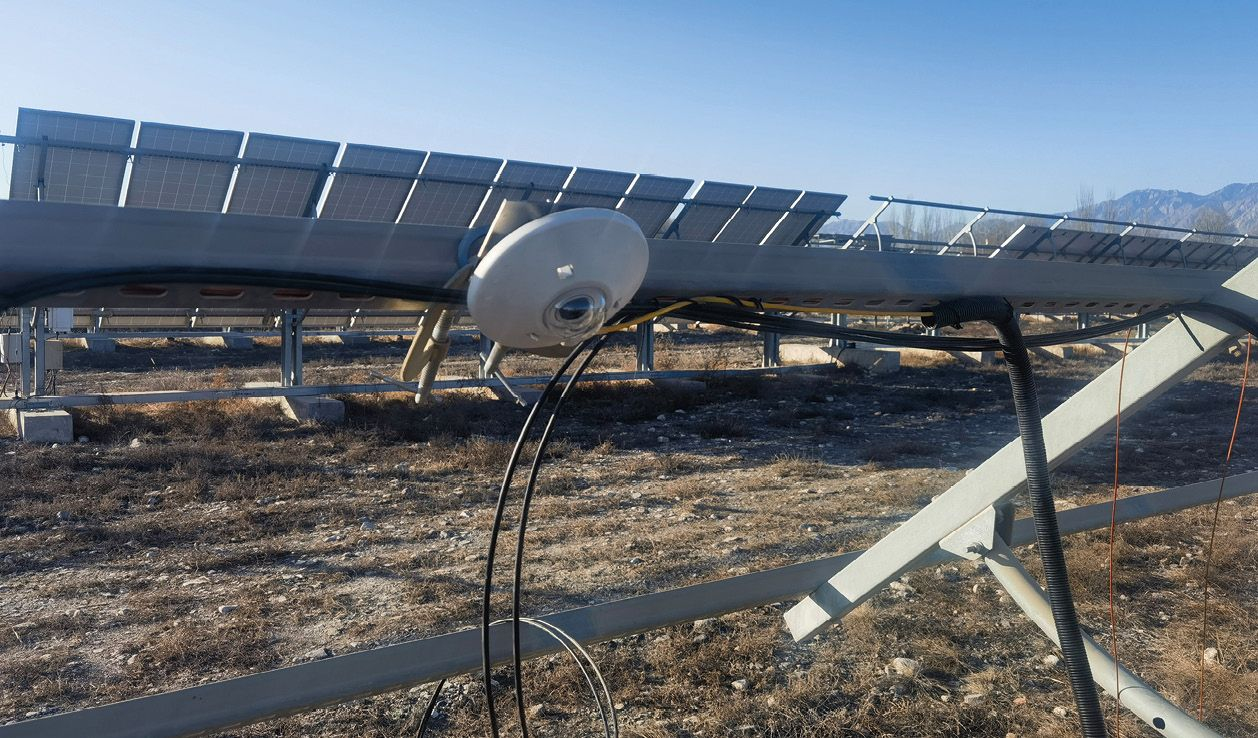
A research team in India has compared the performance of bifacial and monofacial solar PV modules under varying albedo and climatic conditions across the country and has found that ground albedo has a strong and systematic influence.
The researchers simulated the systems across five representative Indian climate zones: hot-dry, warm-humid, composite, temperate, and cold.
“Our study goes beyond conventional energy-yield comparisons by establishing the relationship between surface albedo and bifacial gain and by integrating technical, environmental, and economic indicators,” corresponding author Mobi Mathew told pv magazine. “This provides a more comprehensive understanding of how climate and surface reflectivity jointly influence the performance and deployment potential of bifacial PV systems across India.”
Mathew said his team plans to extend the work in two directions. “The first will focus on developing empirical correlations between surface albedo and key bifacial PV performance metrics across diverse Indian climatic conditions, using a stronger empirical basis to understand the relationship between surface reflectivity and bifacial performance,” he said. “The second will extend the assessment towards an integrated energy, exergy, economic, and environmental evaluation of bifacial and monofacial PV systems under different albedo and climatic conditions.”
In the current study, the team used PVsyst to simulate 6 kW grid-connected monofacial and bifacial PV systems in five Indian cities: Jodhpur (hot and dry), Thiruvananthapuram (warm and humid), New Delhi (composite), Bengaluru (temperate), and Leh (cold). The systems used 400 W modules and the same 3 kW inverter configuration. 5 m and row spacing of 5 m. 5% DC wiring losses.
Source link