Research from the University of Málaga (UMA) has documented six species of birds of prey regularly using a solar PV plant in southern Spain over a two-and-a-half-year period.
The study, “Raptors Using a Solar Photovoltaic Facility in Southern Spain,” published in the Journal of Raptor Research, provides field-based evidence of how birds of prey use PV infrastructure in open agricultural landscapes.
The researchers conducted the study at a 150 MW, 299-hectare PV plant in the Spanish province of Seville. The facility features fixed-tilt modules with uniform spacing between rows. It is located in a flat to gently rolling landscape dominated by cereal crops, with scattered olive groves and areas of natural vegetation, including stone pine.
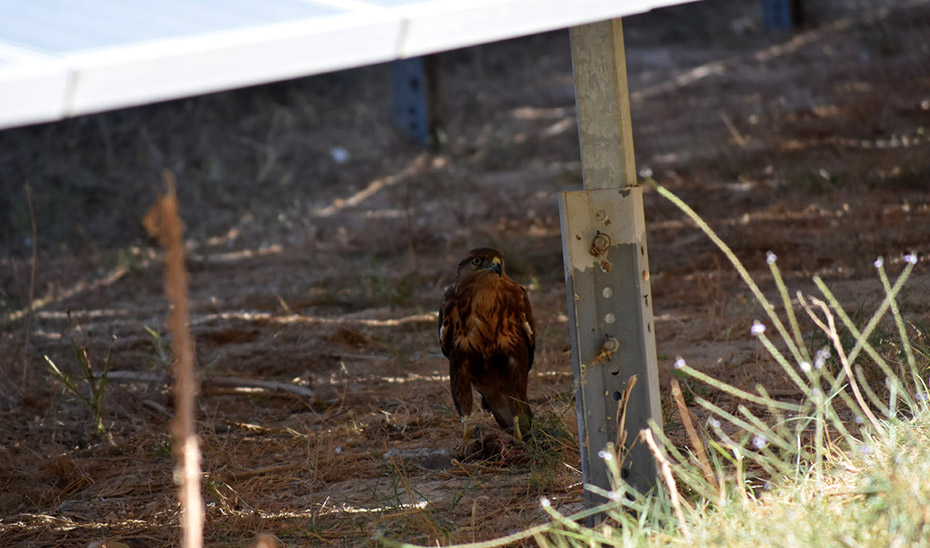
The researchers recorded six raptor species at the site. The black kite was the most abundant, followed by the common buzzard and common kestrel.
Perching on modules, posts and fences was the most frequently recorded behavior, with 121 observations, followed by flight, with 120. The researchers also recorded 47 hunting events, 29 instances of soaring and one observation of territorial behavior.
The researchers said the plant’s location in a cereal-growing area with few natural perches could explain why the birds use PV structures as vantage points and resting places. They added that restrictions on hunting within the site favor prey species such as rabbits, hares, partridges and small mammals, increasing food availability for birds of prey. The researchers recorded several hunting events between the module rows.
Some soaring species also used rising air currents generated by warm air above the PV modules to gain altitude, according to the study.
Source link