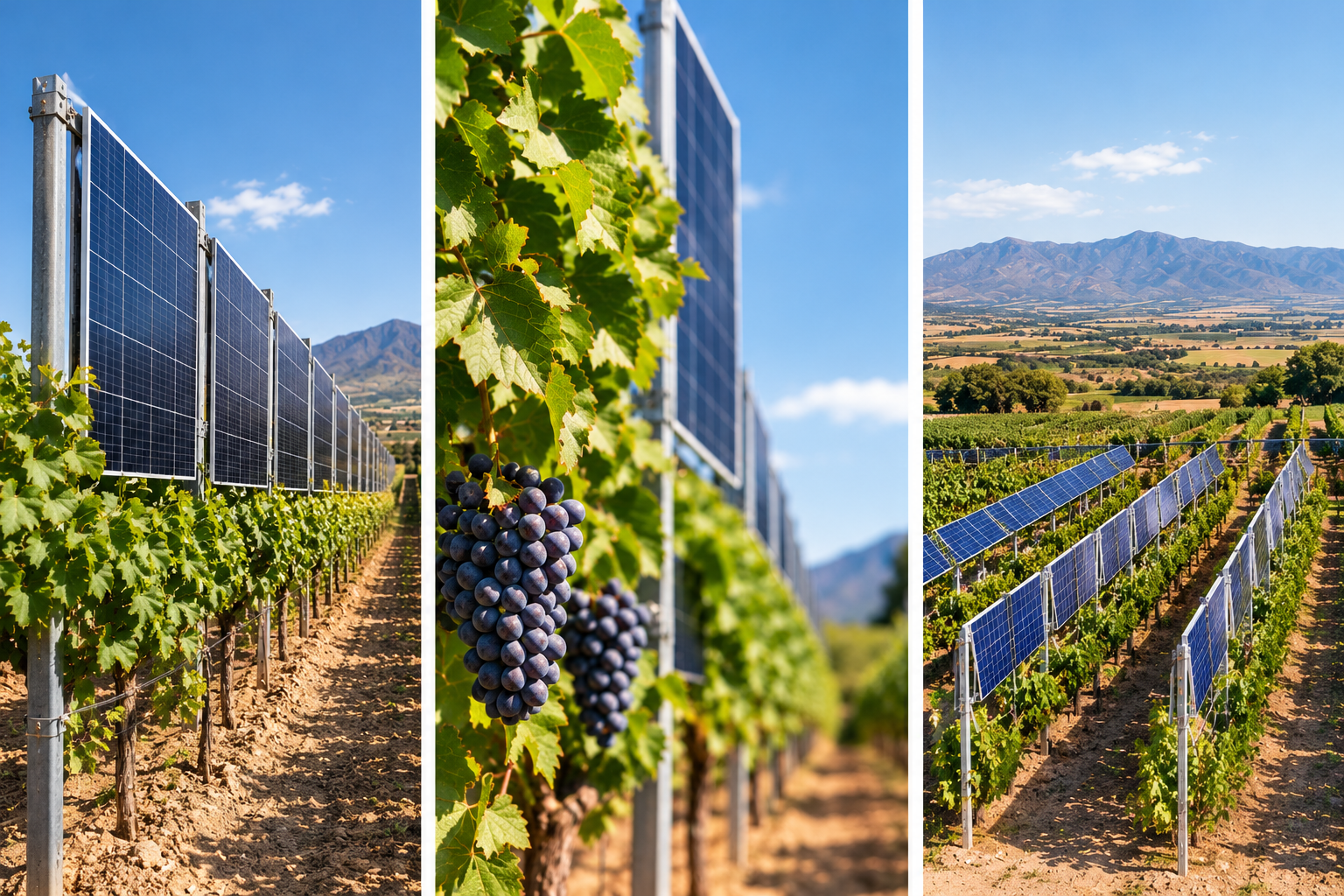
A research team in Spain has experimentally investigated the integration of low-height photovoltaic systems into vineyards.
They explained that low-height agrivoltaic systems could offer several advantages over conventional elevated installations, particularly in vineyards where maintaining existing cultivation practices is essential. By positioning PV modules closer to the ground and integrating them between vine rows, these systems can reduce structural material requirements, installation costs and visual impact. They could also minimize interference with vineyard machinery and routine agricultural operations while limiting shading during critical stages of grape development.
The researchers installed and tested three agrivoltaic systems at commercial vineyards in southeastern Spain, assessing their agricultural performance during the 2024 harvest season and monitoring electricity generation over 14 months.
“This study presents the first field-scale validation of the vertical agrivoltaic design proposed by our group,” the researchers said. “The systems were designed with the primary aim of preserving the agronomic integrity of the vineyard, avoiding critical shading during sensitive periods, and maintaining the operational routines of viticulture. Energy production was considered secondary and constrained by agronomic and structural design.”
The researchers conducted the study at three commercial vineyards in southeastern Spain. 1 m. 1 m. 1 m.
Source link