
This article has been reviewed according to Science X's editorial process and policies. Editors have highlighted the following attributes while ensuring the content's credibility:
Solar cells absorb sunlight and convert it into electricity. This process, however, is not perfect, and a large part of the solar energy is simply lost along the way. Some of it is lost as heat, while photons with insufficient energy pass through the cell without generating electricity. These are the sources of loss that most scientists in the field try to minimize, but there is another important one known as Boltzmann loss.
Boltzmann losses arise because materials that absorb light can also emit light, and in a solar cell this emission is an unavoidable part of the energy-conversion process. The problem with solar cells lies in how this occurs. Because the sun appears very small in the sky, sunlight reaches the cell within a narrow cone of directions.
The solar cell, by contrast, emits in all directions, over a broad cone that practically covers the full hemisphere above it. This mismatch between the narrow cone of incoming light and the broad cone of emitted light translates into a reduction in the useful work that can be extracted from the device.
ICFO researchers Dr. Francisco Bernal Texca, Chiara Cortese, Dr. Mariia Kramarenko and Dr. Quan Liu, led by ICFO and UPC professor Jordi Martorell, have now found a way to reduce Boltzmann losses experimentally.
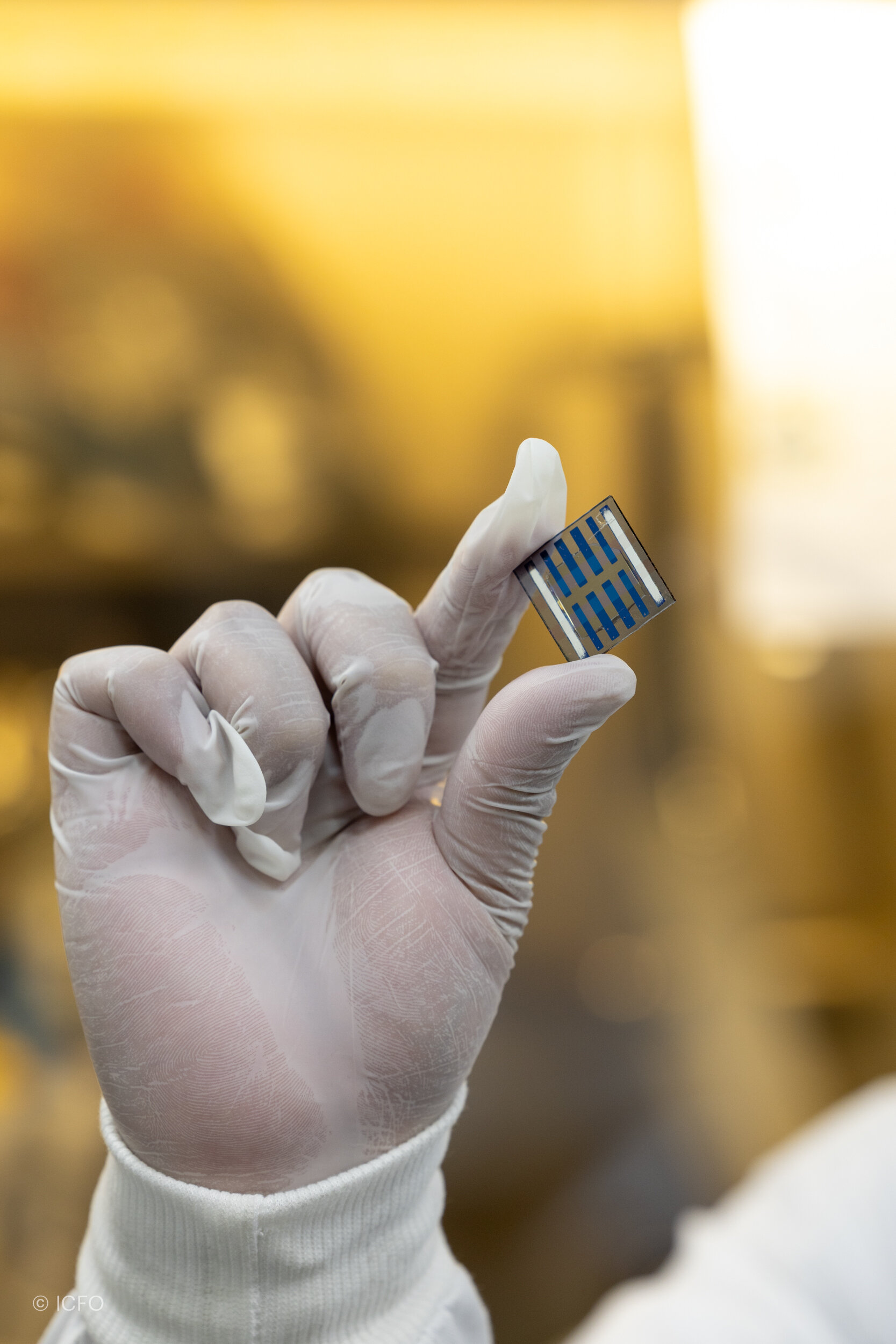
In the study, published in Energy & Environmental Science , the team used an inverted organic solar cell based on the PM6:Y6 blend and, by converting the solar cell into an optical cavity, they inhibited photon emission at large angles, thereby narrowing the emission cone.
Source link





