A research team in Italy has investigated the performance of a direct-expansion, dual-source heat pump that uses air and solar energy as heat sources and CO₂ as the refrigerant. The researchers aimed to identify optimal operating conditions and develop advanced control strategies.
“An experimental campaign was carried out under real-field conditions on a 10 kW prototype, considering both Air-Mode and Sun-Mode operation for domestic hot water production and producing a total of 307 tests,” the researchers said. “To overcome the limitations of non-uniform experimental data, artificial neural networks (ANNs) were developed to predict system performance over a wider operating domain.”
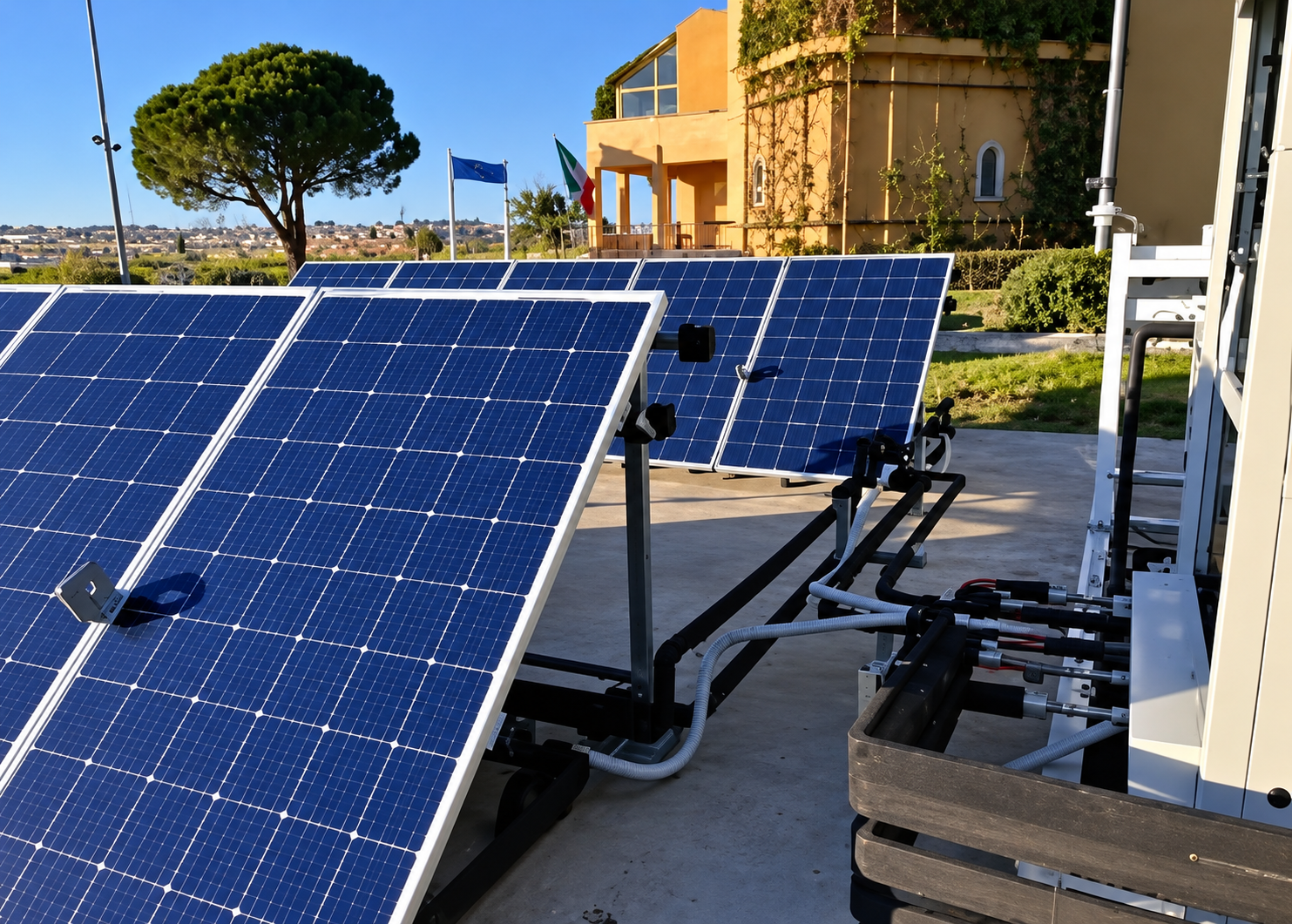
The researchers installed the 10 kW heat pump at a research center in Rome, Italy. The prototype operated either with a fan-assisted air evaporator or with CO₂ flowing through copper tubes attached to the rear of 10 photovoltaic-thermal (PVT) collectors. The collectors were south-facing and installed at a tilt angle of 48 degrees.
An additional water circuit, equipped with a 300-liter storage tank, simulated domestic hot water production. The researchers maintained the water inlet temperature at 20 C and adjusted the flow rate to achieve an outlet temperature of approximately 60 C.
During testing, the team varied the compressor frequency from 50 Hz to 70 Hz and monitored refrigerant temperatures, pressures and mass flow rates, along with solar irradiance and total heat pump electricity consumption. Measurements were recorded every 0.5 seconds and averaged over five-second intervals.
The resulting dataset comprised 164 test points in air mode and 143 in solar mode.
Source link