

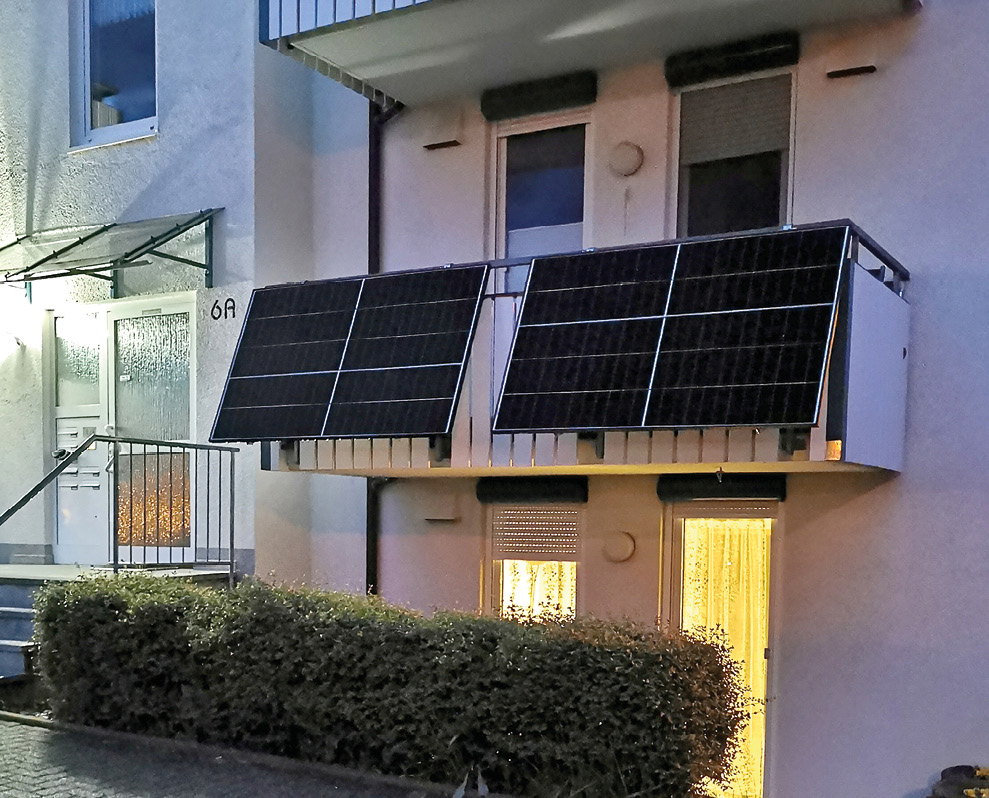
Over the next few months, competition will take care of cost parity sooner rather than later and prices in the United States are likely to eventually resemble those in Europe’s more mature plug-in solar market.
Utah became the first US state to pass legislation allowing portable solar generation devices in May 2025. Maryland, Maine, Colorado, Connecticut, Vermont, Virginia, New Hampshire have since followed. Several others are also in the process of legislating, with California, Massachusetts, New York and New Jersey at advanced stages.
Renters, farm workers and any homeowner conscious of their electricity costs are ideal targets for plug-in solar, said Bentham Paulos, senior research associate for Clean Energy States Alliance (CESA). It remains to be seen how the business model will develop in the United States, but Paulos expects it to dovetail with rooftop residential solar for the moment before it branches out as a full consumer product.
“You can buy it at the store or online, but it’s not easy to ship around big silicon solar panels,” he said. “The distribution will be important. I think, frankly, that rooftop solar installers will be the first to distribute them because they already have warehouses full of solar panels and they have trucks so they can bring the panels to people’s houses. Maybe they’ll even plug it in. Eventually, we’ll get to the point where the big retailers will have them on the shelves.”
Some people are using portable power systems with flexible solar panels that can be attached to balconies using cable ties, but most of these systems are 12 V and cannot be plugged in at home, said Paulos, adding that installation was a teething problem for European plug-in solar, too.
Source link





