

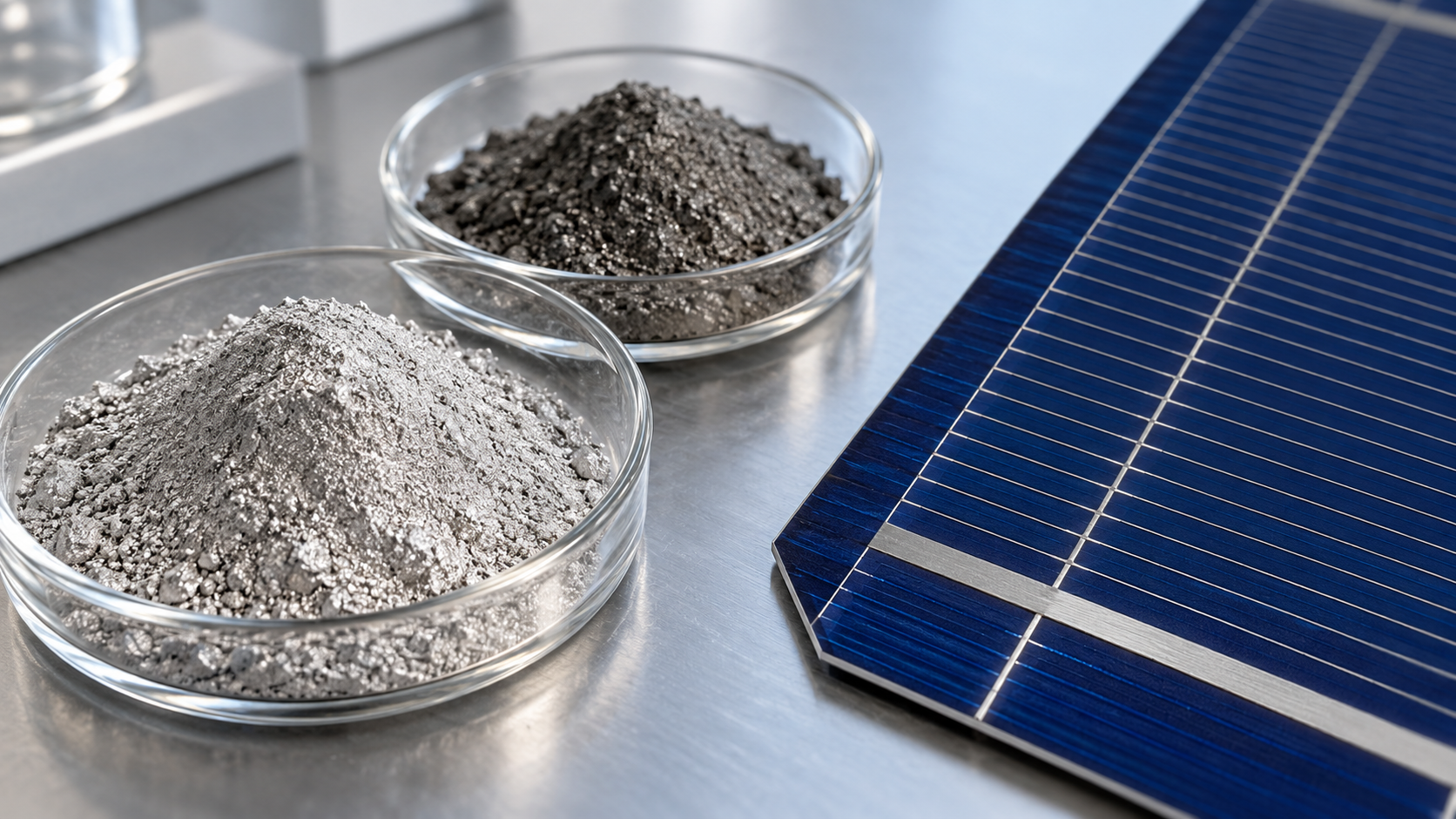
A research group in China has investigated screen-printed silver-nickel (Ag-Ni) rear contacts for tunnel oxide passivated contact (TOPCon) solar cells, assessing device performance at different nickel concentrations. The scientists found that partially replacing silver with lower-cost nickel could reduce metallization costs without significantly compromising cell efficiency.
Silver consumption has become a growing concern for the PV industry, particularly as manufacturers adopt high-efficiency cell architectures such as TOPCon and heterojunction (HJT) technologies, which rely on silver-based metallization pastes. Researchers and manufacturers have been exploring ways to reduce silver consumption through alternative contact materials, including copper-based metallization and hybrid pastes. Silver-nickel contacts represent another potential approach, combining silver’s electrical conductivity with the lower cost of nickel, although contact resistance, grid conductivity, firing compatibility, and long-term reliability remain important considerations.
The scientists noted that silver paste has become the second-largest cost component in solar cell manufacturing, while strong demand from the PV industry is putting upward pressure on global silver prices. “The development of silver-lean or silver-free metallization technologies has emerged as a critical requirement for the sustainable growth of the PV industry,” they said.
“In our study, a novel rear-side contact architecture for TOPCon solar cells uses an Ag-Ni hybrid metallization paste with different Ni contents of 6%–60%,” they added. “The primary objective was to achieve an optimal techno-economic balance between metallization cost and cell efficiency.”
The researchers fabricated TOPCon solar cells using industrial 182 mm × 182 mm precursors with a thickness of around 100 μm. They screen-printed the rear contacts using Ag-Ni pastes containing 6%, 10%, 15%, 30%, and 60% nickel by weight, alongside a reference paste containing only silver.
Source link





