This article has been reviewed according to Science X's editorial process and policies. Editors have highlighted the following attributes while ensuring the content's credibility:
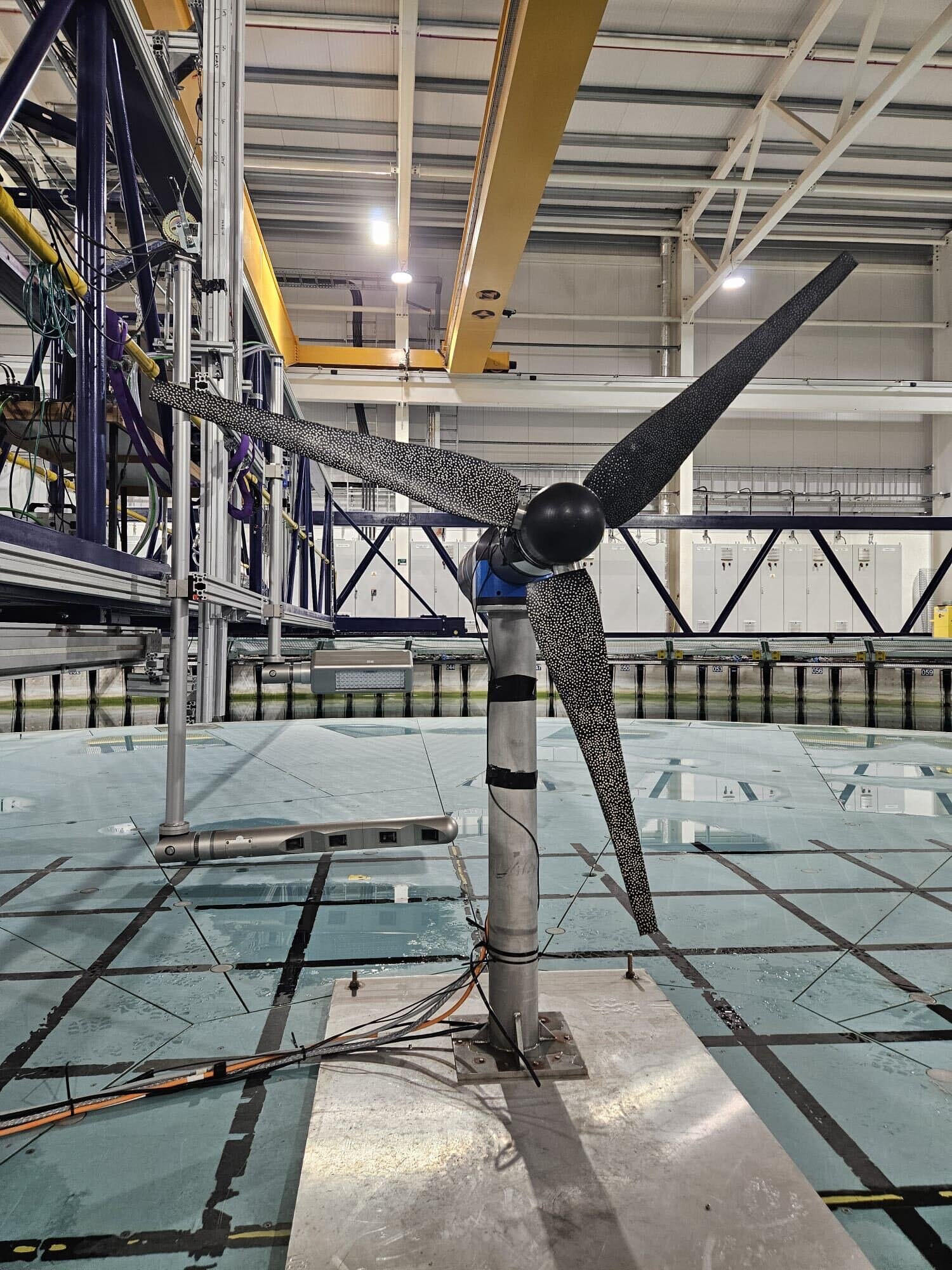
Fitting tidal turbines with flexible rubber blades could enable the machines to generate cheaper power by making them simpler and tougher, a study published in the journal Nature suggests.
Rubber blades that change shape in strong currents can generate as much electricity as today's most advanced designs, without the complex machinery they need to survive at sea, researchers say.
Their findings show the blades naturally bend to shed excess force, reducing by up to one-third the rapid swings in load that wear turbines out.
The approach could ultimately eliminate the costliest and most failure-prone parts of tidal turbines, the team says, helping unlock a clean energy source that—unlike wind and solar—can be predicted years in advance.
The U.K. aims to install 1 gigawatt of tidal stream capacity by 2035, enough to power around 1 million homes. International projections estimate that more than 300 gigawatts could be generated by tidal power worldwide by 2050.
However, fast-flowing tidal channels are among the harshest places on Earth to build a machine. Turbulence, waves and shifting currents batter turbine blades with constantly fluctuating forces, causing fatigue, shortening lifespans and leading to costly unplanned downtime.
To cope, the largest tidal turbines rely on a system of motors, sensors and bearings—known as pitch control—that twists blades away from the flow when currents become too strong. These systems are expensive, difficult to maintain underwater and a major source of breakdowns.
Source link