

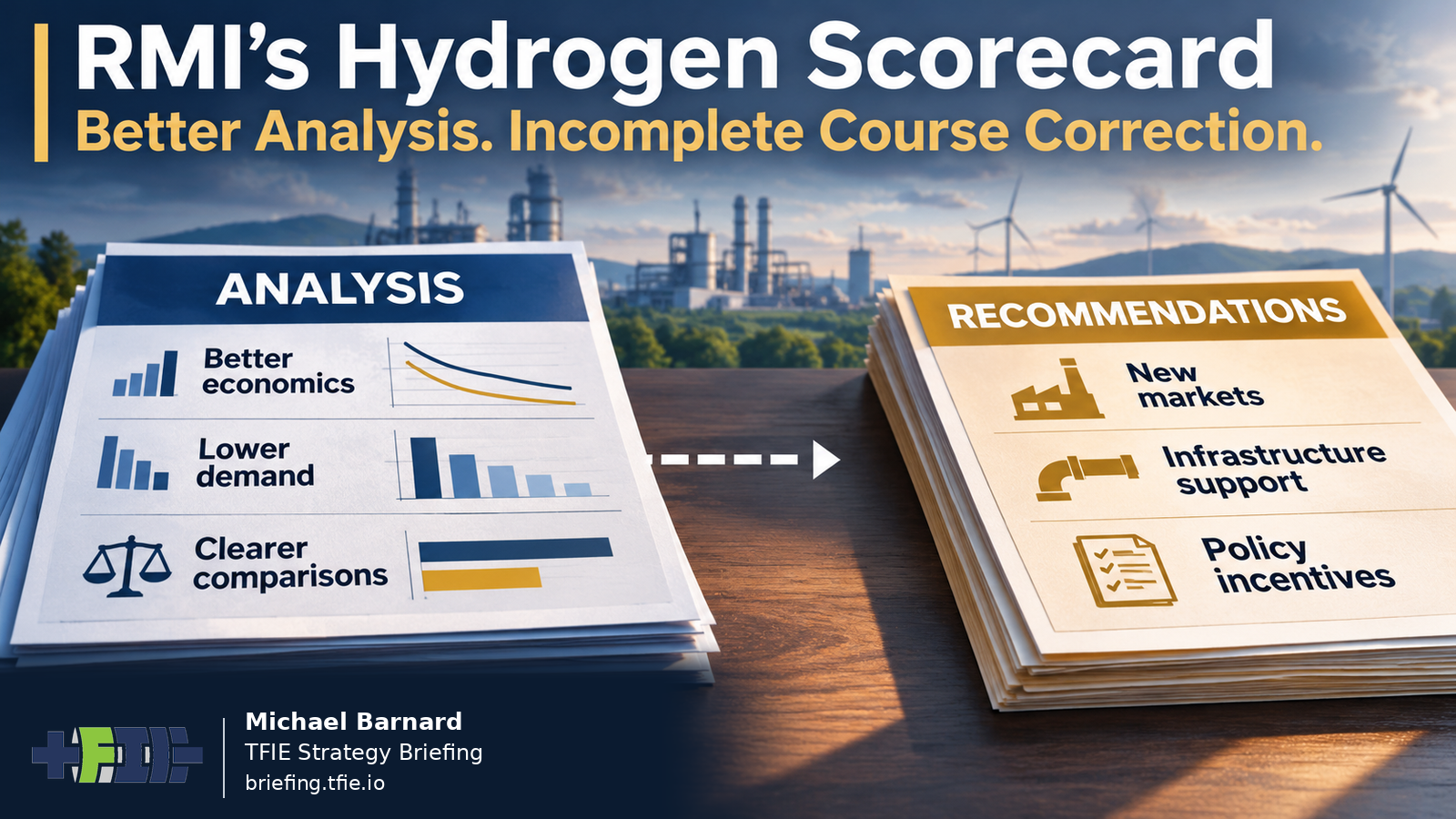
RMI has become much more realistic about hydrogen demand and competing technologies. That makes the gaps between its findings and its recommendations harder to excuse. Its latest work acknowledges that battery trucks generally have better economics than hydrogen fuel-cell trucks, that Europe needs far less hydrogen in 2030 than it originally targeted, and that low-emissions ammonia still costs substantially more than conventional ammonia. Several recommendations still seek public money to develop the very hydrogen markets the research has found difficult to justify.
I have been challenging this tension since January 2024. RMI matters because governments, investors and industrial companies use its research when deciding where to spend money. Its hydrogen program has made genuine analytical corrections. It has not made all of the accompanying strategic decisions.
Consider RMI’s February 2026 report on hydrogen trucking in India. The baseline comparisons find that fuel-cell trucks do not reach battery-electric truck ownership-cost parity through 2040, including the long-haul use case. The report also explores a much more favourable hydrogen price in an alternative sensitivity, which brings fuel-cell trucks closer to parity. Those are different findings, and the baseline matters to investment decisions today.
The report nevertheless recommends hydrogen vehicle subsidies, support for refuelling stations, production incentives and tax relief. It treats a parallel hydrogen-truck market as something to build. The case for spending public money on that market should start with evidence that a particular freight service cannot be served as well or better by batteries. The reported cost advantage of batteries does not disappear when the policy section begins.
Source link





