

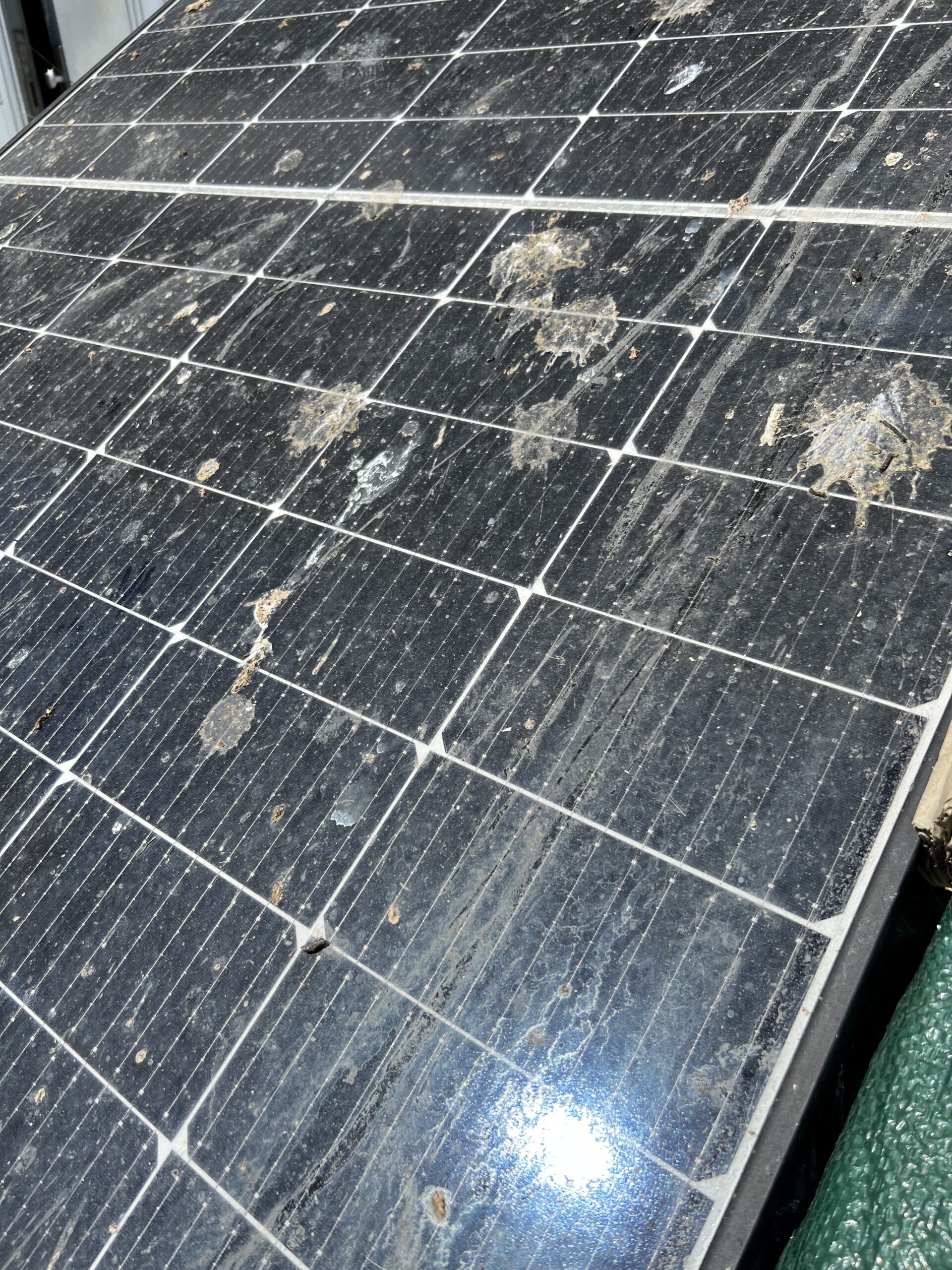
An international research team has conducted a year-long experimental study to assess the impact of bird droppings on PV system performance and has found that soiling losses stabilized after a prolonged accumulation period, remaining at consistent levels despite repeated rainfall events.
“Our paper highlights this limitation, but we cannot yet provide a solution,” corresponding author Leonardo Micheli told pv magazine. “Factors such as bird activity and proximity to nesting areas are likely to influence soiling accumulation under these conditions, but further research is needed to identify the quantitative variables that could be used to reliably model this type of soiling.”
“Our study demonstrates that a monitoring approach based on clean irradiance measurements can successfully estimate soiling losses caused by bird droppings, without the need to maintain a clean reference module,” Micheli added. “However, we also show that its accuracy depends on calibration. Furthermore, accuracy could also be influenced by operating conditions, and further validation across different sites is needed to confirm its general applicability.”
“We show that rainfall does not necessarily restore modules to clean conditions: significant soiling losses can persist even after repeated natural cleaning events,” he said. “The existence of this phenomenon has already been discussed in the literature, and our study confirms its relevance in environments affected by bird droppings, as this can be particularly difficult to remove. This challenges the common modelling assumption that rainfall effectively removes accumulated soiling and should be considered when optimizing cleaning schedules and costs.
Source link





