

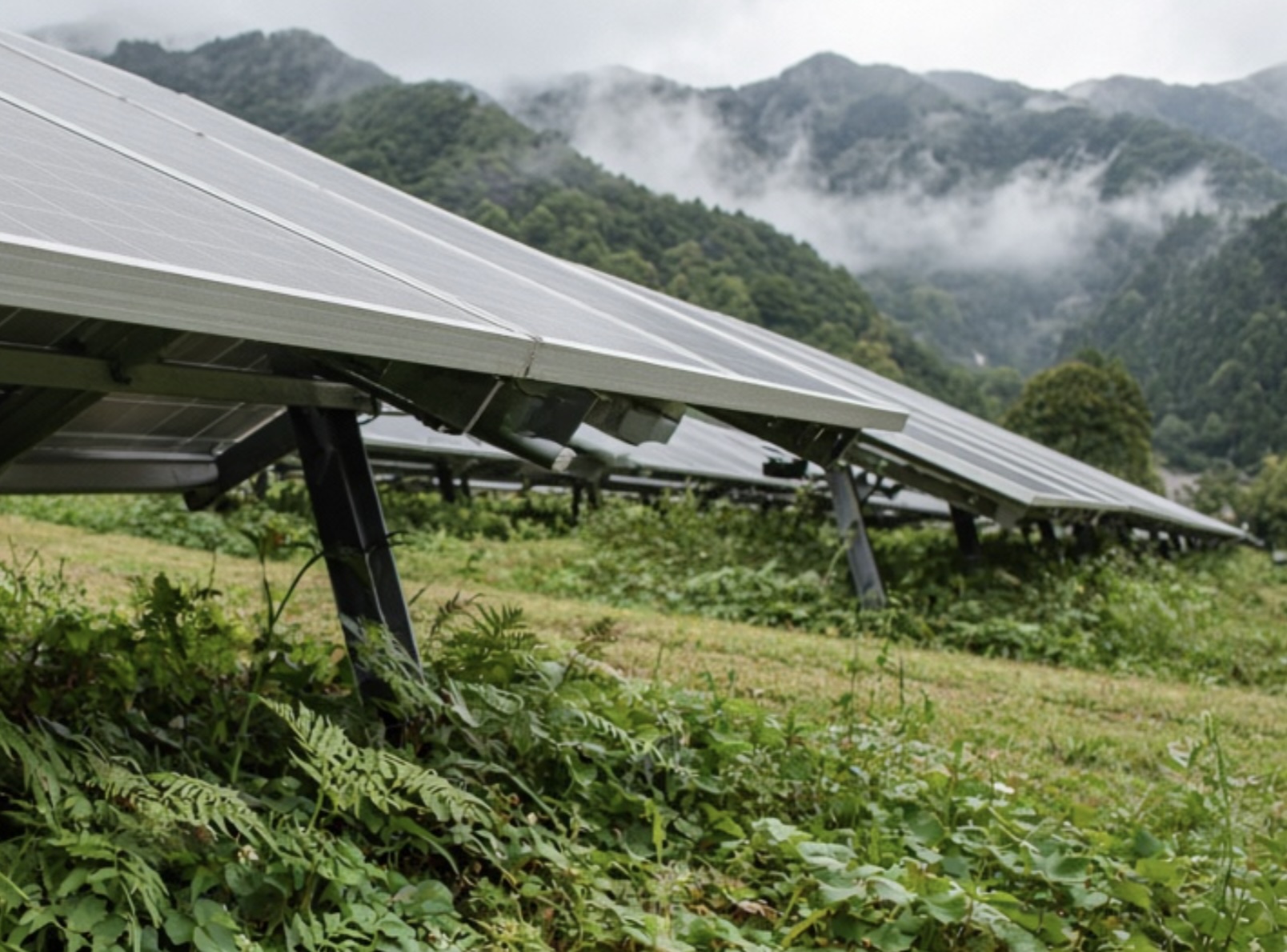
A solar plant built on a former golf course in Japan’s heavily forested Gifu prefecture has developed diverse native vegetation under its panels without seeding or herbicides, according to a new study.
Japanese researchers Miharu Nakatani, Akira Noda and Takeshi Osawa surveyed the 169-hectare, 55 MW plant in the city of Gujo, operated by Pacifico Energy since July 2019. Apart from a commercial seed mix sown on exposed soil before operations began, the site has been managed only by mowing twice a year.
The team recorded 211 plant species from 54 families across 60 sample plots in summer and fall 2024, comparing five settings: under panels near the forest, under panels near open grassland, between panel rows, open grassland, and the surrounding forest edge.
They said that they did not find any significant difference in species richness or diversity between the five settings. However, species makeup did differ.
Vegetation under the panels resembled that of the forest edge, including shade-tolerant ferns, and differed most from the open grassland, where Miscanthus – a tall, fast-growing perennial grass – dominated. Non-native species covered less ground than native species in every setting, particularly under the panels, said the scientists.
The researchers attribute the result to two key factors. Panel shade filtered out sun-loving grassland species and favored forest plants, and the plant’s intricate layout on steep terrain kept every point within about 200 meters of the forest, allowing seeds to disperse throughout the site. Even under-panel plots farther from the edge, about 85 meters on average, resembled forest-edge vegetation.
Source link





