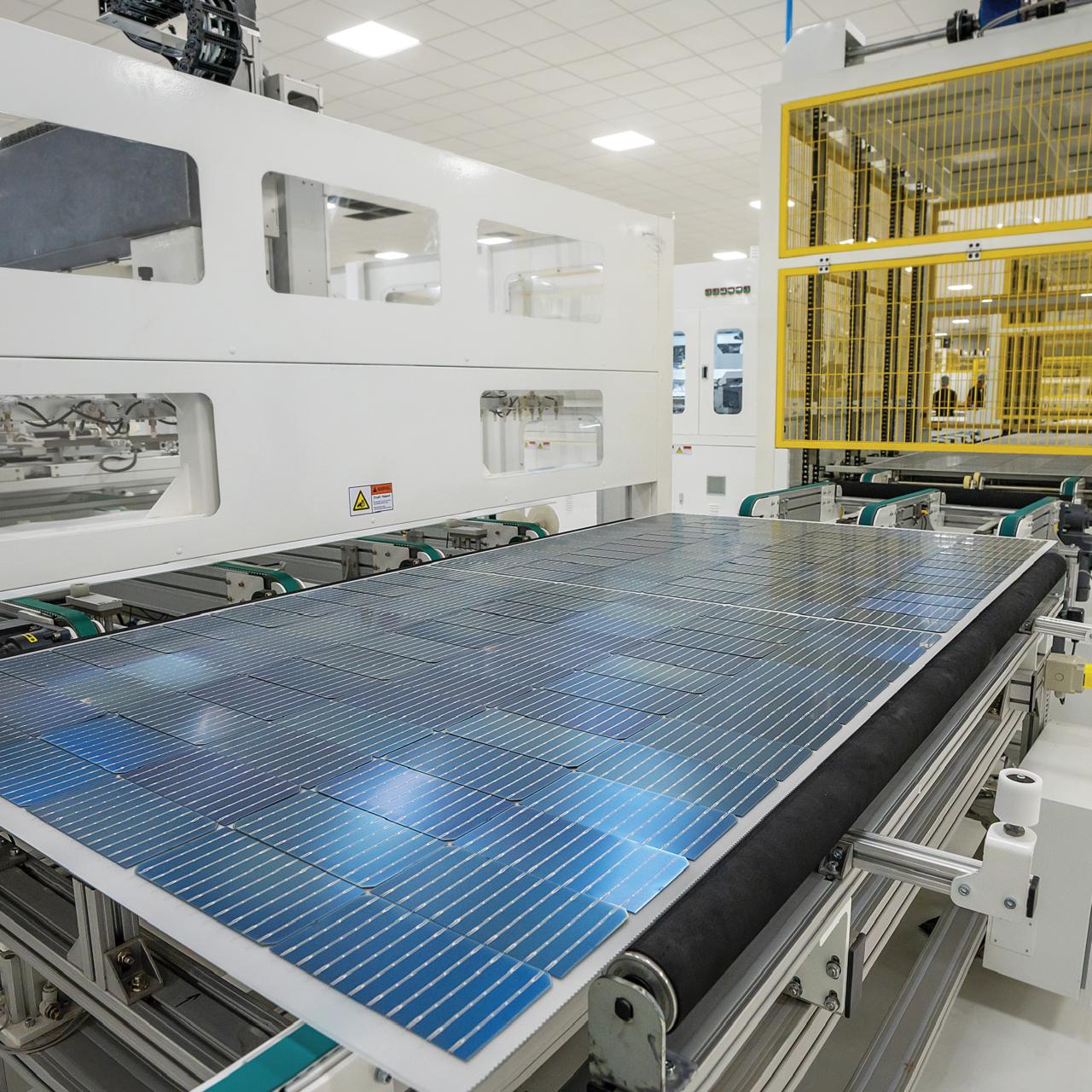
A research team in China has developed a novel preheating-assisted mechanical polishing process to separate ethylene-vinyl acetate (EVA) encapsulants from end-of-life photovoltaic modules. The researchers built an adjustable experimental platform to systematically investigate the effects of key processing parameters on EVA removal and recovery.
“The process efficiency, in terms of EVA removal rate and recovery rate, will be systematically evaluated by investigating the effects of three key parameters: preheating temperature, polishing head speed, and tool penetration depth,” the researchers said. “An experimental production line platform has been constructed to enable precise control of these variables.”
The researchers used decommissioned monocrystalline silicon modules consisting of front glass, EVA encapsulant, silicon solar cells, rear EVA encapsulant, and a polymer backsheet. After removing the aluminum frames and junction boxes, they heated the backsheets to 250 C and peeled them off with a scraper to expose the rear EVA layer.
They then processed the modules using a custom-built, three-axis computer numerical control (CNC) polishing platform equipped with resistance heating and force-feedback systems to maintain a constant load.
The experiments covered preheating temperatures ranging from 150 C to 250 C, polishing head speeds of 500 rpm to 4,000 rpm, and tool clearances of 0 mm to 0.5 mm. The researchers calculated EVA removal rates and recovery rates based on mass measurements and processing times.
They also used thermal analysis to identify suitable processing temperatures, while microscopy and spectroscopy were employed to assess surface damage, contamination, and the chemical integrity of the recovered EVA. All experiments were performed in triplicate.
Source link