A research team in Germany has investigated whether compressive stress relaxation measurement (CSRM) can be used to monitor polymer degradation in aging photovoltaic modules. The technique is typically used in manufacturing quality control to assess the degree of encapsulant cross-linking after lamination.
“This publication uses the CSRM not only for lamination control, but also to monitor the mechanical response of the mini-modules’ rear side,” the researchers explained. “To achieve a higher resolution and sample throughput, the cross-linking density will be used to calibrate the CSRM. The influence of encapsulants and backsheet degradation on the CSRM during weathering is of interest. Therefore, the degradation of the encapsulant and the backsheet will be decoupled.”
CSRM is a non-destructive technique commonly used to assess encapsulant curing after PV module lamination. It involves pressing a tip into the rear surface of a module and measuring how the force decreases while the indentation depth remains constant. The response reflects the mechanical properties of both the encapsulant and the backsheet.
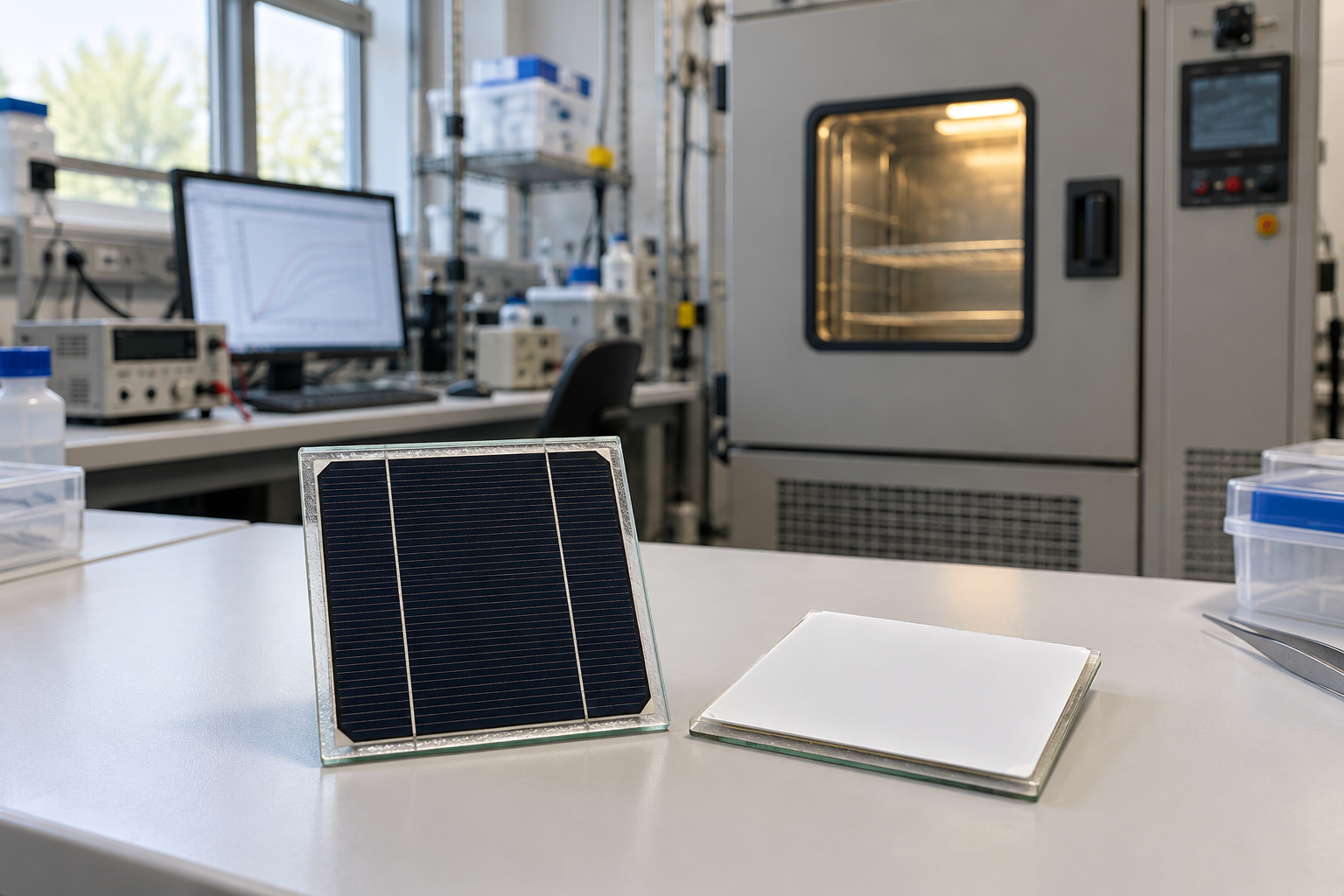
To evaluate CSRM as a method for monitoring aging, the researchers fabricated 200 mm × 200 mm mini-modules incorporating passivated emitter and rear contact (PERC) solar cells, ethylene vinyl acetate (EVA) encapsulants, and polyethylene/polyethylene terephthalate (PET) backsheets. They varied lamination times at 155 C to achieve different degrees of cross-linking.
For each CSRM measurement, they heated the test location to 89 C, pressed a 4 mm steel tip approximately 100 µm into the module’s rear surface, applied a force of less than 20 N, and recorded the decline in force while holding the tip in place.
Source link