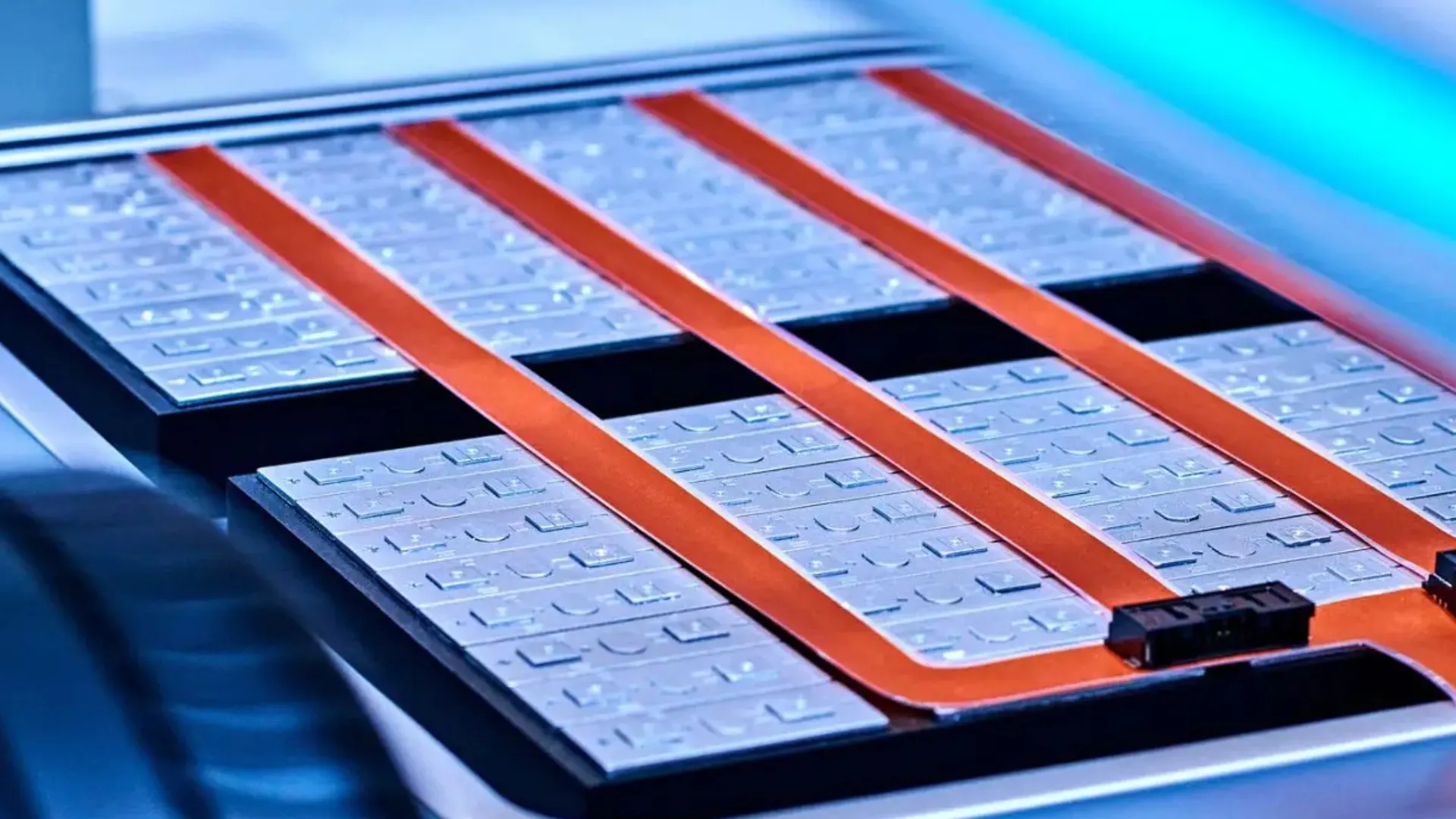
A team at The Hong Kong University of Science and Technology (HKUST) has created a new battery design that could make future energy storage both lighter and longer-lasting. Their anode-free lithium metal battery reached an energy density of 467 Wh/kg (212 Wh/lb) in a pouch cell, bringing its performance closer to that of current commercial batteries.
The full coin cell retained 90 percent of its capacity after 200 charge-discharge cycles. The results come from a strategy that modifies critical battery interfaces to improve lithium deposition and stabilize the internal layers that govern battery performance.
Led by Professor Shao Minhua, the research team developed the approach to address persistent problems that limit the lifespan and energy density of anode-free lithium batteries.
Lithium metal is a promising battery material because it has a high specific capacity and a low reduction potential. Anode-free batteries use a bare copper current collector instead of a separate anode to store lithium, reducing inactive material and simplifying manufacturing.
However, conventional copper surfaces do not readily attract lithium. This can cause lithium to deposit unevenly during charging, encouraging the growth of dendrites, which are needle-like structures that can damage battery components and create safety risks.
Another problem is the solid electrolyte interphase (SEI), a layer that forms naturally on the electrode surface. When this layer becomes unstable, it can interfere with lithium-ion movement and shorten the battery’s life.
To solve these problems, the researchers added an AMI additive with silver ions and anions. This additive starts several processes after the battery is put together, helping to change the copper surface and control how lithium is deposited.
Source link