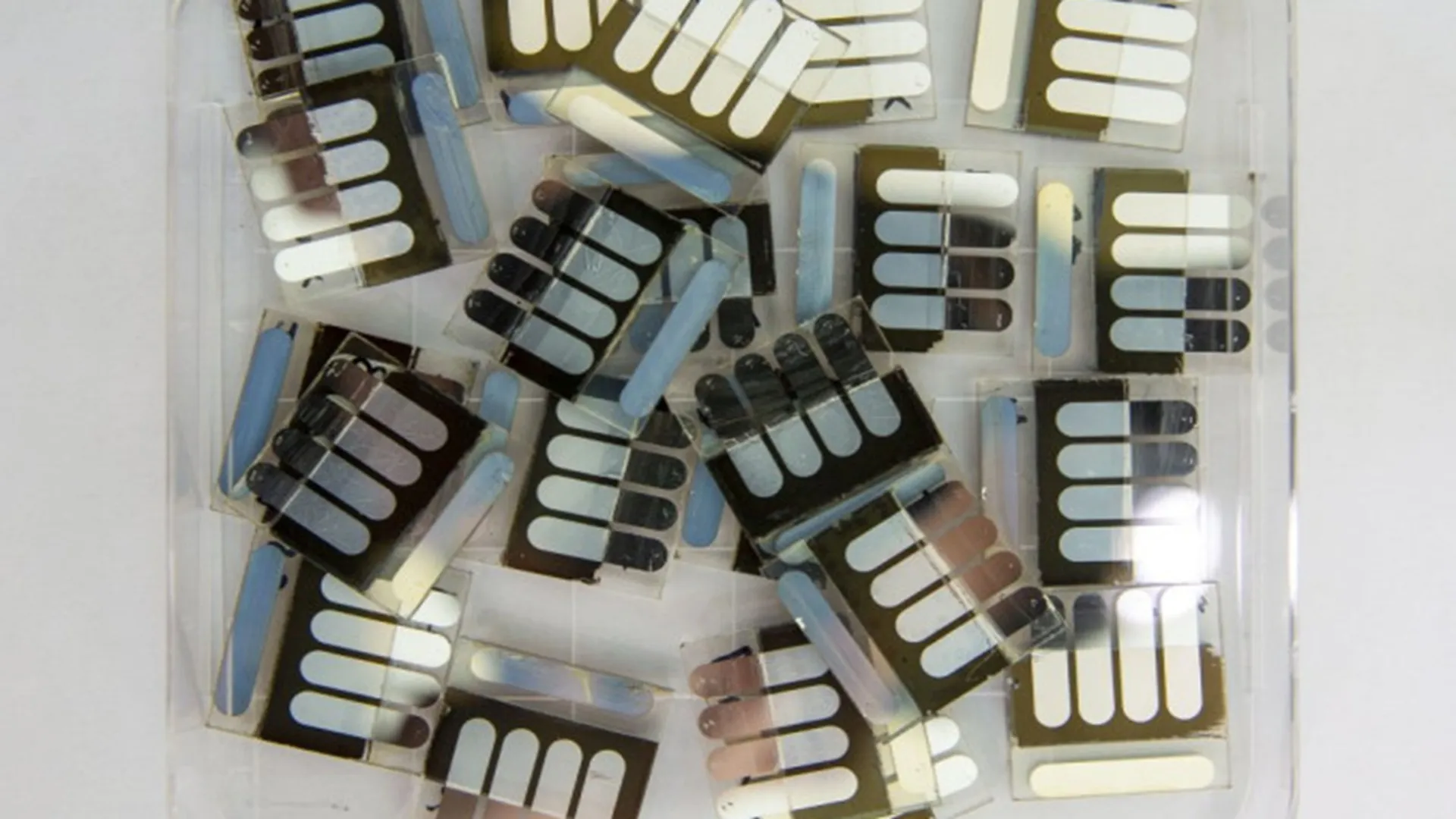
A new catalytic process developed by South Korean researchers could extend the lifespan of perovskite solar cells by preserving 95 percent of their initial efficiency after 1,000 hours of testing.
The technology was invented by a group of scientists at the Daejeon-based Korea Institute of Energy Research (KIER). The effort was led by SeJin Ahn, PhD, a faculty member and principal researcher at the institute. The team also collaborated with a group led by Dong-Seok Kim, PhD, at the Ulsan National Institute of Science and Technology (UNIST).
For the initiative, the cells were tested at temperatures of 185 degrees Fahrenheit (85 degrees Celsius) and 85 percent relative humidity. Still, even after 1,000 hours of exposure to extreme heat and humidity, they retained 95 percent of their initial power conversion efficiency.
According to the team, the new process could help perovskite solar cells compete with traditional silicon panels. “By solving the chronic lifetime issue, it will become an important milestone toward the commercialization of perovskite and tandem solar cells,” Ahn emphasized.
Perovskite solar cells are thin-film photovoltaic devices, which rely on perovskite materials to convert sunlight into electricity. They have attracted a great deal of attention in recent years because of their high energy conversion efficiency and potential for a low-cost manufacturing.
They are also cheap, easy to produce, and lightweight, which makes them suitable for flexible solar panels. But their lifespan is limited ranging from two to 10 years, compared with 25 to 30 years for silicon panels . They are also particularly vulnerable to heat and moisture, which can accelerate their degradation.
Source link