Researchers at Cornell University have developed a method that cuts a critical stage of lithium-ion battery manufacturing by up to 60%, potentially saving large factories as much as $100 million in production costs.
Developed in collaboration with New York-based battery company Charge CCCV (C4V), the approach uses real-time measurements to monitor chemical changes inside batteries during their initial charging and discharging cycles.
The process, known as battery formation, creates protective layers inside a battery that influence its performance and lifespan. It is among the most expensive and time-consuming stages of lithium-ion cell production.
According to the researchers, formation accounts for roughly one-third of battery production costs and occupies about a quarter of a manufacturing facility’s floor space.
By accelerating this stage, manufacturers could reduce production bottlenecks, free up factory space and lower overall electricity consumption by an estimated 10% to 15%.
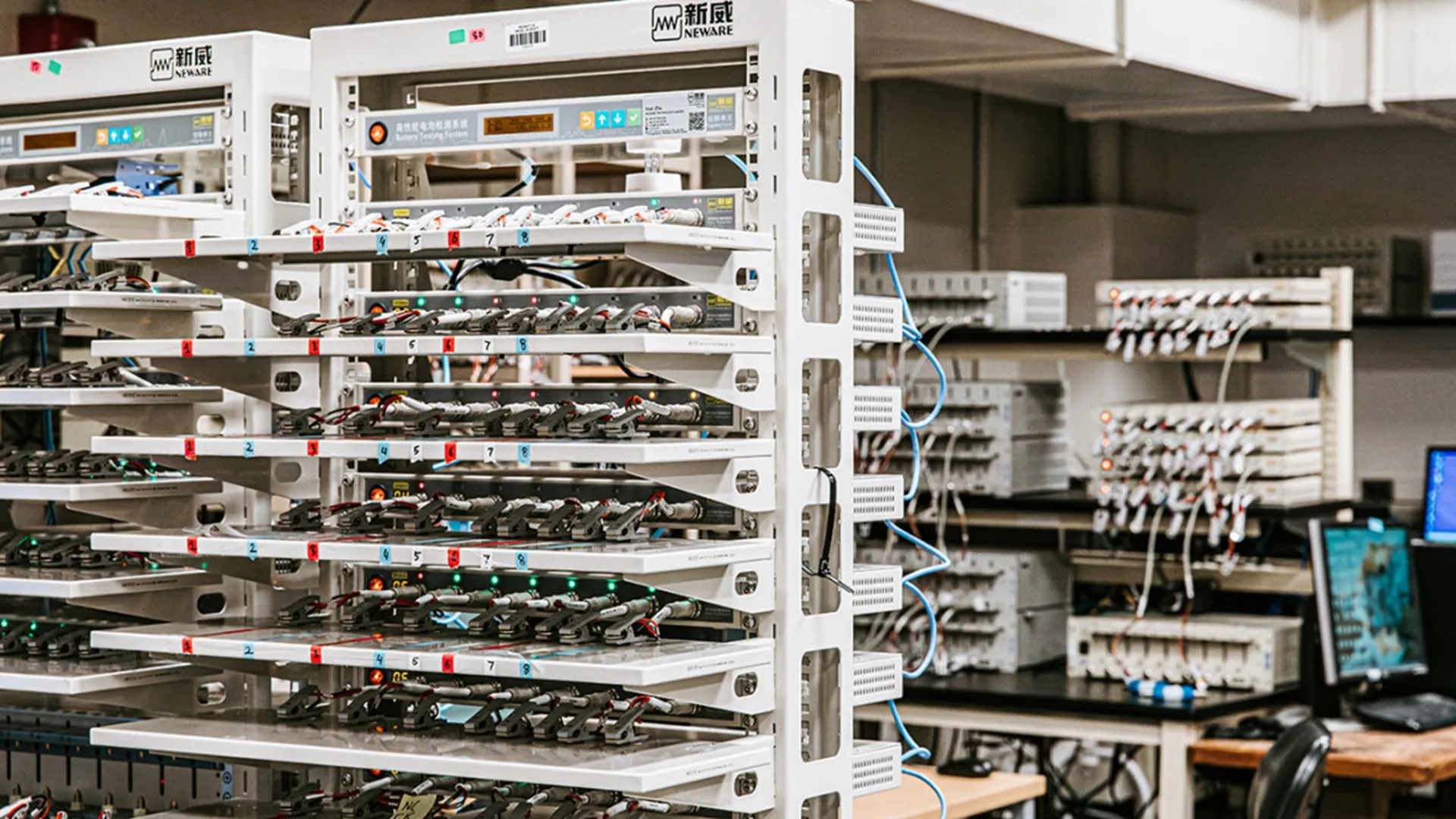
Battery formation typically involves repeated charging and discharging cycles under carefully controlled conditions. These cycles help establish protective interfaces between the electrodes and electrolyte.
However, manufacturers have limited visibility into how these layers develop during the process. Determining whether a particular formation protocol will maintain long-term battery performance can require months or years of testing.
“Evaluating formation processes is typically very trial and error,” said Vibha Kalra, a professor of chemical engineering at Cornell and the study’s principal investigator.
“It can take months to years to effectively evaluate long-term performance because you’re letting the battery run for thousands of cycles.”
To address this limitation, the researchers combined two diagnostic techniques that observe batteries while they operate.
Source link