This article has been reviewed according to Science X's editorial process and policies. Editors have highlighted the following attributes while ensuring the content's credibility:
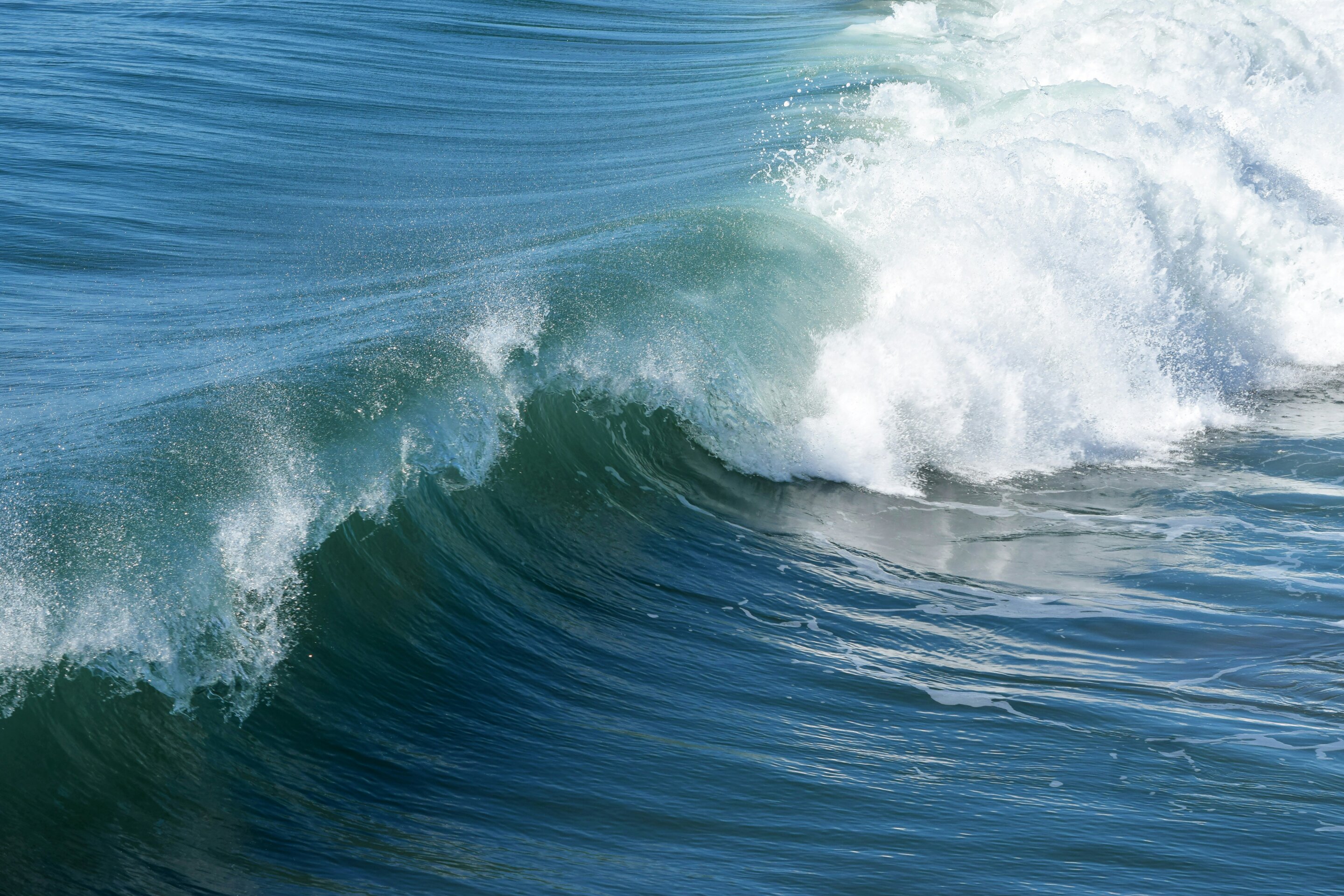
Rising tides and rolling waves release massive amounts of energy from the seas and oceans every day. Attempts to harness this energy are nothing new: For decades, engineers have been building tidal power plants, marine turbines and wave energy systems to use the mechanics of water to produce electricity. But adoption of such technology has been marginal.
According to the International Renewable Energy Agency, the installed capacity of marine energy production worldwide is around 500 megawatts. For comparison, the equivalent figure for wind power is 1,100 gigawatts—or 2,200 times higher.
There are also other, less evident ways to produce energy from water: One is the salinity difference between saltwater and freshwater, and another is the evaporation that occurs at the surface of seas and lakes. Such natural phenomena are continuous and can be found everywhere. Researchers have long known how to describe them using physics—but concrete applications are scarce. At EPFL, two research groups, each with its own approach, have taken major steps forward in developing systems for generating renewable marine energy at a nanometric scale.
Osmotic power , also known as blue energy, is one of the promising options being explored. It can be produced anywhere freshwater comes into contact with saltwater, such as where a river pours into an ocean. In theory, osmotic power has huge potential—over 15,000 TWh per year. But in practice, formidable technical constraints mean that only around 600–2,000 TWh per year of energy can be harnessed, or between France's annual electricity demand and that of India.
Source link