
This article has been reviewed according to Science X's editorial process and policies. Editors have highlighted the following attributes while ensuring the content's credibility:
As mountain glaciers retreat in the face of a warming climate, glacial lakes are expanding, increasing the risk of glacial lake outburst flood events that cause damage and destruction to communities downstream. However, harnessing the power of this excess water could both provide a renewable energy source for these communities and help reduce flood risks.
The Poiqu River (also known as Sun Koshi) basin spans approximately 2,150 square kilometers of the China-Nepal border, with 106 glacial lakes spread throughout its basin. Glacier area shrank by 19% between 1976 and 2017, while the total area of glacial lakes increased by about 110% between 1964 and 2017. The basin's steep terrain and substantial water volume suggest that many of these lakes that can put downstream communities at risk could also offer benefits.
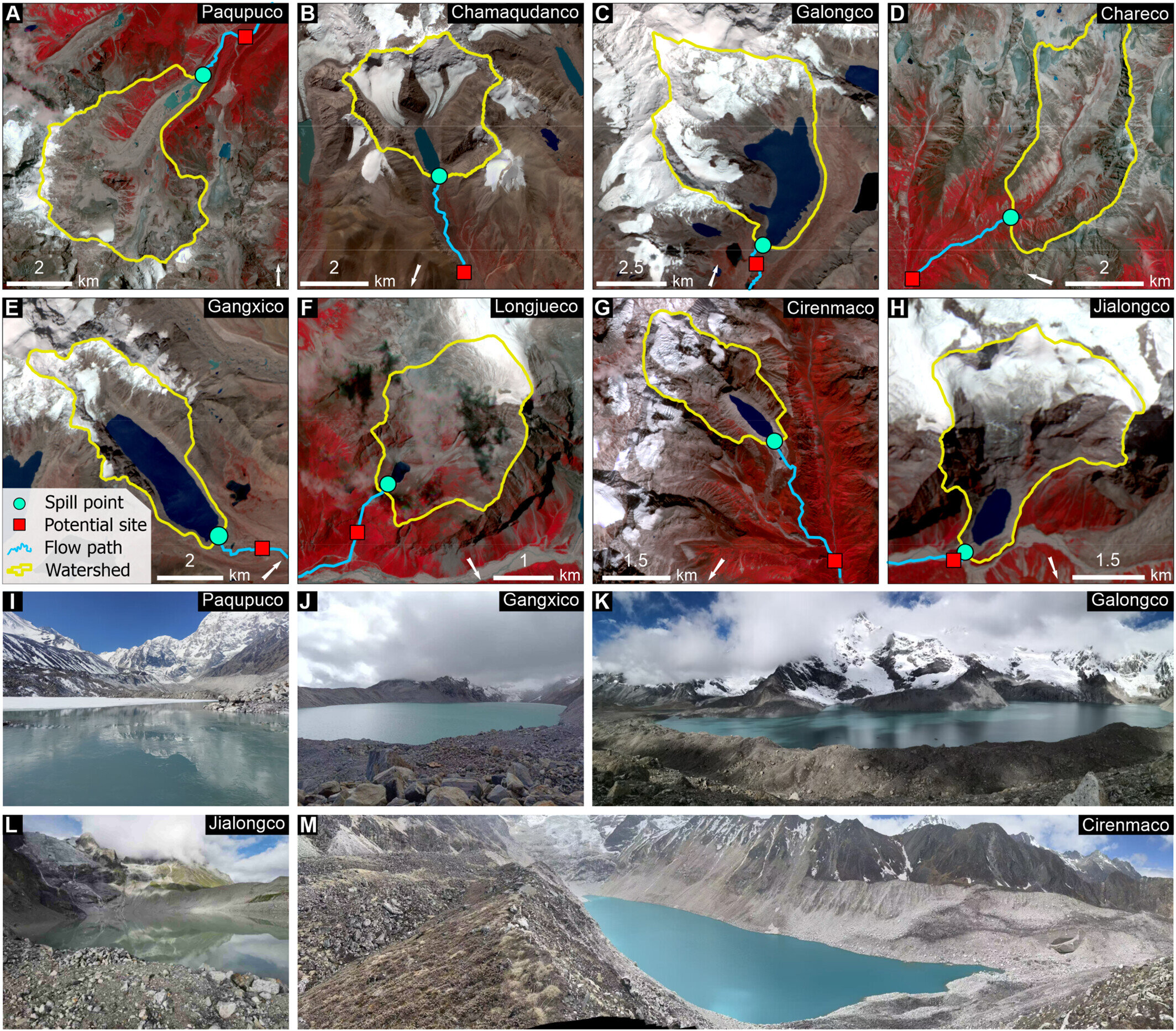
Previous studies of glacial lake expansion tend to focus on the hazards melting glaciers pose. In an article published in Water Resources Research, Jiyao Zhu and colleagues assessed the potential of 37 glacial lakes in the Poiqu River basin. Using climate projections and estimates of how water moves in and out of the lakes as well as elevation differences between the lakes and the surrounding terrain, the researchers explored how much electricity the lakes could generate and which sites might be suitable for future development.
Researchers mapped how water flows into and out of each lake, calculating the annual water budget through four means: glacier runoff, nonglacier runoff, precipitation, and evaporation.
Source link





