
This article has been reviewed according to Science X's editorial process and policies. Editors have highlighted the following attributes while ensuring the content's credibility:
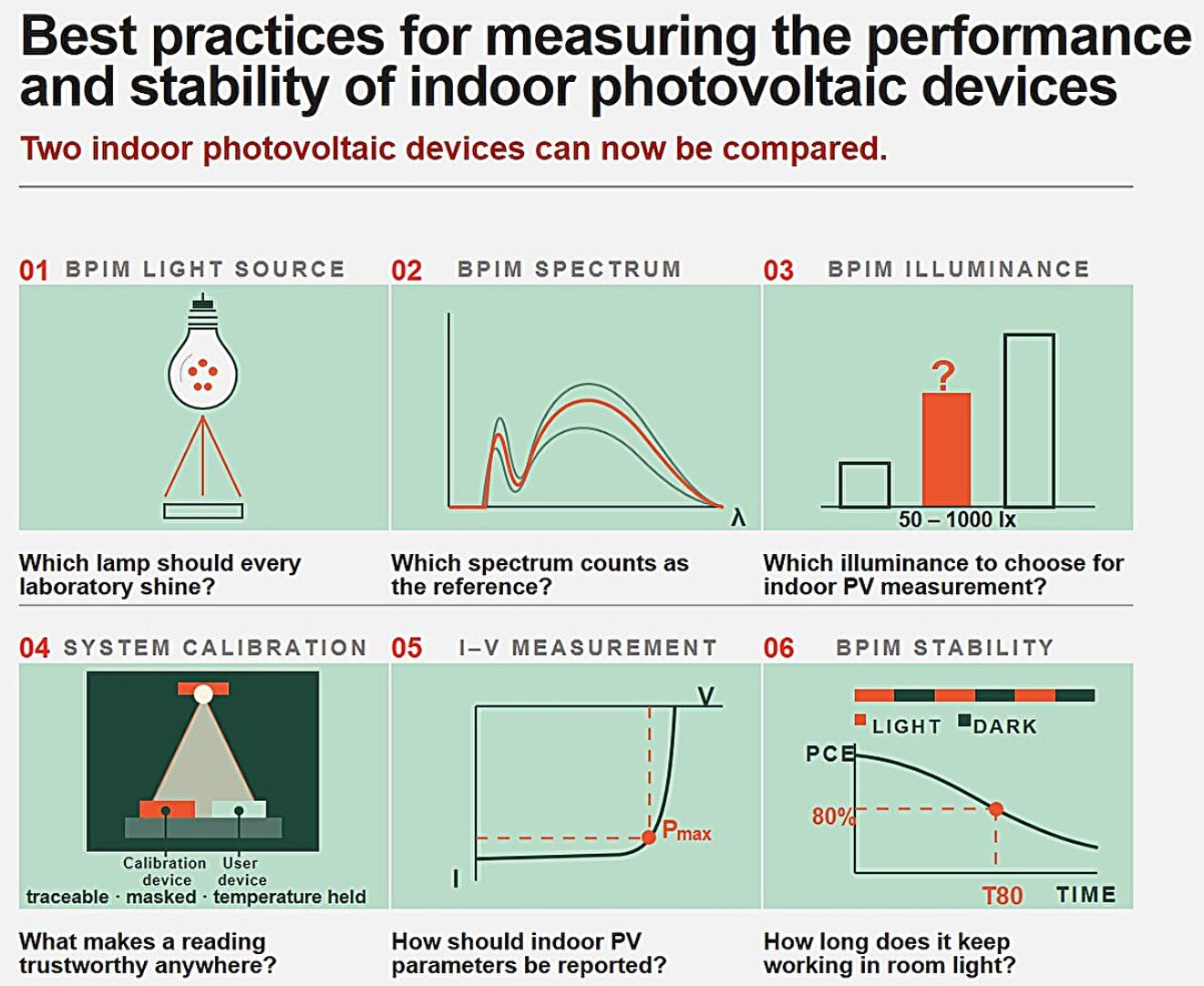
Indoor photovoltaics (iPV) converts light from LEDs and fluorescent lamps found in homes and buildings into electricity, offering a route to self-powered sensors, remote controls, wearables and the tens of billions of connected devices expected to make up the internet of things (IoT). Whereas solar cells have had clear standards for measuring and reporting performance and stability outdoors under the sun, their use under indoor lighting has lacked a comparable consensus baseline standard.
Differences in light sources, intensities and testing conditions between laboratories have made reported efficiencies, output power and stability benchmarks difficult to compare, with performance figures for nominally similar devices varying by large margins. This inconsistency slows the transition of both emerging and conventional indoor PV technologies from research and development to commercially viable products. Accelerating the development of baseline standards and protocols for measuring and reporting the performance and stability of iPV has become important.
An international collaboration spanning 73 researchers across 63 organizations, including universities, research centers, industry (10 of these) and standardization bodies, has published a consensus set of best practices for measuring and testing indoor photovoltaic (PV) devices in the journal Nature Energy . The study , coordinated by professor Thomas M. Brown and Dr. Abhisek Chakraborty of the Centre for Hybrid and Organic Solar Energy (CHOSE) at the Department of Electronic Engineering, Tor Vergata University of Rome, provides the first field-wide consensus statement on how to characterize both performance and stability of photovoltaic cells designed to harvest energy from indoor light.
Source link





