
This article has been reviewed according to Science X's editorial process and policies. Editors have highlighted the following attributes while ensuring the content's credibility:
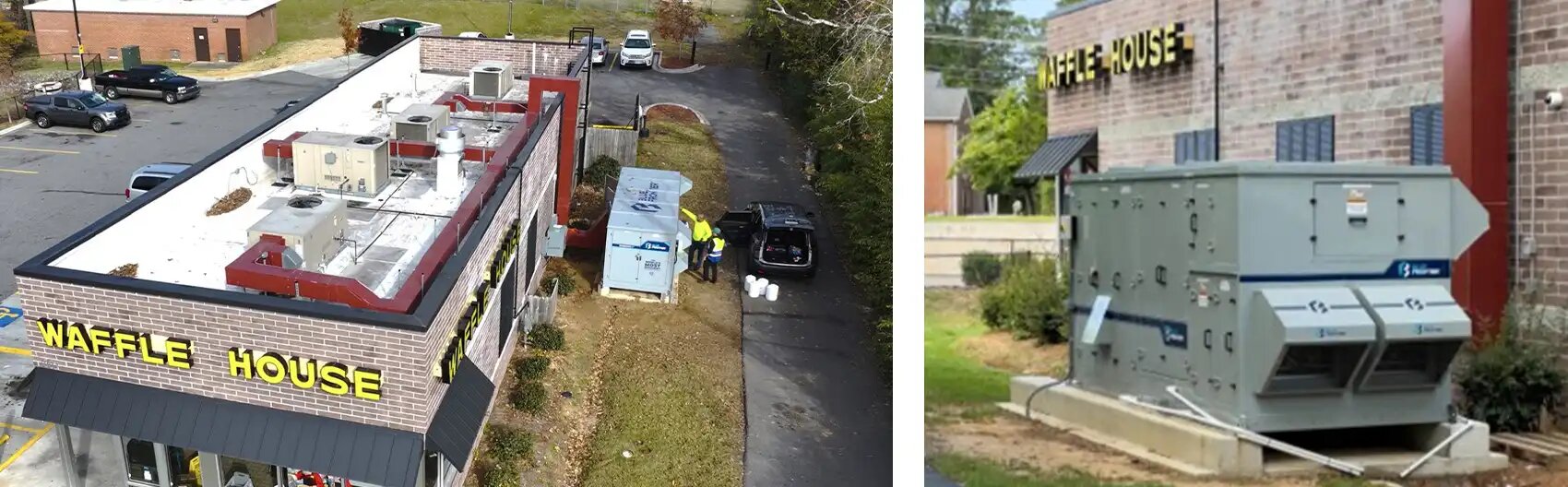
In July 2025, a team of technicians walked into a Waffle House in Macon, Georgia. That month, peak temperatures hovered around 92 degrees Fahrenheit (33 degrees Celsius). In the restaurant's kitchen, where cooks fried patty melts, hash browns and waffles on an oil-slick grill, temperatures could feel just as hot, if not hotter.
The cooks kept sizzling while the technicians installed a machine out back and turned it on. Within minutes, the cooks came out. "What did you do?" they asked. "This is the first time we're not sweating in the middle of summer."
That Macon Waffle House test was the first real-world pilot for a new kind of air-conditioning system co-invented by researchers at the National Laboratory of the Rockies (NLR) and the startup Blue Frontier.
Blue Frontier's air-conditioning system can run on far less electricity and cools and dehumidifies independently, which makes it quicker and less energy-intensive to convert hot, sticky air into comfortable cool. The invention can even store energy, so it can power itself during the hottest summer afternoons—even sweaty July days in Georgia—to avoid high energy prices and help prevent grid overloads and blackouts.
"It's a complete rethinking of how we condition air," said Eric Kozubal, a senior engineer at the NLR and one of the system's co-inventors.
That pilot was successful, both physically for those hot cooks and statistically: The system consumed 40% less energy than the building's previous air conditioner and cut operating costs by 65%, in part due to an 89% reduction in power use during peak grid hours when electricity costs are highest.
Source link





