
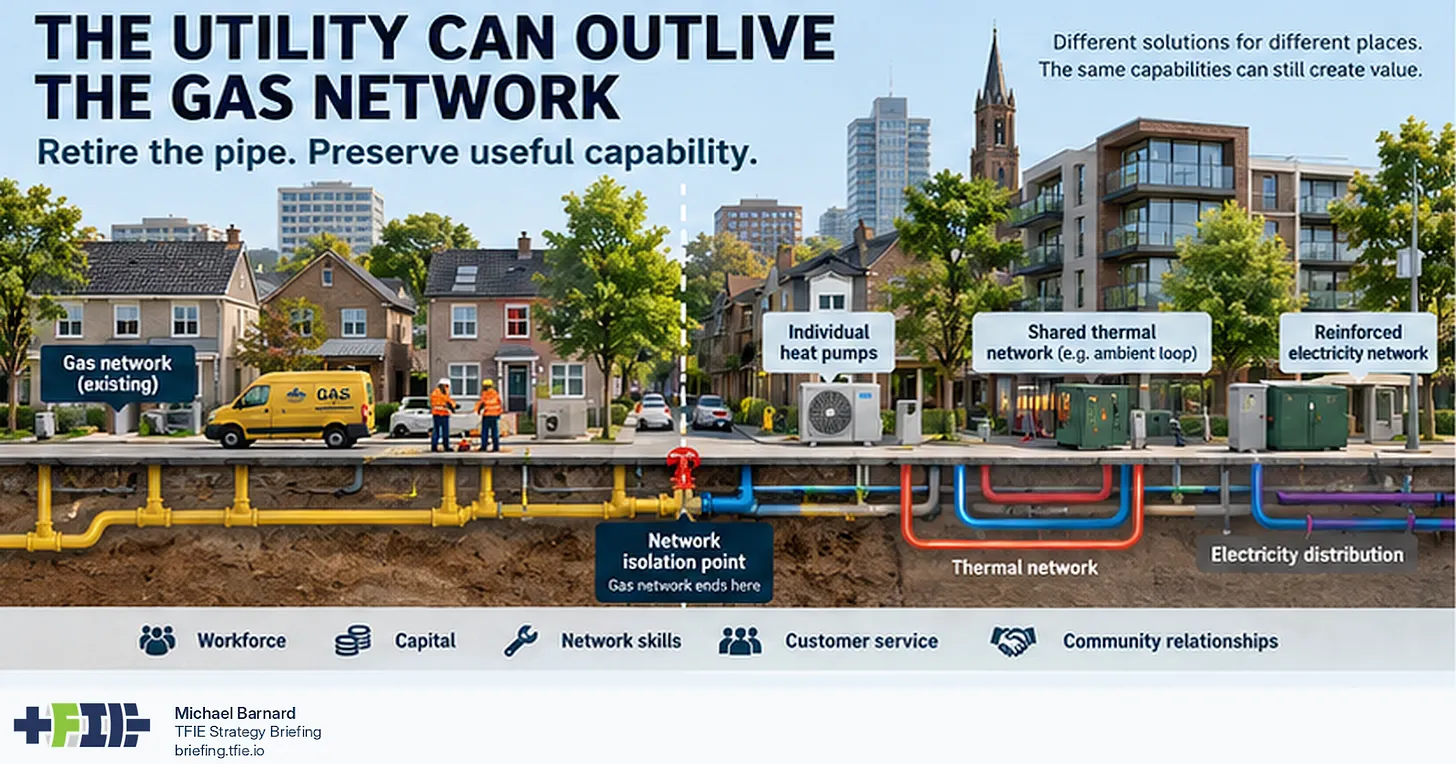
Gas utilities have a structural problem in an electrifying economy. Customers can stop using gas one building at a time, while most of the physical network remains in service until enough neighboring customers have left for a section of pipe to be shut down.
That distinction matters more as heat pumps and electric appliances spread. Falling gas demand does not immediately eliminate inspections, pressure equipment, emergency response or replacement spending. If customers disappear randomly across a service territory, a shrinking customer base can end up supporting much of the old infrastructure.
I argued in 2023 that regulators would eventually have to treat this as a geographic problem rather than simply forecasting declining gas demand. The newer development is that this is beginning to show up in actual utility-planning processes.
I recently revisited the larger strategy in Gas Utilities Need A Future Beyond The Gas Network, including what three more years of evidence have taught us about retiring gas infrastructure without trapping the remaining customers or giving incumbent utilities ownership of whatever comes next.
California is now putting some of that logic into regulation. Its SB 1221 process requires gas utilities to identify planned maintenance and replacement work and allows targeted neighbourhood projects where zero-emission alternatives can cost less than continuing to repair or operate the gas system. The state has designated 151 initial priority neighbourhood zones and created a programme that can approve up to 30 pilots without unanimous property-owner participation. The first utility applications are due in April 2027.
Source link