

The Fraunhofer Institute for Solar Energy Systems (Fraunhofer ISE) has evaluated high-temperature heat pumps designed to supply process steam at temperatures of up to 160 C and pressurized hot water, as well as the performance of five large-scale heat pumps integrated into district heating networks. The results show that these technologies can achieve their target operating conditions under real-world conditions, provided that components, hydraulic integration, control systems and operating strategies are properly designed and sized.
The research focuses on two applications for large-scale heat pumps: decarbonizing industrial heat supply and replacing fossil fuel-based heat generation in district heating networks. In both cases, performance depends on the interaction between the heat source, refrigerant, heat exchangers, hydraulic system and operating conditions. Fraunhofer ISE said that simply scaling up components designed for refrigeration or building heating, ventilation and air conditioning (HVAC) systems is insufficient.
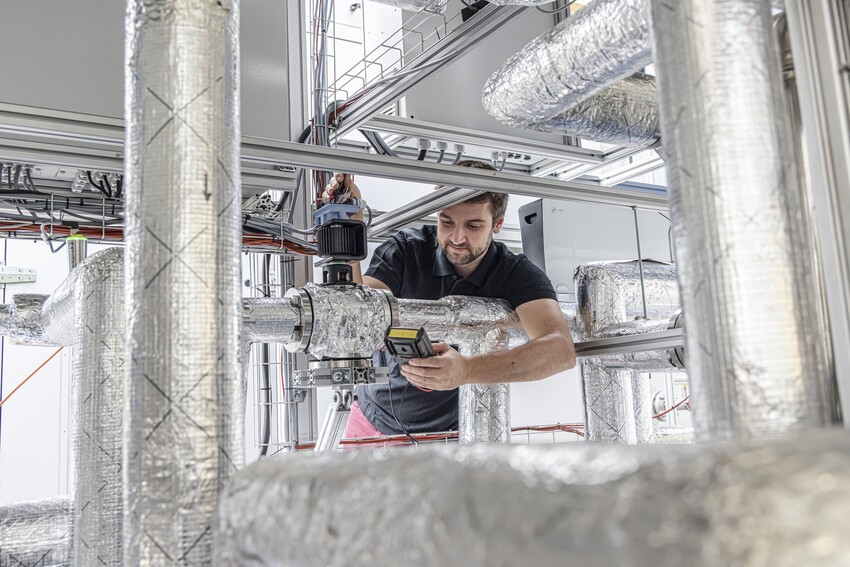
As part of the FernWP research project, which focuses on supplying industrial and district heating with heat pumps as an alternative to coal-fired heat generation, the institute has developed a test rig to characterize high-temperature systems operating at up to 160 C. The aim is to combine the development of thermodynamic concepts with component validation and the design of systems tailored to industrial operating conditions.
Testing has focused on heat pumps using butane as a refrigerant. Given its flammability, the research also addresses safety requirements and installation conditions. The data will help manufacturers and heat exchanger developers optimize components for high temperatures, large capacities and variable operating conditions.
According to Ursula Wittstadt, technical lead for the FernWP project at Fraunhofer ISE, the maximum achievable temperature is not the only relevant criterion for industrial applications.
Source link





