
Hydrofoils have an obvious appeal. Lift a boat’s hull clear of the water, reduce drag and move passengers faster while consuming less energy. I’ve written before about the proposed electric hydrofoil ferry between Vancouver, Bowen Island and Gibsons, where floating logs, coastal conditions and uncertain passenger demand make the economics difficult. Hydrofoils have been commercially available for decades, but their operating niche remains narrower than their technical appeal suggests.
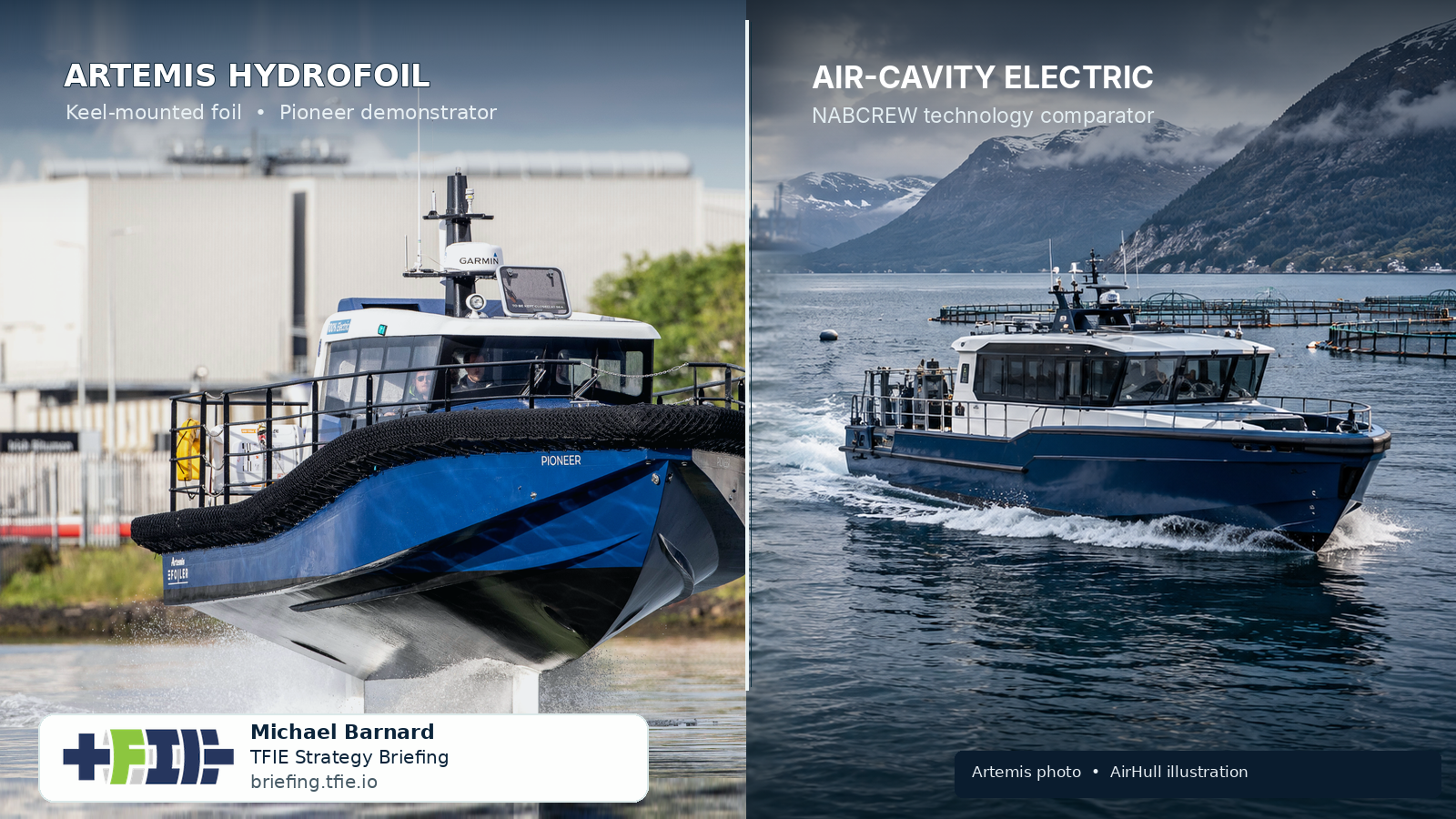
A different opportunity emerged when Antwerp pilotage operator Brabo ordered an Artemis EF-12 electric hydrofoil pilot boat in August 2024. The vessel combines electric propulsion with submerged foils and active controls. Artemis has also demonstrated ship-contact manoeuvres using its EF-12 workboat platform, while the EF-12 Pilot design entered sea trials in 2026. The handling benefits are relevant to pilot transfers even when the boat isn’t operating at full speed.
The financial question is whether a hydrofoil can spend enough of its working life taking advantage of its design. Antwerp pilot boats work around locks, docks, ship movements and changing assignments. Reaching a high maximum speed is of limited value when the vessel spends much of its day manoeuvring or travelling through constrained waterways.
I tested that question using a Python-based operating model with synthetic assignments and three hypothetical sets of port-speed permissions. Depending on how much suitable high-speed water was available, the EF-12 spent zero, approximately 6% or approximately 13% of its underway time foilborne. These are modeled scenarios, not measurements of Brabo’s operations or actual Antwerp speed authorizations.
Source link