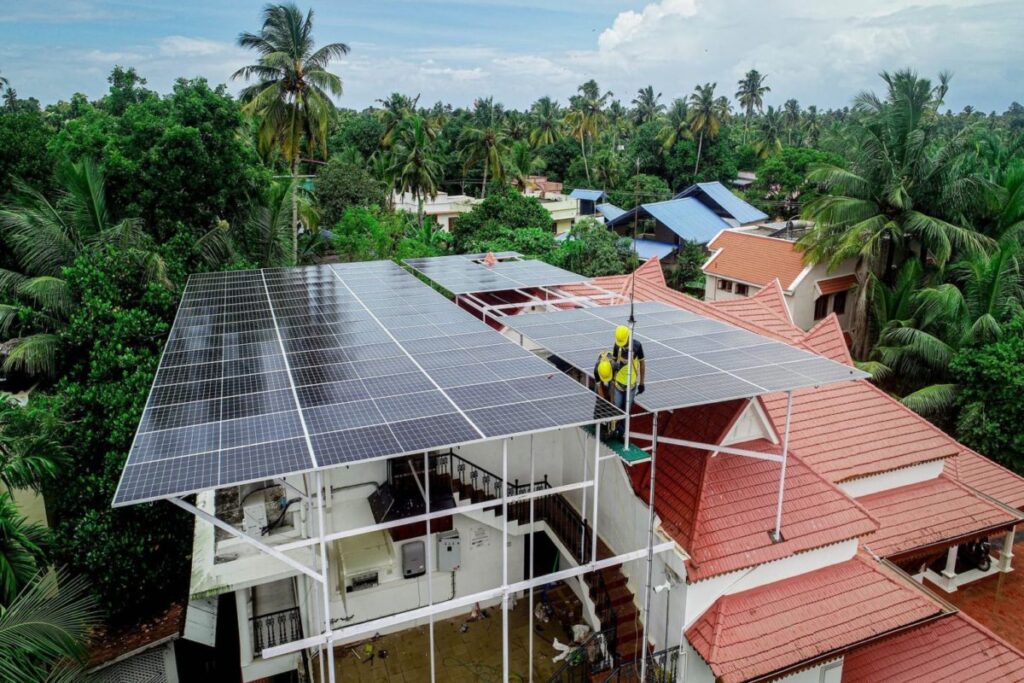
Distributed solar generation is gradually moving to the center of India’s energy transition, driven by a growing shortage of land and grid availability for utility-scale solar plants and a policy push for distributed solar. Applications such as rooftop solar systems (in the residential, commercial, and industrial consumer categories), agrivoltaics (which refers to small-scale solar plants on active farmland), and building-integrated photovoltaics (BIPV) are changing the way solar generation enters the electricity system. Meanwhile, energy storage, digital energy management, and new business models are also growing and changing the way solar assets are operated.
Large solar projects have enabled rapid capacity expansion and economies of scale. This model is here to stay. India’s Central Electricity Authority (CEA), in its National Generation Adequacy Plan for financial year 2026-27 to fiscal 2035-36, has envisaged 509 GW of solar capacity installation by fiscal 2035-36. Large-scale solar still has a vital role to play in this, even as grid limitations slow its growth in many regions.
In fiscal 2025-26, rooftop and agricultural solar installations together accounted for over 36% of total solar capacity additions. But rather than displacing large-scale solar in the longer term, this trend indicates the need for diversification in solar applications, an energy system where distributed resources built close to consumption points meet electricity demand, and large plants connected to transmission grids form the backbone of the national energy network.
Residential rooftop solar has most strongly demonstrated the pivotal role of distributed solar in India. The PM Surya Ghar (PMSG) scheme that targets 10 million residential rooftop installations by the end of fiscal 2026-27 had already passed the halfway point of 5 million households by August 2026 – representing a substantial 15 GW capacity increase in just two years.
Source link