

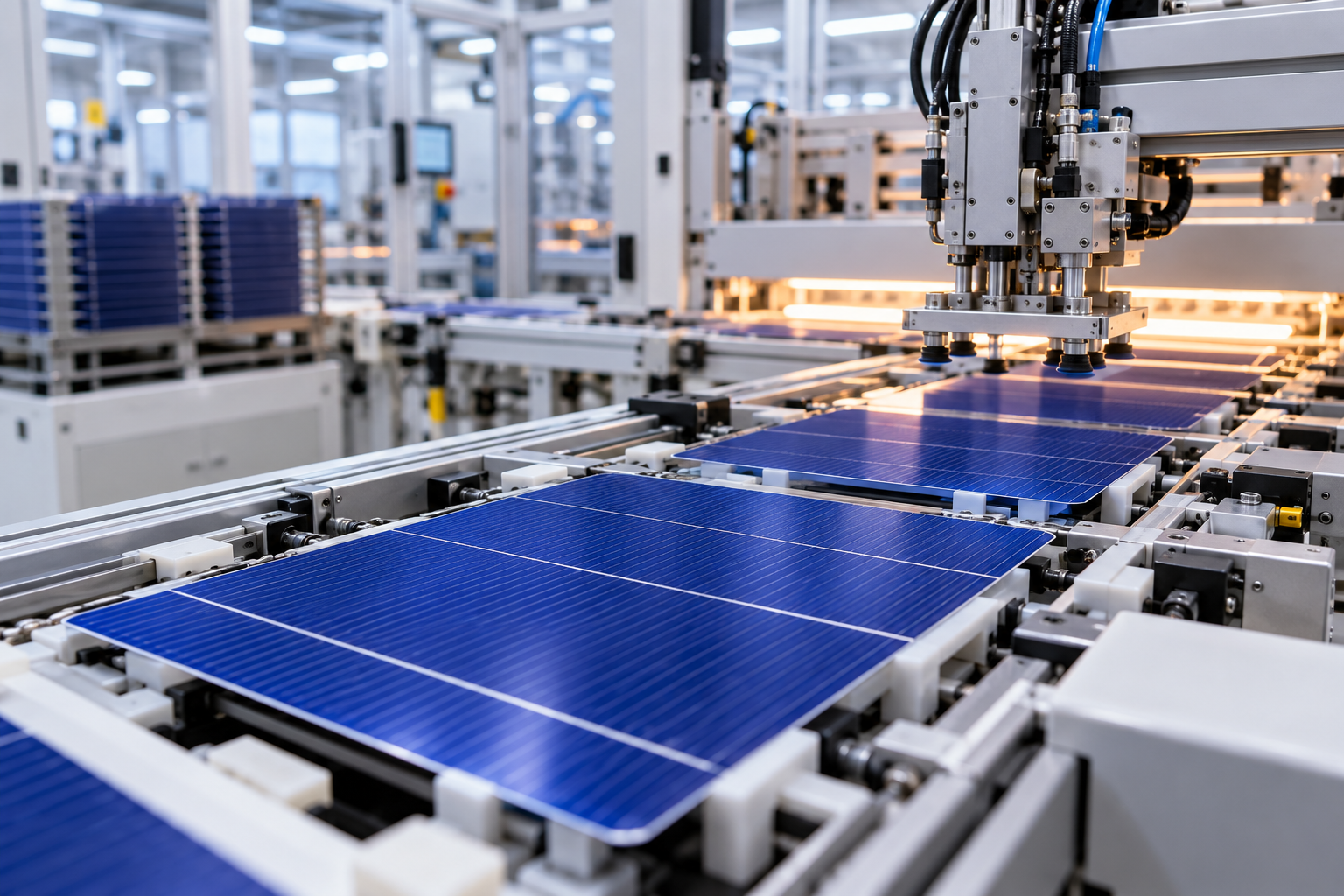
Digital twin (DT) technology could help photovoltaic manufacturers tackle “involution,” a term increasingly used in China’s solar industry to describe excessive competition, persistent price declines, and shrinking profit margins, according to a new study published in the Journal of Cleaner Production.
Digital twins are virtual representations of physical assets or processes that use real-world data, simulations, and artificial intelligence to monitor, predict, and optimize performance. In the PV industry, the technology has already been explored for plant monitoring, fault detection, predictive maintenance, and quality assurance. Other applications include drone-based inspections and energy-yield analysis, helping operators identify underperforming assets and improve operational efficiency.
In PV manufacturing and R&D, researchers have also investigated the use of digital twins to accelerate materials discovery and optimize organic solar cell production. The new study extends this approach beyond technical and operational optimization to explore broader economic and competitive challenges facing the PV industry.
In the paper, “Evolution path of anti-involution in photovoltaic enterprises driven by digital twin technology,” the researchers developed a digital twin-inspired simulation framework to assess how different corporate strategies could help PV manufacturers move away from destructive price competition and improve their financial performance.
“The dynamic and iterative nature of anti-involution strategies in the photovoltaic industry closely aligns with the core principles of digital twin technology, which creates virtual representations of physical systems to enable real-time monitoring, simulation, and optimization of decision-making,” corresponding author Fan Wang told pv magazine .
Source link





