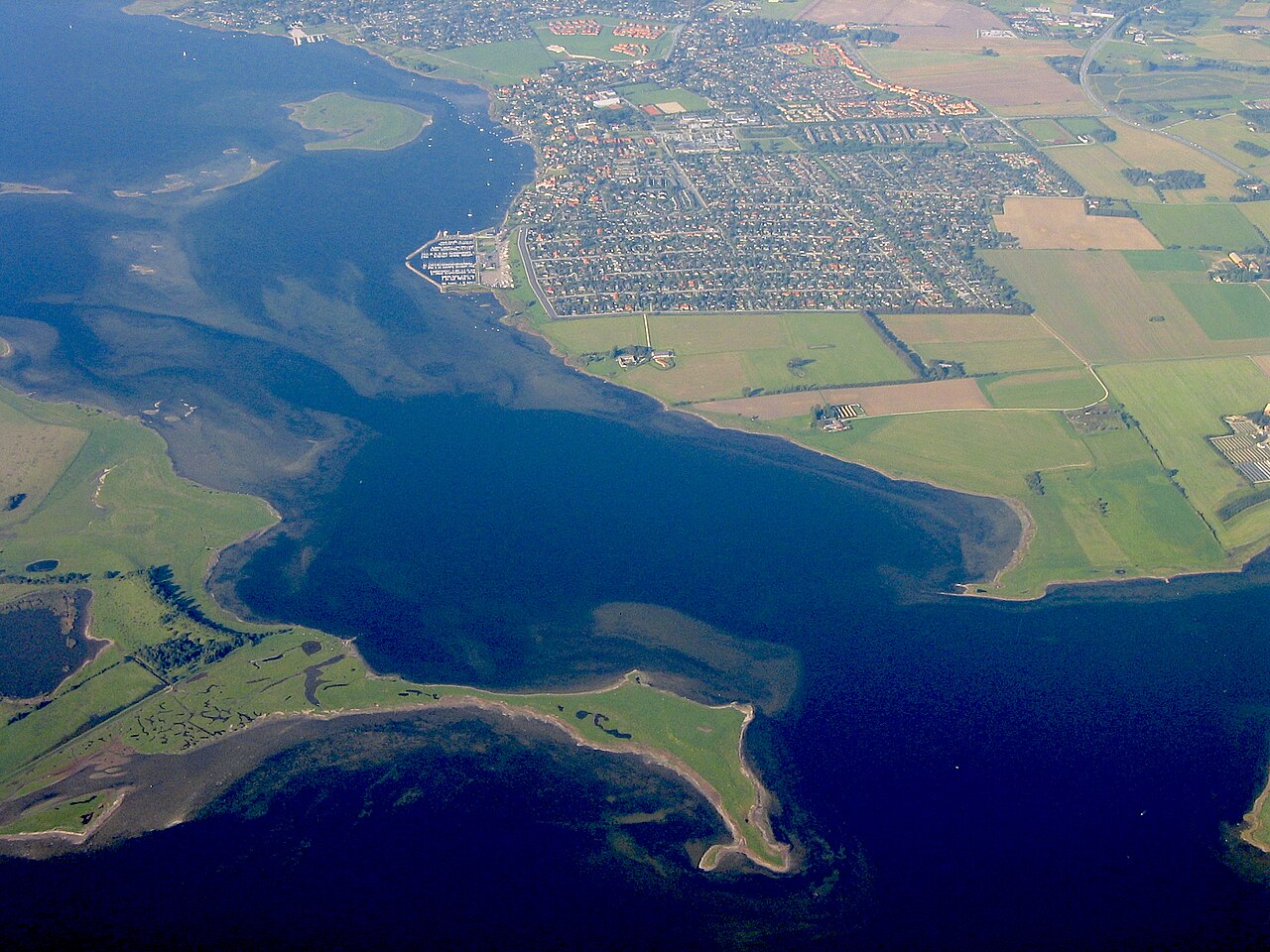
The Danish Energy Agency has granted Denmark-based engineering and consulting company COWI and the Technical University of Denmark (DTU) approval to conduct preliminary investigations and install and test three floating PV systems in Roskilde Fjord, near DTU Risø Campus in northern Denmark.
The project aims to determine whether floating PV is technically, environmentally and economically viable under Danish conditions.
The agency determined that the three pilot installations will not require an environmental impact assessment (EIA). It also noted that a provision added to Denmark’s Renewable Energy Act in 2024 allows the Minister for Climate, Energy and Utilities to issue permits for testing renewable energy installations at sea with a maximum capacity of 3 MW. Such projects may be conducted for research, development or demonstration of new technologies and processes within 15 km of the coast and for up to three years.
The pilot project will feature three different floating PV technologies installed side by side for comparison. The systems will be supplied by France-based HelioRec, Germany’s SINN Power, and Norway’s Sunlit Sea. The systems will have capacities and surface areas of approximately 40 kW/410 m², 40 kW/280 m² and 35 kW/230 m², respectively, for a combined capacity of around 115 kW and a total area of approximately 920 m².
The facility will test both monocrystalline PERC and heterojunction (HJT) solar modules. All three systems will use concrete or cement seabed anchors, combined with lines and connectors made from materials including steel and polyester.
The researchers will assess energy yield and operational performance, corrosion and material degradation, maintenance requirements, floating and mounting configurations, impacts on marine ecosystems and biodiversity, investment risks, and overall project economics, including the levelized cost of electricity (LCOE).
Source link