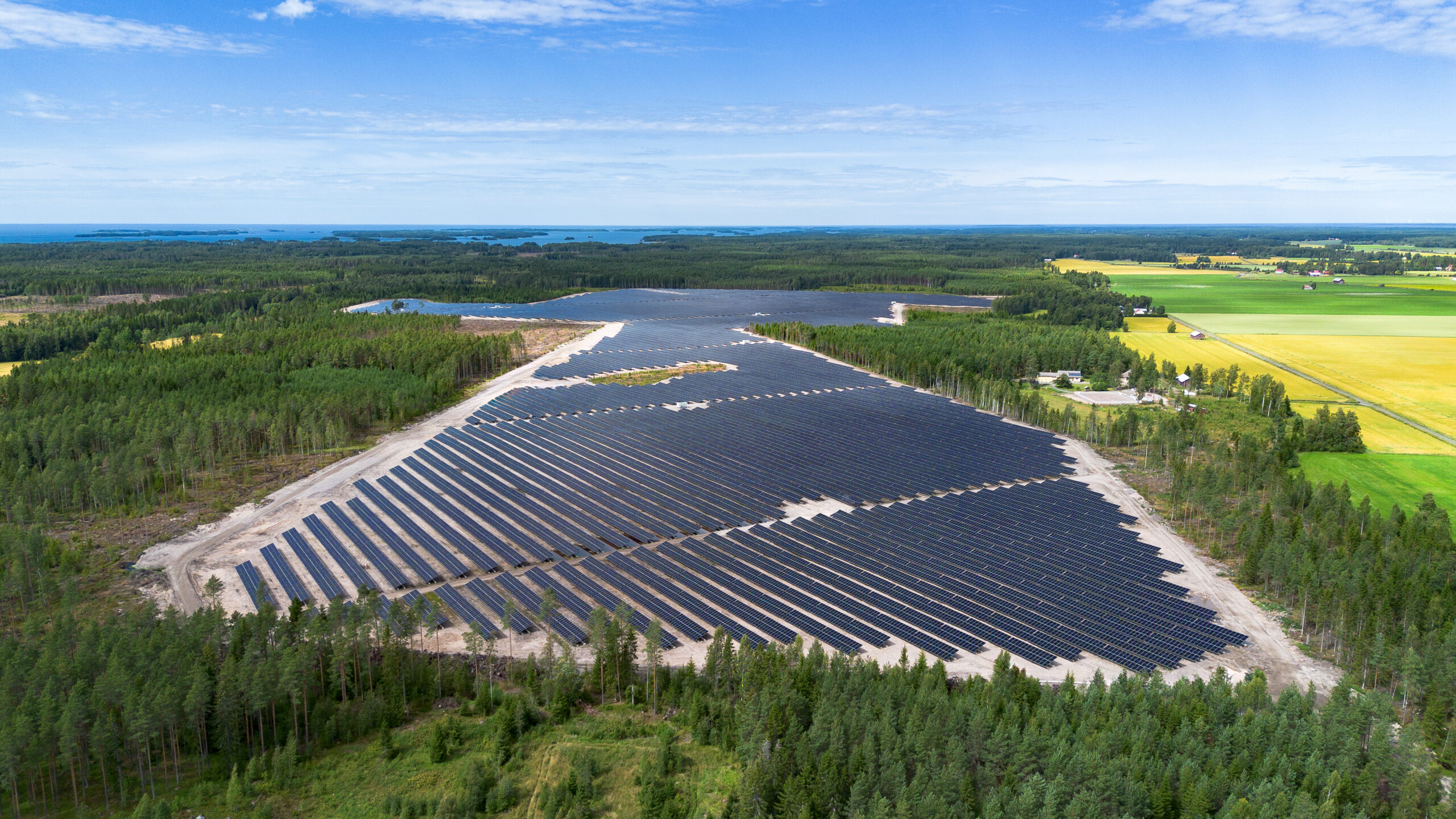
Researchers in Sweden have investigated how climate change could affect the country’s solar power generation potential throughout the 21st century, aiming to provide more accurate projections of PV output in high-latitude regions. The study accounts for factors such as panel orientation, temperature and snow cover, which are often overlooked in conventional assessments of PV potential, potentially leading to inaccurate estimates in cold climates.
“We found that the combined effects of air temperature and snowfall are as crucial as solar radiation for PV production in high-latitude regions,” corresponding author Wujun Wang told pv magazine. “This is quite different from the case in low- and mid-latitude regions. In Sweden, climate change will lead to an approximate 5% increase in PV generation, which means global warming might be positive for PV generation.”
The researchers assessed PV generation from 1951 to 2100 in four Swedish cities: Malmö in the south, Gothenburg on the west coast, Stockholm on the east coast, and Kiruna in the far north. Malmö recorded the highest temperatures and solar radiation levels and the least snowfall, while Kiruna had the coldest conditions, lowest solar radiation levels and approximately twice as much snowfall. Stockholm and Gothenburg represented intermediate climatic conditions. The team combined an hourly snow-PV model with climate projections from the HCLIM43-ALADIN regional climate model at a spatial resolution of 12.5 km.
0). Their model calculated direct, diffuse and reflected solar radiation reaching the modules, accounting for incidence-angle and snow-related losses. It also estimated cell temperatures based on ambient temperature, irradiance and nominal operating cell temperature, before calculating electricity generation using module efficiency and its temperature coefficient.
Source link