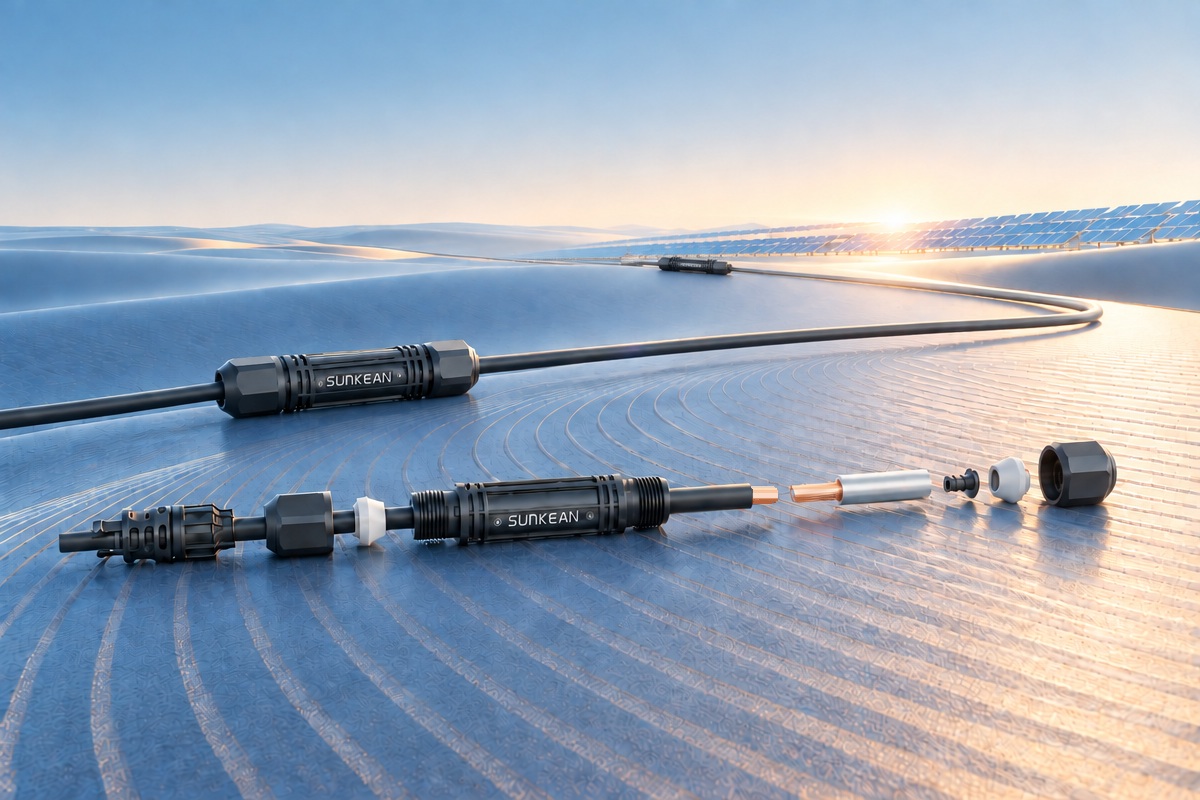
For utility-scale PV plants, DC-side cabling often spans considerable distances, making conductor selection an important factor in overall material costs. SUNKEAN’s copper-to-aluminum jumper solution uses a dedicated transition structure that allows aluminum conductors to be used in selected sections of the DC-side circuit, reducing copper consumption while maintaining the required connection performance. Project experience indicates that, under suitable application conditions, the copper-to-aluminum approach can deliver cost savings of nearly 50%. For cable runs exceeding 20 meters, the economic advantage of aluminum becomes increasingly significant.
Installation efficiency is another consideration behind the jumper design. SUNKEAN supplies the copper-to-aluminum jumper as a pre-assembled cable harness, with the copper-to-aluminum connector assembled before delivery. At the project site, installers only need to crimp the copper connector to the copper cable, eliminating the need for complex copper-to-aluminum conversion work in the field. For utility-scale projects involving large numbers of repeated DC connections, this prefabricated approach can reduce field operations and improve installation consistency.
The copper-to-aluminum connector is central to the solution. The challenge in adopting copper and aluminum conductors is not simply replacing one material with another but ensuring a stable connection between dissimilar metals over the operating life of the system. SUNKEAN’s copper-to-aluminum terminals use solid-state friction welding, in which heat generated by high-speed friction, combined with applied pressure, creates a solid-state bond between copper and aluminum without melting the materials.
Compared with conventional fusion welding, the process avoids key manufacturing challenges associated with the different melting points and thermal expansion characteristics of copper and aluminum.
Source link