

Carbon capture isn’t just an option for cement – it’s the only way to tackle the industry’s fundamental chemistry problem.
In 2026, the conversation among producers has shifted from asking if the technology works to figuring out which business models and tech stacks can scale fast enough.
Responsible for roughly 8% of global CO2 emissions, with production hitting 4 billion tons in 2024, per LeadIT, cement remains one of the hardest industrial sectors to abate. The core issue isn’t energy use; it’s chemistry. Making conventional Portland cement requires heating limestone to extreme temperatures, triggering calcination and releasing CO2 directly from the rock itself.
Switching kilns to alternative fuels, boosting efficiency, or running on clean power trims operational footprint, but it can’t stop the chemical release of CO2. Other strategies help at the margins: cutting clinker ratios, blending in supplementary materials, or leaning into alternatives like calcined clay, which is gaining real momentum across multiple continents.
Yet no silver-bullet technology can replace traditional cement production at global scale today.
Instead of trying to re-engineer limestone, point-source capture traps flue emissions before they reach the atmosphere, directing concentrated CO2 toward permanent storage or utilization. For the sector’s hardest-to-avoid emissions, point-source capture is fast becoming a baseline necessity.
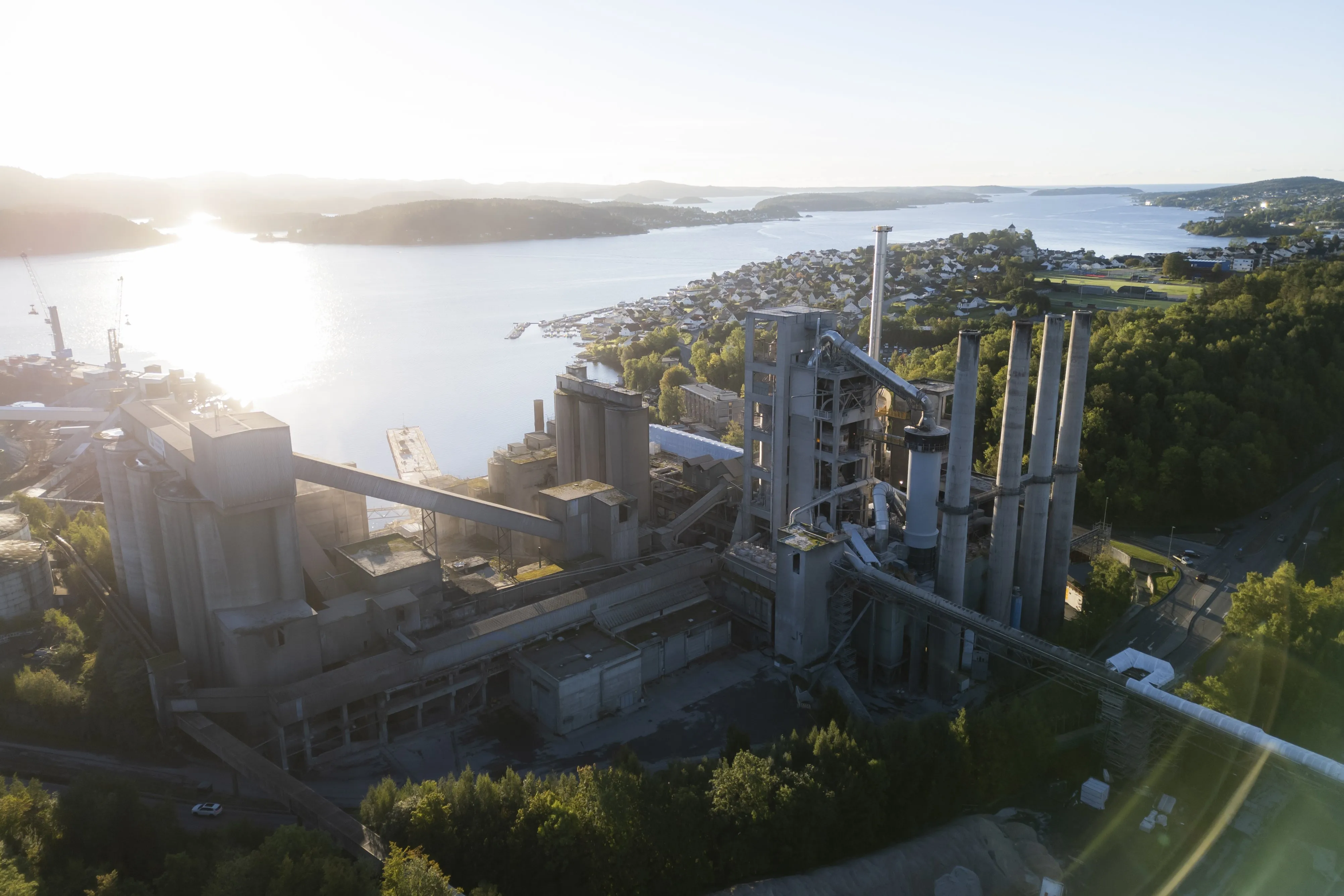
Brevik matters because it proved cement CCS can survive contact with commercial reality.
Integrated directly into Heidelberg Materials ‘ Norwegian facility, the plant captures roughly 400,000 tons of CO2 annually. The captured gas is liquefied, shipped, and ultimately injected into deep saline aquifers beneath the North Sea via the Northern Lights network.
Source link





