

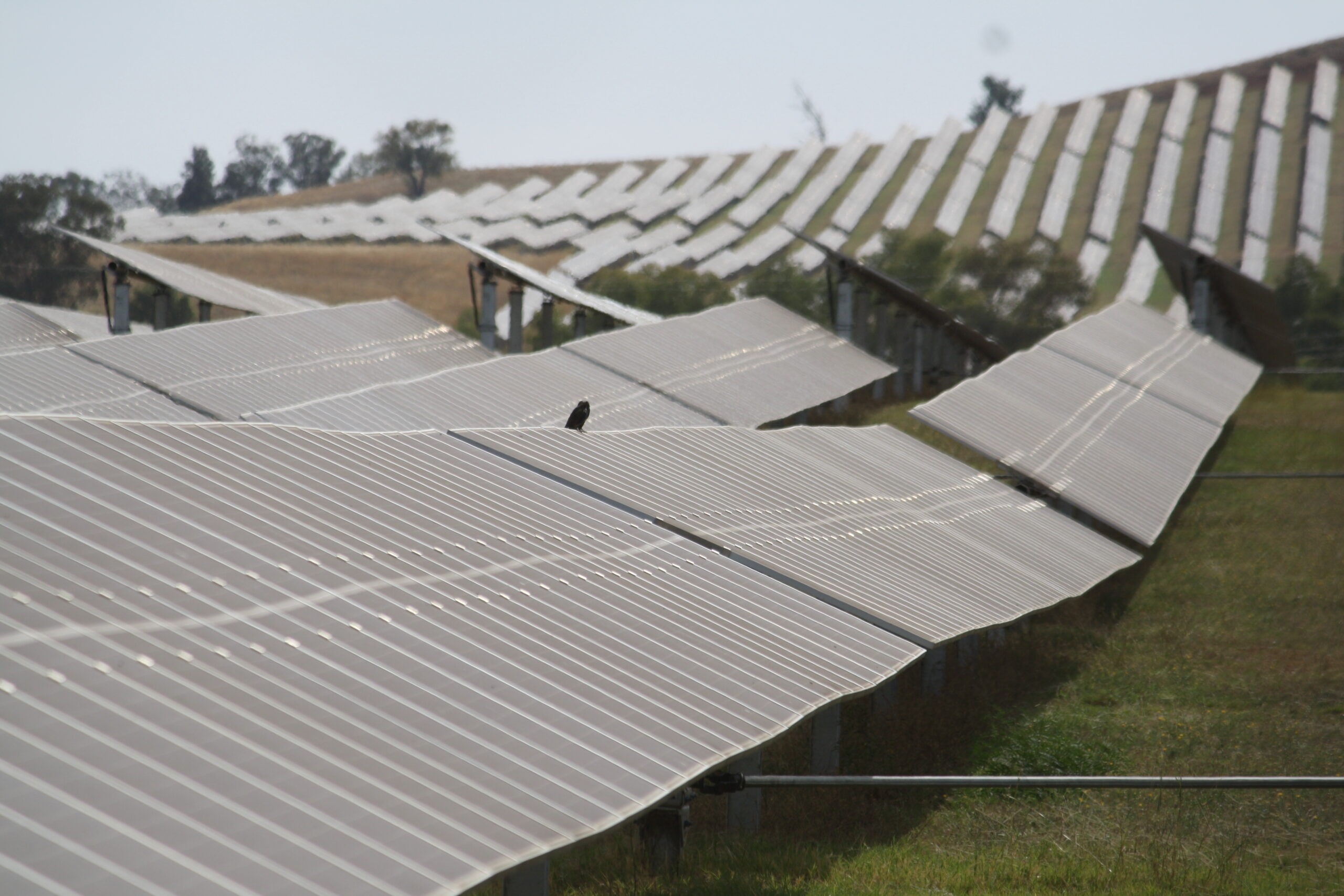
New modelling from Bloomberg New Energy Finance (BNEF) shows solar emerging as the largest component of Australia’s power fleet by mid-century, with capacity growing from 43 GW in 2025 to 137 GW under a business-as-usual scenario or 215 GW under a more accelerated transition.
In the latest edition of its New Energy Outlook Australia report, BNEF has modelled a net zero scenario (NZS), that achieves fully decarbonised power, transport, industry and buildings by 2050, and a base-case economy transition scenario (ETS), that lays out how commercially available technologies could be deployed with no further policy support beyond existing measures.
The modelling shows Australia’s solar capacity growing from 43 GW in 2025 to 137 GW by mid-century under the ETS. Under the NZS, capacity reaches 215 GW, more than five times the 2025 level.
BNEF said under both models, solar emerges as the largest component of Australia’s power fleet by 2050, its dominance in the power mix reflecting the country’s “high-quality solar resource and the continued cost advantage of both utility-scale and rooftop solar.”
Onshore wind capacity reaches 61 GW by 2050 under the ETS, up from 15 GW in 2025, while it reaches 107 GW by mid-century under the NZS.
Stationary battery storage capacity is forecast to expand from 5 GW in 2025 to 45 GW under the ETS and 50 GW under the NZS by 2050. BNEF said the larger fleet under the NZS reflects the need for greater flexibility in a system with higher electricity demand and a larger share of variable renewable generation.
Source link





