Researchers at the University of Oxford have discovered that bismuth sulfide material can overcome a major limitation in solar energy.
The problem was that materials that absorb sunlight strongly usually lose electrical charge too quickly to generate efficient power.
The identified semiconductor material has an unusual internal energy setup that acts like a temporary waiting room. Specifically, it holds onto captured energy longer and reducing charge loss by about 75% at room temperature.
“One of the longstanding challenges in developing efficient solar-energy materials is that the properties which make a semiconductor very good at absorbing sunlight also tend to make the resulting electrical charges disappear quickly. Our work shows that this trade-off is not inevitable,” said Professor Laura Herz, corresponding author from the Department of Physics, University of Oxford.
Solar panels generate power by capturing freed electrons before these charges recombine with positively charged holes and dissipate energy as heat.
Materials designed to absorb maximum sunlight naturally create a crowded environment where these charges collide almost instantly. This rapid recombination creates an efficiency barrier for standard light-harvesting semiconductors.
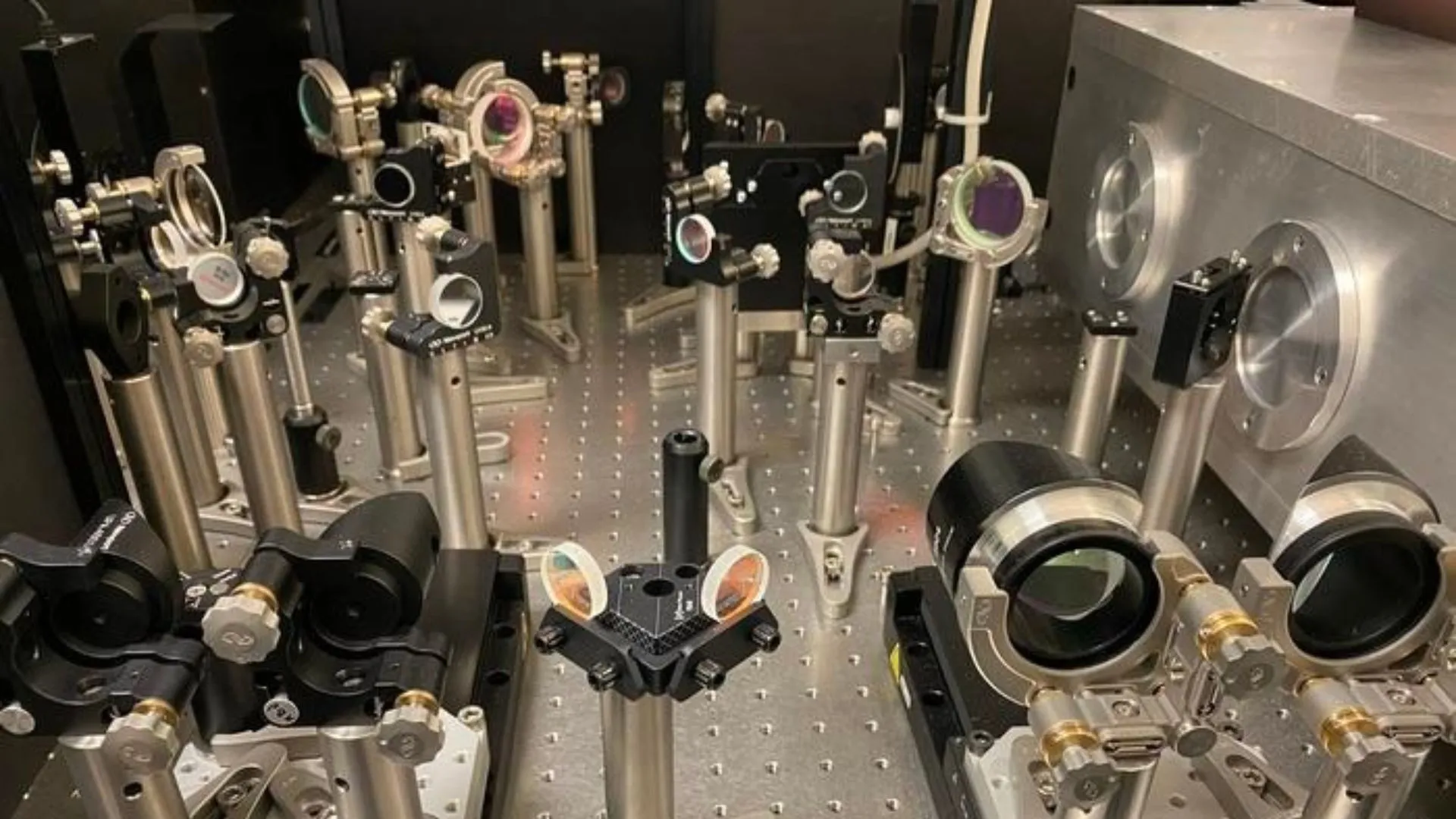
Bismuth sulfide-based semiconductors could help change this. The Oxford team used ultrafast terahertz spectroscopy, which basically fires laser pulses lasting mere fractions of a second. This technique helped to probe thin films of the material.
What they found surprised them. Bismuth sulfide features a rare quantum arrangement known as a pseudo-direct semiconductor.
Light energy enters through a primary, high-energy pathway where sunlight is strongly absorbed. Immediately below this entrance lies a lower-energy state that captures the excited charges.
Source link