

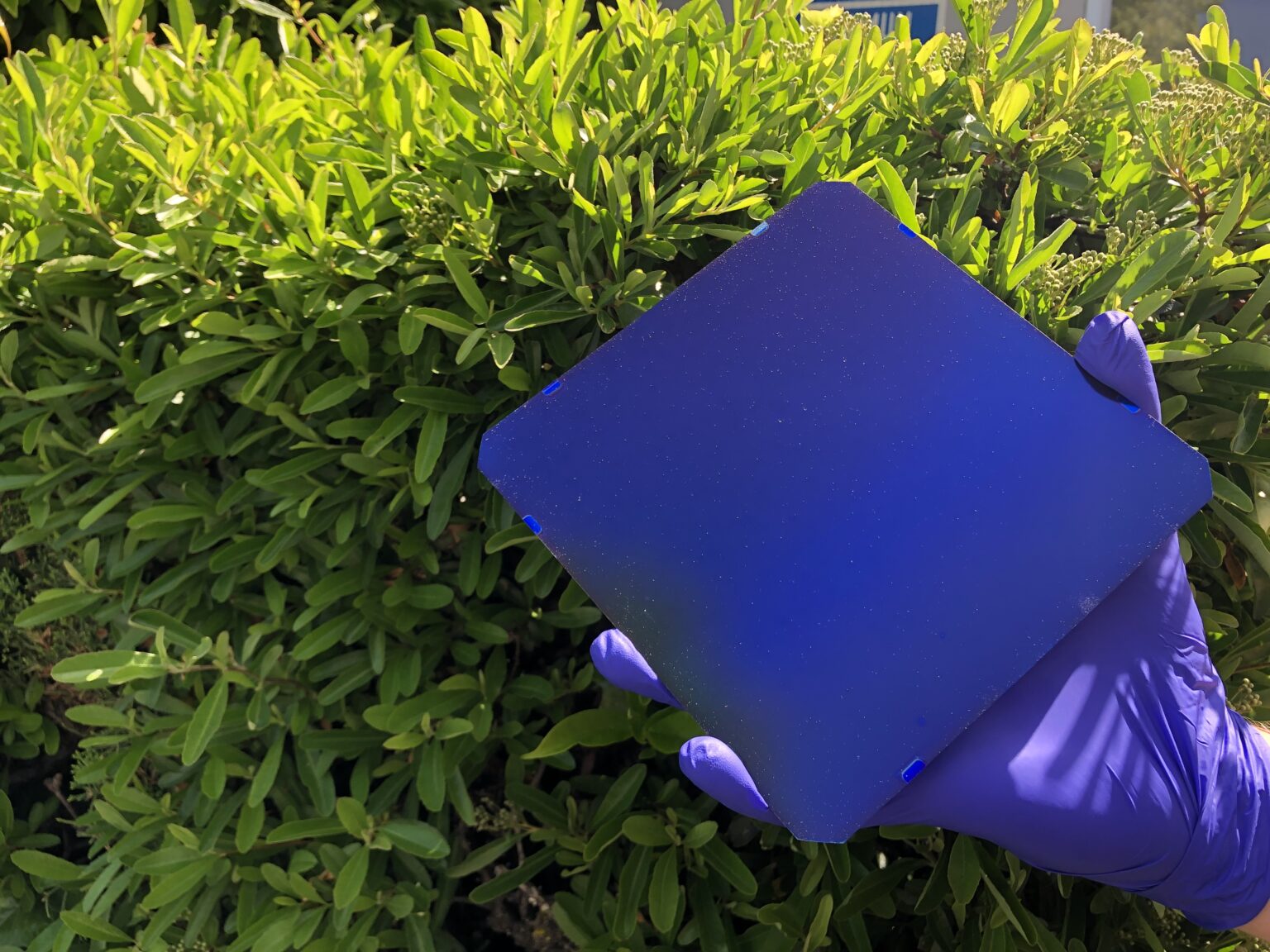
Beyond standard single-junction silicon solar technologies, which are rapidly approaching their theoretical efficiency ceilings, the solar industry is turning to perovskite tandem architectures to unlock the next wave of energy yield and cost reductions.
At a panel session during Solar Manufacturing USA 2026, hosted by pv magazine USA, industry executives and researchers outlined how leading developers are taking perovskite-on-silicon tandems out of the laboratory and into commercial deployment.
Ralf Preu, director of photovoltaics at Fraunhofer Institute for Solar Energy Systems ISE, put the technology shift into historical perspective, reflecting on how far solar manufacturing has progressed.
“My journey is more than 30 years in PV,” Preu noted, recalling an early visit to a 10 MW plant in Camarillo, California, which was once one of the three largest production sites in the world. “It’s great to see that with all the production sites, what was manufactured there in a year, we have it now in a few hours.”
Preu highlighted the absolute physical necessity of moving past single-junction silicon, pointing out that industrial cell efficiencies have drawn dangerously close to theoretical boundaries.
“The efficiency limit for silicon single junction is 29.4%. That’s the maximum you can get out of a solar cell, and we are now – with the announcement of Longi – we are so close to that with 28.1%. And even if we look at the module, we are at 26.4% efficiency. Obviously, there is not much to squeeze out of that theoretical efficiency limit anymore.”
Source link





