
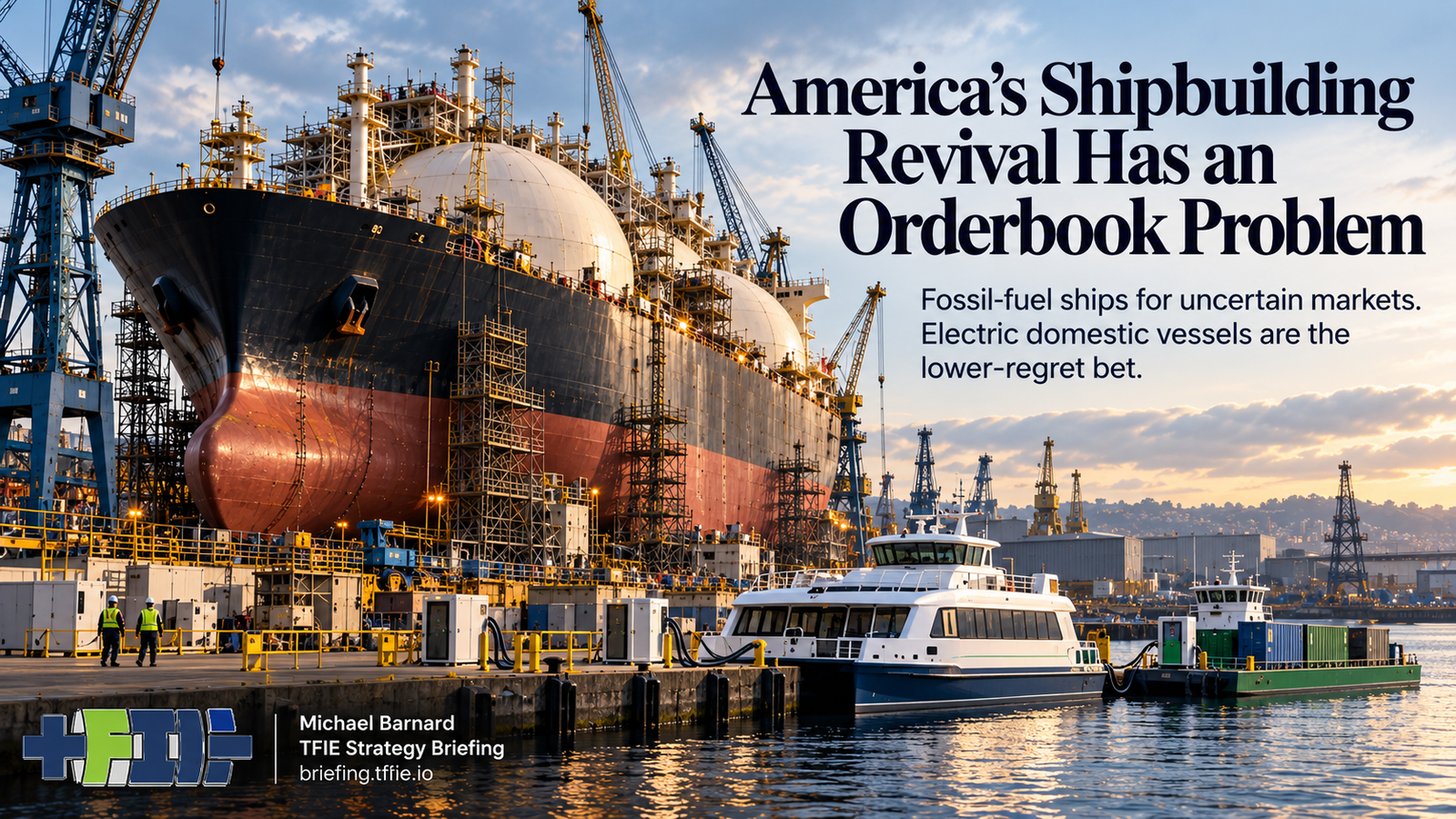
South Korea’s Hanwha Group owns the Philadelphia shipyard that has become a centerpiece of Washington’s attempt to rebuild American commercial shipbuilding. Its Hanwha Ocean and Hanwha Systems subsidiaries acquired the US yard in December 2024. The investment creates and sustains American production capacity and jobs while transferring shipbuilding expertise, technology and training from South Korea to US workers. The facility is in America, but its corporate ownership remains South Korean. The company’s published orderbook, however, tells a more complicated story: two liquefied natural gas carriers, four firm orders for oil and chemical tankers, and options for another six tankers. Three LNG-fueled container ships ordered by Matson in 2022 predate the current administration. The newer LNG and tanker orders come from Hanwha’s own shipping affiliates. They can help restart production, but buying ships from another company in the same group does not demonstrate that independent shipowners will pay US construction prices.
The price gap is difficult to dismiss. Kinder Morgan’s January 2026 investor presentation estimates that a new medium-range Jones Act tanker would cost more than $240 million and require a long-term charter above $115,000 per day to justify construction. The existing charter market was around $90,000 per day. Kinder Morgan operates 16 tankers, with its fleet fully utilized, yet the gap between current charter revenue and the cost of a replacement vessel remains substantial. High utilization establishes a need for shipping services; it does not establish a financeable order for a new American-built tanker at today’s prices.
Source link