
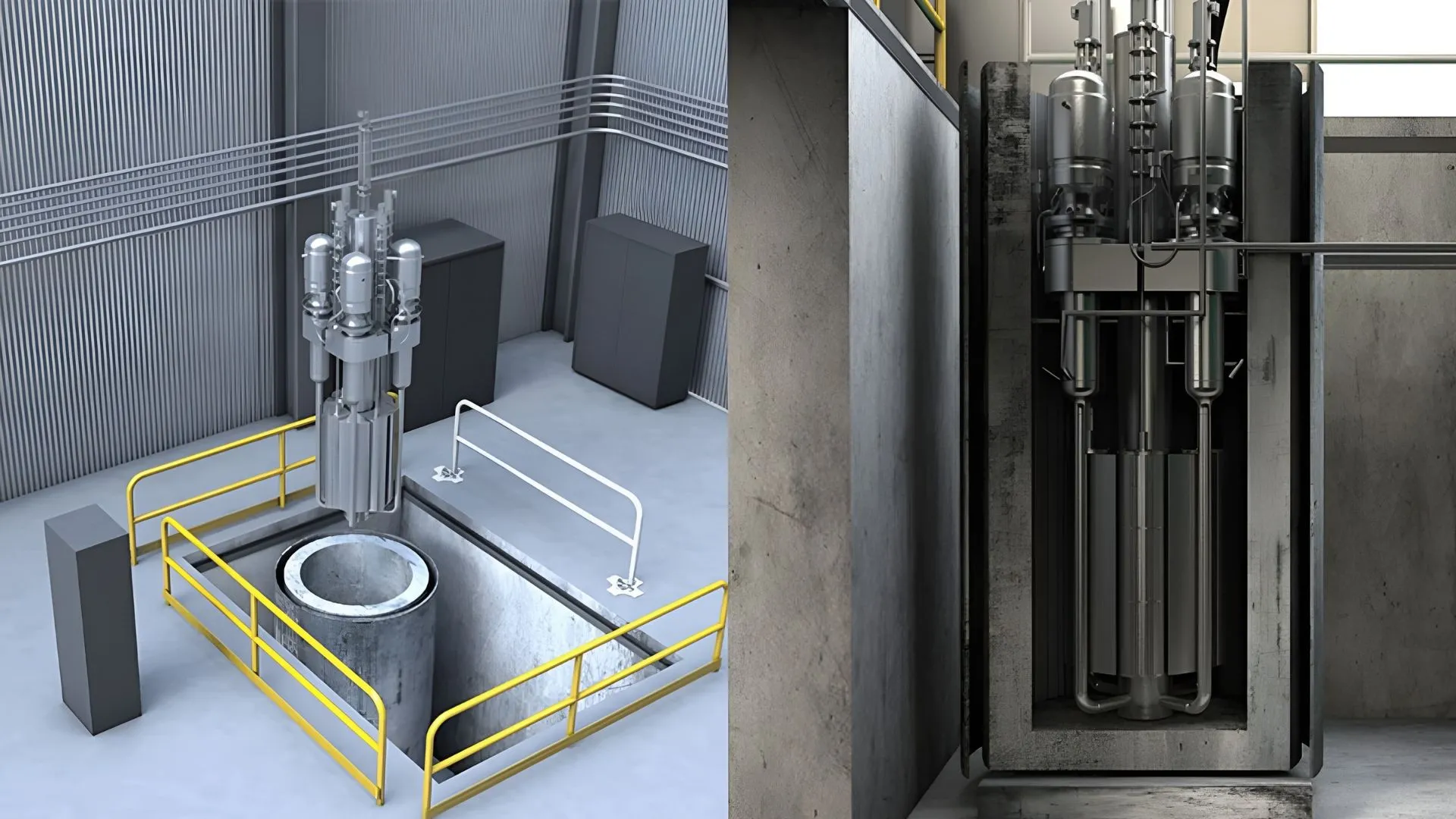
A small nuclear reactor at Idaho National Laboratory is approaching its first criticality test after engineers received a major piece of its cooling system.
The primary coolant system for the Department of Energy’s MARVEL microreactor reached INL in mid-September. Its arrival gives engineers another major component to integrate before the reactor enters initial testing, which the project currently expects in December.
MARVEL stands for Microreactor Applications Research Validation and Evaluation. INL leads the project for DOE as researchers explore how compact nuclear systems behave and how their operating data can support future reactor development.
The primary coolant system will eventually carry heat away from MARVEL’s reactor core. It uses a sodium-potassium alloy that remains liquid at room temperature and can transfer heat at high temperatures.
Unlike water-based systems that operate under significant pressure, the liquid-metal coolant does not require pressurization to remain fluid. That makes its behavior particularly relevant to researchers studying compact reactor designs.
The system arrived at INL’s Transient Reactor Test Facility, where engineers will integrate it with the rest of MARVEL. That work will prepare the reactor for a series of tests leading toward initial criticality.
Criticality marks the point when a reactor sustains a nuclear chain reaction. MARVEL’s first criticality will not immediately mean full-power operation. Instead, researchers will use the early phase to collect measurements about the reactor’s physics and behavior.
The project reached another important checkpoint before the coolant system arrived. DOE’s Idaho Operations Office approved MARVEL’s final documented safety analysis, clearing the way for a dry criticality configuration.
Source link





