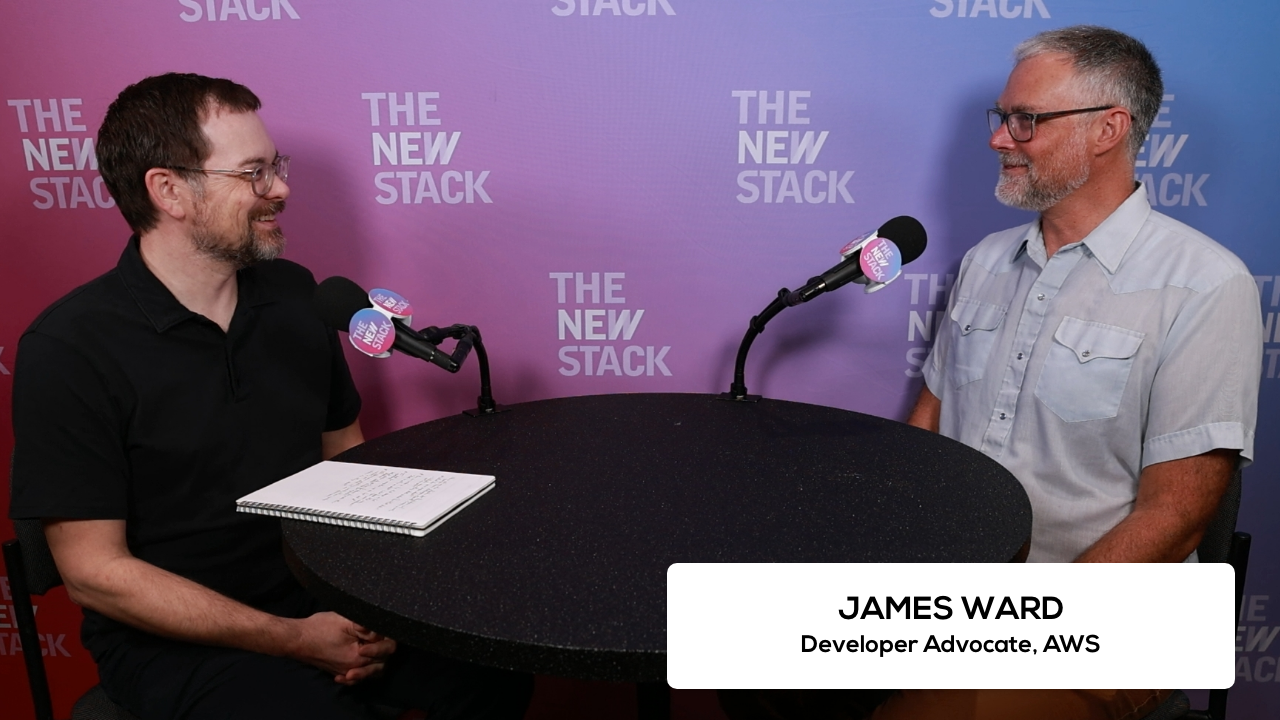
Many MCP servers do one thing. An agent asks for data, and the server hands it back. AWS’s James Ward thinks that leaves a lot on the table. The protocol works best, he told me, when the server acts less like a database and more like another voice in the conversation.
Ward is a principal developer advocate at AWS and sits on the technical committee of the Agentic AI Foundation, the Linux Foundation group that now houses MCP. I sat down with him last week at AGNTCon + MCPCon in San Jose the day before he and co-presenter Alexander Ioffe were set to give a session on moving MCP from a basic API to an agent integration interface.
“Many times our MCP servers are just these APIs, like ‘get me the customers,’ and that is a good place to start,” Ward said. “I imagine MCP as the third person in this conversation, or a fourth or a fifth, depending on how many MCP servers you have.”
In practice, that means a tool response carries guidance with the data. It tells the agent what it just did, what it might want to do next, and where to find more.
The other half of his pitch is visibility. Web developers can trace a click on a page all the way down to the database. “MCP by default doesn’t have any way to do trace ID,” Ward said.
The workaround AWS uses is rather low-tech. Add a session ID parameter to the tools and tell the agent to pass it on every call, so individual calls can be stitched into one journey.
Source link